Best Heating Pads for Seniors with Arthritis (2026): Auto Shut-Off, Moist Heat, and the Cordless Question
Most heating pad reviews rank by heat-up speed and settings count. For an older user, the two features that matter more rarely make the headline: whether the pad shuts itself off, and whether the cord is a tripping hazard waiting to happen. Here's what to check before buying one, and three that get the safety basics right.
As an Amazon Associate I earn from qualifying purchases. We independently review products; buying through our links never costs you extra.
Best Overall
Pure Enrichment PureRelief XL Heating Pad
Quick picks
| Product | Best for | Amazon |
|---|---|---|
| Pure Enrichment PureRelief XL Heating Pad | Overall | Check price on Amazon |
| Thermophore MaxHEAT Moist Heating Pad | Deep Moist Heat | Check price on Amazon |
| Comfytemp Cordless XL Heating Pad with Massager | Removing the Cord Hazard | Check price on Amazon |

Our Top Picks
Chosen for seniors based on features, specs, and verified buyer reviews.
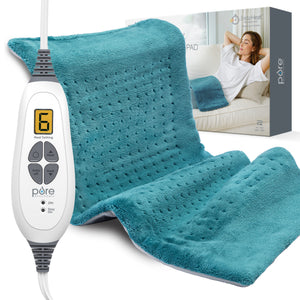
Pure Enrichment PureRelief XL Heating Pad
- 20x24 inch coverage for back or hip
- Firm 2-hour auto shut-off
- Six heat settings on a slide control
- Supports moist heat with a damp cloth cover
- Not cordless
- Slide controller feel varies unit to unit per some buyer reports
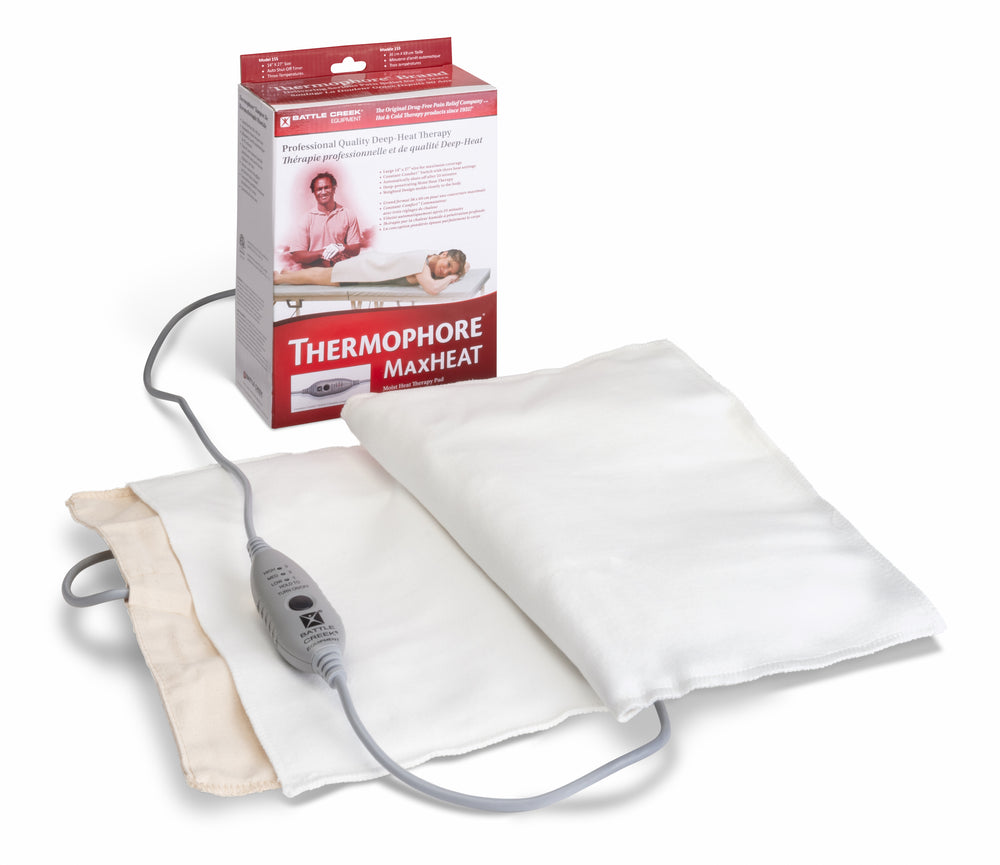
Thermophore MaxHEAT Moist Heating Pad
- Automatic moist heat, no water reservoir to fill
- 14x27 inch weighted pad stays in place
- Reaches deeper joint stiffness than dry heat
- 25-minute auto shut-off
- Shorter auto shut-off window than dry pads
- Heavier and bulkier than a standard heating pad
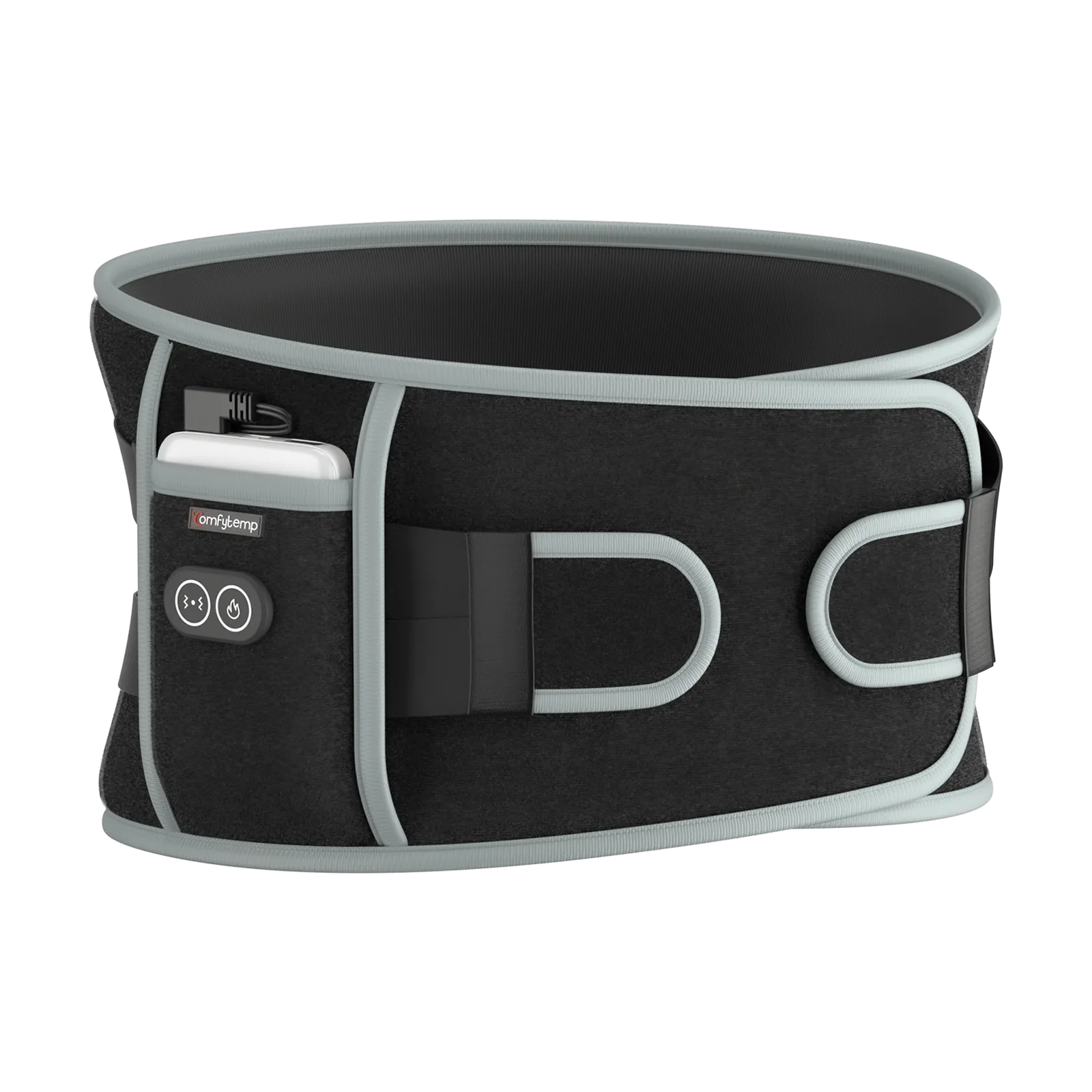
Comfytemp Cordless XL Heating Pad with Massager
- No cord — removes a real trip hazard
- Built-in massage function alongside heat
- Portable between rooms or a recliner
- Rechargeable battery
- Shorter run time per charge than plug-in pads
- Higher price than corded options
A heating pad is one of the simplest tools there is for arthritis pain — heat increases local blood flow and loosens stiff joints, and unlike most pain-relief products it works in minutes with no medication involved. The problem is that most heating pads on the market were designed for a healthy 30-year-old who falls asleep with it on maybe once, by accident. For an older user with reduced skin sensitivity, a heating pad left running for hours is a real burn risk, and a heating pad connected by an eight-foot cord across a bedroom floor is a real fall risk. Neither of those shows up in a typical product listing's bullet points, so this guide leads with them. Our top pick is the Pure Enrichment PureRelief XL, which combines full-back coverage with a firm two-hour auto shut-off. For genuine moist heat — the kind physical therapists actually recommend for deep joint stiffness — the Thermophore MaxHEAT is the closest thing to clinical-grade heat therapy sold for home use. And for anyone concerned about a cord underfoot, the Comfytemp Cordless XL Heating Pad removes that risk entirely by running on a rechargeable battery.
The auto shut-off issue nobody puts in the headline
A meaningful share of heating pads sold today, including some well-known budget models, have no automatic shut-off at all — they run until someone manually turns them off, indefinitely. That's a manageable inconvenience for someone with full skin sensation who's alert and moving around. It's a genuinely different risk for someone with diabetic neuropathy, poor circulation, or reduced sensation from a stroke or nerve condition, where a pad that's uncomfortably hot may not register as painful until skin damage has already started — and for anyone who tends to doze off with the pad still on, hours of sustained heat against skin can cause a low-grade burn that develops slowly enough to go unnoticed until it's already happened. Every pick in this guide has some form of automatic shut-off, and it's the first spec worth checking on anything not listed here — not the number of heat settings, not the size, not the price.
Cordless vs. corded: a real trade-off, not just a convenience feature
A standard plug-in heating pad needs to stay within reach of an outlet, which usually means a cord running across a floor, under a chair, or looped over a nightstand — exactly the kind of low, easy-to-miss obstacle that causes falls in older adults, especially at night or when getting up quickly. A cordless, rechargeable heating pad solves that problem outright, at the cost of a shorter run time per charge and a higher upfront price. For someone who uses a heating pad mostly in one fixed spot — a recliner, a specific side of the bed — the cord usually isn't a real problem as long as it's routed along a wall rather than across an open path. For someone more mobile around the house, or living with a spouse or caregiver who has their own mobility issues, a cordless model is worth the extra cost specifically because it removes a hazard rather than just adding a feature.
Moist heat vs. dry heat: which actually helps arthritis more
Standard electric heating pads produce dry heat, which is comfortable and effective but penetrates less deeply into muscle and joint tissue than moist heat. Physical therapists commonly use moist heat packs in clinical settings specifically because the added humidity transfers heat more efficiently below the skin surface, which is why a moist-heat pad can feel more effective for deep joint stiffness even at a lower temperature setting — a real advantage for arthritis specifically, as opposed to surface-level muscle soreness where a standard dry pad works fine. The trade-off is that most moist-heat pads are heavier, need a water reservoir or a damp cloth cover, and cost more than a basic dry pad. For a hip, lower back, or shoulder that's genuinely stiff rather than just sore, moist heat is worth the extra step; for a smaller area or occasional use, a standard dry pad does the job without the added complexity.
Our picks
Pure Enrichment PureRelief XL — Best Overall
The PureRelief XL covers a full 20x24 inches, enough to treat a whole lower back or wrap around a hip and thigh at once, with six heat settings for fine control rather than a blunt low/medium/high. Its two-hour automatic shut-off is a firm, no-exceptions timer rather than an optional setting, which is exactly the behavior you want for anyone who might doze off with it running. It also supports moist heat if a damp cloth is placed over the pad, giving some of the deeper-penetrating benefit without buying a dedicated moist-heat unit. The controller uses a slide switch rather than small buttons, which is easier to operate for anyone with reduced hand dexterity from arthritis in the fingers themselves — a detail that matters more than it sounds like it should for a product aimed at treating arthritis.
Check price on AmazonPure Enrichment PureRelief XL Heating Pad
Thermophore MaxHEAT — Best for Deep, Moist Heat
The MaxHEAT produces genuine moist heat automatically, pulling humidity from the surrounding air rather than requiring a water reservoir to fill and clean, which makes it considerably less fuss than older-style moist-heat units. At 14x27 inches it's large enough to drape across both shoulders or wrap a hip, and its weighted design helps it stay in place rather than sliding off mid-use — useful for anyone using it while seated in a recliner rather than lying flat. It includes a 25-minute automatic shut-off, shorter than the other two picks here, which is worth knowing going in: it's built around the assumption of a focused, attended session rather than hours of passive background heat, and that shorter window is actually appropriate given how much more intensely moist heat penetrates compared to a dry pad at the same temperature.
Check price on AmazonThermophore MaxHEAT Moist Heating Pad
Comfytemp Cordless XL Heating Pad — Best for Removing the Cord Hazard
This is the pick for anyone who has specifically identified a trailing cord as a fall risk, whether for themselves or a spouse or parent they're buying for. It runs on a rechargeable battery, so there's no cord to route around a recliner or across a bedroom floor, and it includes a built-in massage function some users find adds real relief for tight shoulder or lower-back muscles alongside the heat itself. If the shoulder pain shows up mainly overnight rather than during the day, a heating pad only addresses part of the problem — our guide to pillows for chronic shoulder pain covers a system built to offload pressure from the joint while sleeping, which heat alone doesn't fix. The trade-off is battery life — expect roughly an hour or two of continuous heat per charge depending on the setting, meaningfully less than a plug-in pad that can run as long as its timer allows — and a higher price than either of the corded options above. For occasional or targeted use rather than long sessions, that trade-off is a reasonable one.
Check price on AmazonComfytemp Cordless XL Heating Pad with Massager
Who should skip a heating pad entirely, or use one with real caution
This is the section most heating pad guides skip, and it matters. Anyone with diabetic neuropathy, peripheral vascular disease, or any condition that reduces sensation in the skin should talk to a doctor before using a heating pad unsupervised, because the same reduced sensitivity that makes heat feel good can also mask the early signs of a burn. Heat should never be applied directly to skin — always use the fabric cover included with the pad, and never add extra layers of blanket on top of a running heating pad, which traps heat and can push the surface temperature well past what the pad is designed to reach safely. Anyone with an open wound, active inflammation from a recent injury (heat is the wrong response to acute swelling — ice is), or a cardiac condition affecting circulation to the treated area should check with a doctor first rather than assuming a heating pad is automatically safe because it's sold without a prescription.
A mistake worth avoiding: buying based on heat-up speed alone
Marketing for heating pads leans hard on how fast they get warm — "heat in 30 seconds" is a common claim — because it's an easy number to put on a box. For arthritis specifically, a pad that reaches a comfortable temperature quickly is a nice convenience but a secondary concern to auto shut-off, coverage size, and control ease. A pad that heats in 30 seconds but runs indefinitely with no shut-off, or has a control panel too small and stiff for arthritic fingers to operate, is a worse purchase than one that takes two minutes to warm up but gets everything else right.
Frequently asked questions
Is it safe to sleep with a heating pad on overnight?
Manufacturers generally advise against it, and this is one case where that caution is worth following rather than treating as boilerplate liability language. Even models with auto shut-off are designed around a defined session length, not all-night use — set a timer, use the pad while awake, and let it shut off on its own rather than trying to sleep with it running.
How hot should a heating pad actually get?
Most quality pads top out in the 150–165°F range on their highest setting, which is hot enough to feel therapeutic without causing surface burns through the included fabric cover in normal use. If a pad feels uncomfortably hot even on a low or medium setting, that's a sign to stop and check skin for redness, not to push through it.
Can a heating pad replace a doctor visit for ongoing joint pain?
No — it's a supportive comfort measure for known, diagnosed arthritis pain, not a substitute for medical evaluation of new, worsening, or one-sided joint pain, which can have causes a heating pad won't address and could even make worse if the underlying issue is acute inflammation rather than chronic stiffness.
Why does moist heat cost more than a standard dry pad?
Moist-heat units need additional engineering — either a water reservoir and heating element built to handle it, or, in the case of newer models like the Thermophore, a mechanism that draws ambient humidity into the pad automatically. That added complexity is reflected in the price, but for genuinely deep joint stiffness, several users find the difference in relief worth the extra cost.