Best Recumbent Exercise Bikes for Seniors (2026)
A recumbent bike is only a good fit for a senior if getting on and off it is easy and the seat actually supports a bad back. Here's how to tell the difference and which models get the basics right.
As an Amazon Associate I earn from qualifying purchases. We independently review products; buying through our links never costs you extra.
Our top pick
Sunny Health & Fitness Magnetic Recumbent Bike
Quick picks
| Product | Best for | Amazon |
|---|---|---|
| Sunny Health & Fitness Magnetic Recumbent Bike | — | Check price on Amazon |
| Schwinn 270 Recumbent Bike | — | Check price on Amazon |
| Exerpeutic 900XL Extended Capacity Recumbent Bike | — | Check price on Amazon |
| Marcy Recumbent Exercise Bike ME-709 | — | Check price on Amazon |

Our Top Picks
Chosen for seniors based on features, specs, and verified buyer reviews.

Sunny Health & Fitness Magnetic Recumbent Bike
Check price on Amazon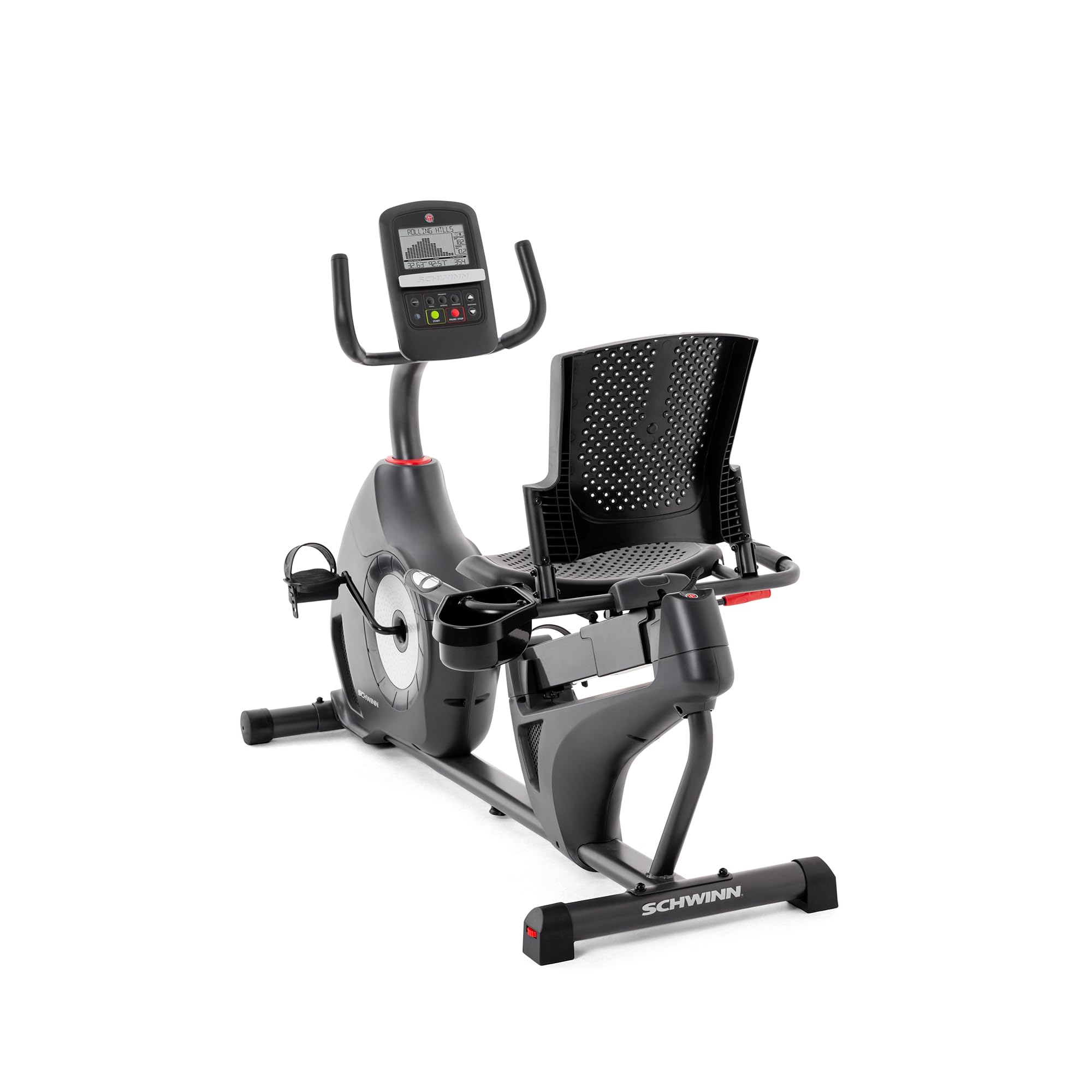
Schwinn 270 Recumbent Bike
Check price on AmazonExerpeutic 900XL Extended Capacity Recumbent Bike
Check price on Amazon
Marcy Recumbent Exercise Bike ME-709
Check price on AmazonA recumbent bike gets recommended to seniors more than almost any other piece of home fitness equipment, and for good reason — the reclined, chair-like seating position takes pressure off the knees, hips, and lower back that an upright bike puts directly on them. But not every recumbent bike is actually easy for an older adult to use: some have a seat height and step-through gap that's still awkward to swing a leg over, and some have consoles with tiny text nobody past 60 can read without squinting. Our top pick for most seniors is the Sunny Health & Fitness Magnetic Recumbent Bike, with the Schwinn 270 the better call for anyone who wants a more capable console and a plusher seat and is willing to pay more for it.
Our top picks
Sunny Health & Fitness Magnetic Recumbent Bike — Best Overall
This is the bike that shows up most often in senior fitness recommendations, and the reason is the basics: a low, step-through frame that doesn't require lifting a leg high to mount, a seat that adjusts without tools, and quiet magnetic resistance instead of a friction system that grinds and jerks. The console is simple — time, speed, distance, calories, pulse from hand-grip sensors — which is a feature, not a limitation, for anyone who just wants to pedal while watching TV rather than manage workout programs.
Check price on AmazonSunny Health & Fitness Magnetic Recumbent Bike
Schwinn 270 Recumbent Bike — Best for a More Capable Console
The 270 costs meaningfully more than the Sunny Health bike, and the difference shows up in the console and seat rather than the core mechanics — more resistance levels, a more detailed dual-track display, and a more cushioned, ventilated seat. For a senior who wants workout variety or plans to use the bike daily for longer sessions, the better seat alone can be worth the upgrade. For someone who just wants basic low-impact cardio a few times a week, it's genuinely more bike than necessary.
Check price on AmazonSchwinn 270 Recumbent Bike
Exerpeutic 900XL Extended Capacity Recumbent Bike — Best for a Higher Weight Capacity
Several budget recumbent bikes top out at a weight capacity that excludes a meaningful number of seniors. The Exerpeutic 900XL is built specifically with a higher-capacity frame and wider seat, without stepping up into premium bike pricing. It's a more basic console than the Schwinn, but the frame and seat width are the more important variable for anyone who's been turned away by a standard-capacity bike's specs before.
Marcy Recumbent Exercise Bike (ME-709) — Best Budget Pick
A no-frills bike at the lowest price point in this roundup, with eight resistance levels and a basic LCD readout. It skips the padded, contoured seat of the pricier options in favor of a flatter cushion, which is a real trade-off for longer sessions but not a dealbreaker for shorter, more frequent rides. A reasonable choice for a senior testing whether a recumbent bike will actually get used before spending more.
Check price on AmazonMarcy Recumbent Exercise Bike ME-709
What actually matters for a senior, beyond the price tag
- Step-through height: Look for a low seat and an open frame design that lets you sit down the way you'd sit in a chair, rather than swinging a leg over a top tube. This matters more than resistance levels or console features for anyone with hip or knee limitations.
- Tool-free seat adjustment: A pop-pin or lever adjustment that doesn't require a wrench makes it realistic for the bike to actually get fitted correctly, rather than left at whatever position it arrived in.
- Magnetic, not friction, resistance: Magnetic resistance systems run quieter and smoother, without the jerky feel of a friction pad. Nearly every bike worth buying today uses magnetic resistance, but it's worth confirming on very cheap models.
- Display size and simplicity: A large, high-contrast readout matters more than a long feature list. Bluetooth connectivity and pre-programmed workouts are nice extras, not requirements, for a senior who mainly wants steady low-impact cardio.
- Weight capacity, stated plainly: Check the manufacturer's listed capacity against the actual user, not an assumption based on the bike's overall size. Extended-capacity models like the Exerpeutic 900XL exist specifically for this reason.
Getting started safely and using it well
A recumbent bike is one of the gentler ways for an older adult to build cardio fitness, but a sensible start makes it both safer and more likely to stick. If the person is new to exercise, has a heart condition, or is recovering from surgery or an injury, it's worth a quick conversation with a doctor before beginning — a low-impact bike is still exercise. From there, begin with short, easy sessions of five to ten minutes at the lowest resistance, and build duration before difficulty; most seniors never need more than the lowest two or three resistance levels regardless of how many the bike offers. Fit the seat so the knees stay slightly bent at the farthest pedal position rather than locking straight, which protects the joints the bike is supposed to be sparing. Keep water within reach, pedal at a pace that still allows a conversation, and stop for any chest pain, dizziness, or unusual shortness of breath. Consistency at an easy effort beats occasional hard sessions for both safety and results.
Common mistakes to avoid
- Buying for the spec sheet instead of the mount. Step-through height and seat comfort determine whether an older adult actually uses the bike; resistance-level counts and app features rarely do.
- Setting the seat wrong and leaving it. A tool-free adjustment only helps if it's actually used — an unfit seat strains the knees and back and makes riding unpleasant.
- Starting too hard. High resistance or long first sessions lead to soreness and abandoned bikes. Easy and frequent wins.
- Overpaying for unused features. Bluetooth, dozens of programs, and 25 resistance levels add nothing for someone who mainly wants steady, low-impact cardio while watching TV.
- Ignoring weight capacity. Check the manufacturer's stated capacity against the actual user rather than guessing from the bike's size; extended-capacity models exist for exactly this reason.
Where to place it so it actually gets used
The best bike is the one that gets ridden, and placement drives that more than any feature. Put it somewhere the person already spends time — in front of the television or near a window with a view — so a ride fits into an existing habit rather than requiring a trip to a spare room that's easy to skip. Position it next to a wall or a sturdy piece of furniture so there's something to hold while getting on and off, which is the moment balance matters most. Leave enough clear floor space to step in and out without maneuvering around clutter, and keep the room well lit. If transferring on and off the bike is a consistent struggle rather than an occasional one, that's worth raising with a doctor or physical therapist before riding unsupervised.
Frequently asked questions
Is a recumbent bike actually easier on the joints than a treadmill?
Generally yes, for anyone with knee, hip, or lower back issues. There's no impact from footfall, and the reclined seat supports the lower back in a way that standing exercise doesn't. A treadmill is still better for someone specifically trying to maintain walking gait and balance, so the right choice depends on the goal — cardio with minimal joint stress favors the bike, functional walking practice favors the treadmill.
How much resistance does a senior actually need?
Less than the spec sheet implies. Most seniors starting out use the lowest two or three resistance levels regardless of how many the bike offers — eight levels of magnetic resistance is plenty for the vast majority of home users, and a bike advertising 25 levels isn't meaningfully better for someone who'll never go past level five.
Do I need Bluetooth or app connectivity?
No. It's a genuine convenience for someone who likes tracking workout history over time or wants pre-built programs, but it adds nothing to the actual exercise. A basic console showing time, distance, and pulse covers what most seniors need to know during a ride.
What if getting on and off the bike is still hard, even with a step-through frame?
Placing the bike next to a wall or sturdy piece of furniture gives something to hold onto while mounting and dismounting. If balance during the transfer is a consistent concern rather than an occasional one, that's worth mentioning to a doctor or physical therapist before continuing to use the bike unsupervised.
How often should a senior use a recumbent bike?
For most people, short sessions on most days of the week do more than occasional long ones. Starting with five to ten easy minutes and building gradually is a sensible approach, but the right amount depends on individual fitness and health, so it's worth confirming a plan with a doctor — especially when starting out or returning after time off.
Is a recumbent bike safe with knee or hip replacements?
Low-impact cycling is often recommended after joint replacement because it avoids the pounding of walking or running, but the timing and settings should come from the surgeon or physical therapist rather than a general guide. Fitting the seat so the knee doesn't lock straight at full extension is one detail that protects a replaced joint during use.
Do I need to check with a doctor before starting?
It's a good idea for anyone new to exercise, managing a heart condition, recovering from surgery or injury, or unsure about their limits. A recumbent bike is gentle, but it's still cardiovascular exercise, and a brief check-in ensures the intensity and duration are appropriate for the individual.
What if balance is a problem getting on and off?
Placing the bike beside a wall or sturdy furniture gives something to hold during the transfer, which is when balance matters most. A low step-through frame helps, but if the transfer is a consistent concern rather than an occasional wobble, it's worth mentioning to a doctor or physical therapist before using the bike unsupervised.
The bottom line
The Sunny Health & Fitness Magnetic Recumbent Bike covers what most seniors actually need — an easy mount, quiet resistance, and a simple display — without paying for console features that go unused. Step up to the Schwinn 270 for a better seat and more program variety, and check the Exerpeutic 900XL first if weight capacity has ruled out other bikes before. For a broader look at other low-impact options like resistance bands and balance equipment, see our full senior exercise and fitness equipment guide.

