Best Raised Toilet Seats & Toilet Safety Frames for Seniors (2026)
A raised toilet seat and a toilet safety frame solve different problems — one adds height, the other adds something to push up from. Four picks, split by which fix actually matches the difficulty.
As an Amazon Associate I earn from qualifying purchases. We independently review products; buying through our links never costs you extra.
Best Overall Raised Seat
Drive Medical RTL12027RA 2-in-1 Raised Toilet Seat
Quick picks
| Product | Best for | Amazon |
|---|---|---|
| Drive Medical RTL12027RA 2-in-1 Raised Toilet Seat | Overall Raised Seat | Check price on Amazon |
| KOHLER Hyten Elevated Toilet Seat | Low-Profile Look | Check price on Amazon |
| Medline Toilet Safety Rail | Safety Frame | Check price on Amazon |
| Platinum Health Ultimate 3-in-1 Commode & Raised Toilet Seat | Combination Unit | Check price on Amazon |

Our Top Picks
Chosen for seniors based on features, specs, and verified buyer reviews.

Drive Medical RTL12027RA 2-in-1 Raised Toilet Seat
- Removable padded arms convert it between a raised seat and a standalone commode-style seat
- Secure locking mechanism keeps it from shifting during use
- Widely stocked, easy to source replacement parts
- Bulkier than a low-profile seat once the arms are attached
- Round and elongated versions are sold separately — measure the bowl first
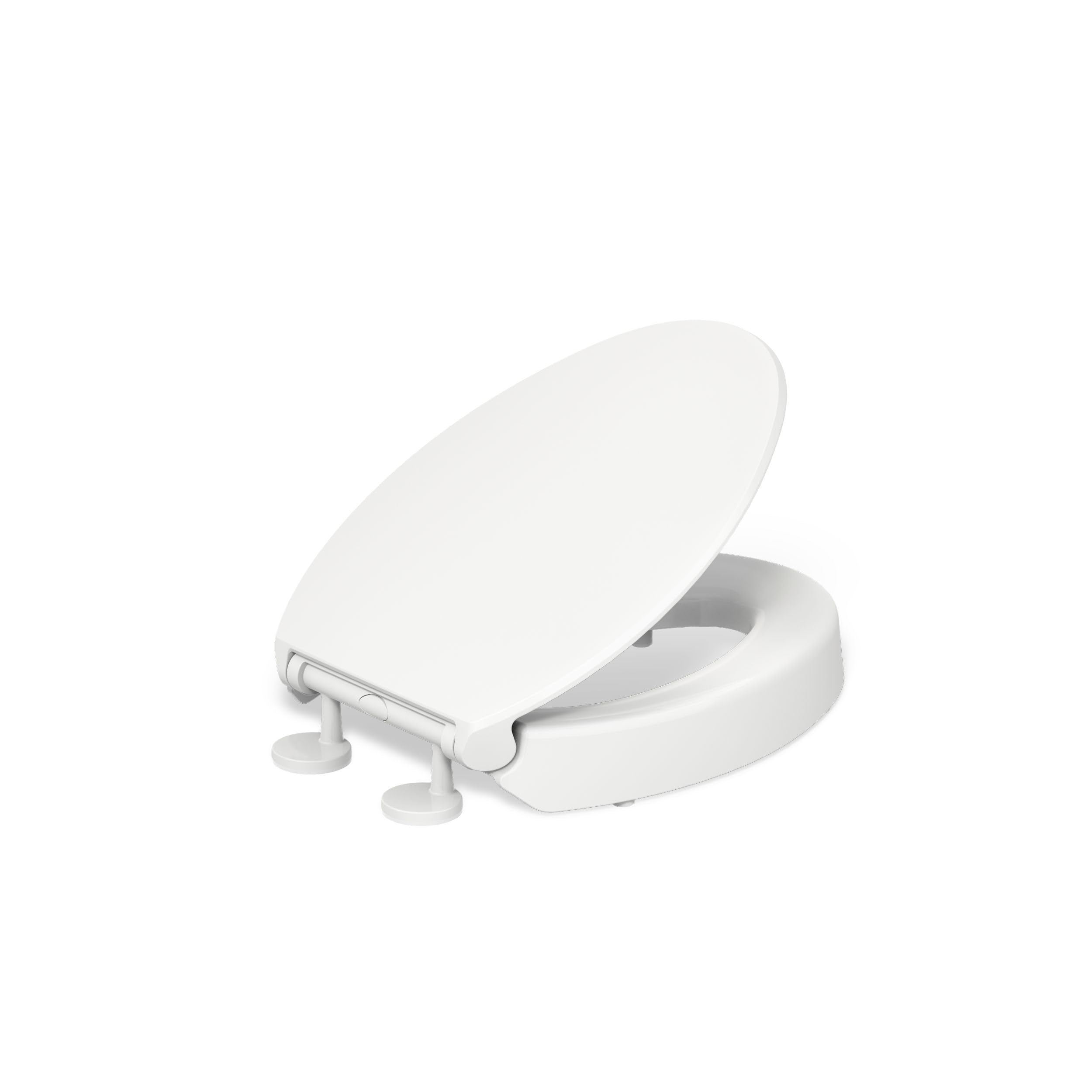
KOHLER Hyten Elevated Toilet Seat
- Adds about 2 inches of height without looking like medical equipment
- Soft-close lid feels like a standard bathroom fixture, not an add-on
- Lower profile fits smaller bathrooms better than bulkier clamp-on styles
- Less height gain than dedicated raised seats built for post-surgery recovery
- No armrests — pair with a wall grab bar if push-up support is also needed

Medline Toilet Safety Rail
- Two-armed support bolts directly to the existing toilet — no seat height change
- Saves floor space compared to a floor-standing frame
- Straightforward installation with included hardware
- Doesn't help if the core problem is seat height, not push-up support
- Armrests are fixed height — no adjustment range
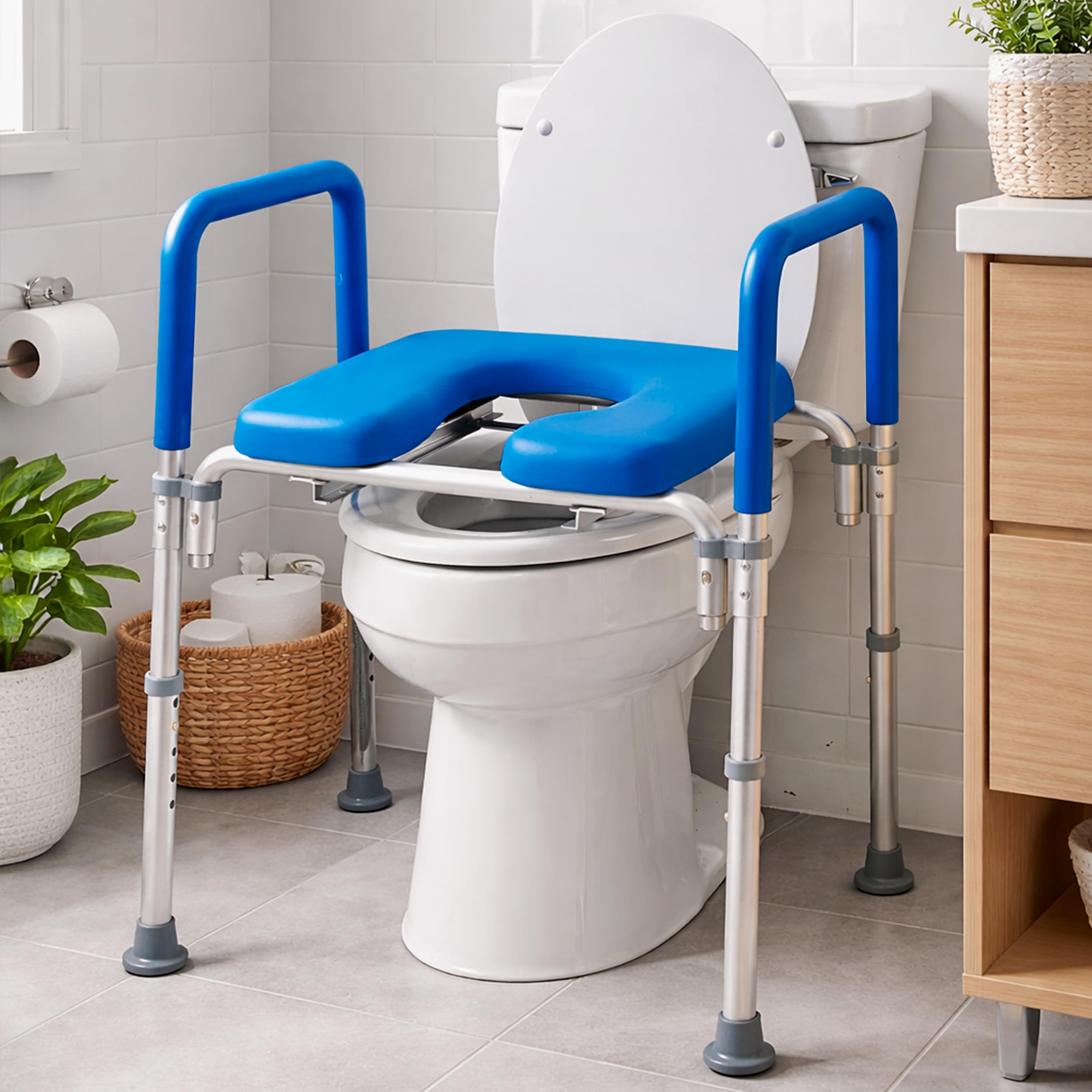
Platinum Health Ultimate 3-in-1 Commode & Raised Toilet Seat
- Doubles as a raised seat, safety frame, and standalone bedside commode
- Medical-grade aluminum frame rated for a high weight capacity without wobble
- One purchase covers both the height and the push-up support problem
- Higher price than a single-purpose seat or frame
- Larger footprint takes up more bathroom floor space
Raised Seat or Safety Frame — They're Not the Same Fix
These two product types get lumped together in searches, but they solve different mechanical problems. A raised toilet seat adds height so there's less distance to lower into and push up from — it helps someone whose main issue is weak knees or hips struggling with a standard-height bowl. A toilet safety frame (or safety rail) bolts around the existing toilet and gives arms something sturdy to push against, independent of seat height. Someone recovering from hip or knee surgery often needs the added height most; someone with general balance or upper-body weakness often gets more benefit from the frame's armrests. A few combination units do both, at a higher price and bulkier footprint.
Our Top Picks
Four options covering the raised-seat, safety-frame, and combination categories rather than four versions of the same fix.
Getting the Fit Right
- Measure the bowl first. Round and elongated bowls need different hardware — check the bowl shape before ordering, not after a return is needed.
- Weight capacity matters more than the marketing number. Buy comfortably above the actual user's weight, not right at the limit; clamps and hinges are the parts that fail first under load.
- Tool-free installation is worth paying for if the person setting it up is the senior's spouse rather than a contractor.
- Check under-bowl clearance for frames — some styles need floor space on both sides that a small bathroom doesn't have.
When a Grab Bar Is the Better Fix
Not every bathroom needs a seat or frame replacement. If the toilet itself is already a comfortable height and the real issue is getting up from a low position generally, a wall-mounted grab bar installed at the right height and angle can do the same job for less money and with no bulky hardware around the bowl. Our bathroom safety products guide covers grab bar placement and other fall-prevention basics for the room where falls happen most.
What to Look For, Beyond Height
Two seats can both add the same inches and still be very different products to live with. These are the details that decide whether a raised seat or frame feels secure and dignified or wobbly and awkward.
- A locking mechanism that truly holds. A seat that shifts or rocks when someone leans to one side is worse than no seat at all, because it invites a fall at the exact moment weight is unsupported. Clamp-and-lock designs that grip the bowl rim are generally steadier than seats that simply rest on top.
- Armrests, if push-up support is needed. Padded, sturdy arms give the hands and shoulders something to press against when the legs can't do all the lifting. If the seat has no arms and the person needs them, plan on a wall grab bar or a safety frame instead.
- A comfortable, warm-to-the-touch surface. Bare hard plastic can be cold and slippery. A contoured or lightly padded seat is easier to sit on for anyone who spends real time there, and less slick during transfers.
- Weight capacity with real margin. Choose a rating comfortably above the user's weight, not right at it. Hinges, clamps, and arm joints are the parts that loosen or crack first under repeated near-limit loads.
- Easy, tool-free cleaning. A seat that lifts off or has smooth, gap-free surfaces is far more hygienic and pleasant to maintain than one with crevices that trap moisture.
- Weight of the unit itself. If it needs to come off for other household members, a lighter seat is easier to lift and reseat; if it stays on permanently, a heavier, bolted frame can feel more solid.
How to Choose for the Specific Situation
Recovering from hip or knee surgery
Added height is usually the priority, and the surgeon may specify a minimum. Follow that number rather than guessing — hip precautions after replacement surgery often require the hips to stay above a certain angle, which a too-short seat won't achieve. A seat with arms also helps protect the repair by reducing how much the new joint has to do during sit-to-stand.
General balance or upper-body weakness
A safety frame or a seat with sturdy arms often helps more than height alone, because the real need is something stable to push up from and steady against. If the toilet is already a comfortable height, a frame or a well-placed grab bar may be all that's required.
Arthritis or weak hands
Look for wide, padded armrests that spread the load across the forearm rather than forcing a hard grip, and tool-free installation so a family member can set it up without a wrench. Avoid designs that require fine finger work to lock or adjust.
A small or shared bathroom
A low-profile raised seat or a bolt-on rail preserves floor space and looks less like medical equipment, which matters in a bathroom the whole household uses. A bulky floor-standing frame or 3-in-1 commode makes sense when the need is greater and space allows.
Using It Safely
- Check that it's locked before every use, especially in the first weeks — a quick press down on the front edge confirms it won't tip.
- Sit and stand slowly, using the arms or grab bar, not the towel bar or a nearby sink, which aren't built to bear weight.
- Re-tighten clamps periodically. Fasteners work loose over weeks of use; a monthly check keeps the seat solid.
- Keep the floor around it dry and clear. A raised seat helps with the toilet itself but does nothing about a wet floor or a scatter rug, which are their own fall risks.
Common Mistakes to Avoid
- Buying for the wrong problem. Height doesn't help someone who mainly needs something to push up from, and arms don't help someone whose only issue is the distance down. Diagnose the difficulty first.
- Ordering without measuring the bowl. Round and elongated bowls are not interchangeable; the wrong shape means a return and a delay.
- Choosing a weight rating with no margin. Buy above the user's weight, not at it.
- Ignoring clearance on a narrow toilet. Frames need floor space on both sides; measure before ordering if the toilet sits close to a wall or vanity.
- Assuming Medicare will cover it. Basic raised seats usually aren't covered unless prescribed as durable medical equipment for a specific diagnosis. Confirm before counting on reimbursement.
Frequently Asked Questions
Will a raised toilet seat fit any toilet?
Most clamp-style raised seats fit standard round or elongated bowls, but not both without an adapter — check the listing's bowl-shape compatibility before ordering. Wall-hung or unusually shaped toilets sometimes need a specific model, so measure first.
Is a raised seat covered by insurance or Medicare?
Basic raised toilet seats are typically not covered by Medicare unless prescribed as durable medical equipment tied to a specific diagnosis, and even then coverage varies by plan. Check with the specific insurer rather than assuming either way before buying.
How much height do I actually need?
Most raised seats add 2 to 6 inches. For someone recovering from hip replacement surgery, follow the surgeon's specific height recommendation rather than guessing — hip precautions often specify a minimum seat height during recovery.
Can I install a safety frame myself?
Most modern frames are tool-free or need only a screwdriver, and the better ones ship with clear instructions for a single person to install in under 20 minutes. If the toilet has an unusual base or is close to a wall on one side, measure clearance before ordering rather than assuming a standard frame will clear.
Do these work with a bidet attachment already installed?
Sometimes, but not always — a raised seat that clamps to the bowl can conflict with a bidet attachment using the same mounting bolts. Check for bidet-compatible listings specifically if that applies, rather than assuming a standard model will stack cleanly on top.
How do I know if I need arms or just height?
A simple test: if the person can rise from a standard chair but struggles with the lower toilet, added height may be enough. If they push on the chair's arms to stand from any seat, they'll likely want armrests or a safety frame, not height alone.
Are padded raised seats better than hard plastic?
Padding adds comfort for longer sits and a warmer surface, but it can be harder to keep clean and can wear or tear over time. For most users a smooth, firm seat with a secure lock is the priority; padding is a comfort preference on top of that, not a safety feature.
Can these be used with an existing toilet lid?
Many clamp-on raised seats replace the function of the lid while installed, and some require lifting or removing the original seat first. Check whether the model sits on top of or in place of the existing seat, and whether the lid still closes if that matters to you.
How often should the hardware be checked?
Give clamps and bolts a quick check about once a month, and any time the seat feels like it has developed even slight movement. Fasteners loosen gradually with normal use, and catching it early keeps the seat solid.
The Bottom Line
Match the product to the actual difficulty: added height for weak knees or post-surgery recovery, a safety frame for balance and push-up support, or a combination unit if both apply and the budget and bathroom space allow for it. Pair whichever one fits with the rest of the room's fall-prevention setup — our shower chair and bath safety guide covers the other half of the bathroom where falls are most common.
