Best Reachers & Grabber Tools for Seniors (2026 Reviews)
The best reacher grabber tools for seniors — lightweight, strong-grip pickup aids that make reaching high shelves and low floors easy without bending or straining.
As an Amazon Associate I earn from qualifying purchases. We independently review products; buying through our links never costs you extra.
Best Overall
RMS Featherweight Reacher Grabber
Quick picks
| Product | Best for | Amazon |
|---|---|---|
| RMS Featherweight Reacher Grabber | Overall | Check price on Amazon |
| Vive Suction Cup Reacher Grabber | Small Items | Check price on Amazon |
| Ettore Grip'n Grab Reacher | Rotating Head | Check price on Amazon |
| Unger Nifty Nabber Reacher | Outdoor Use | Check price on Amazon |
| DMI Rotating Reacher Grabber | Budget Multi-Pack Value | Check price on Amazon |

Our Top Picks
Chosen for seniors based on features, specs, and verified buyer reviews.

RMS Featherweight Reacher Grabber
- Well under a pound — easy to hold with weak or arthritic hands
- Magnetic tip picks up keys and coins
- Folds for travel and storage
- Jaw isn't ideal for very thin or slippery objects
- Standard length may not suit very high shelves
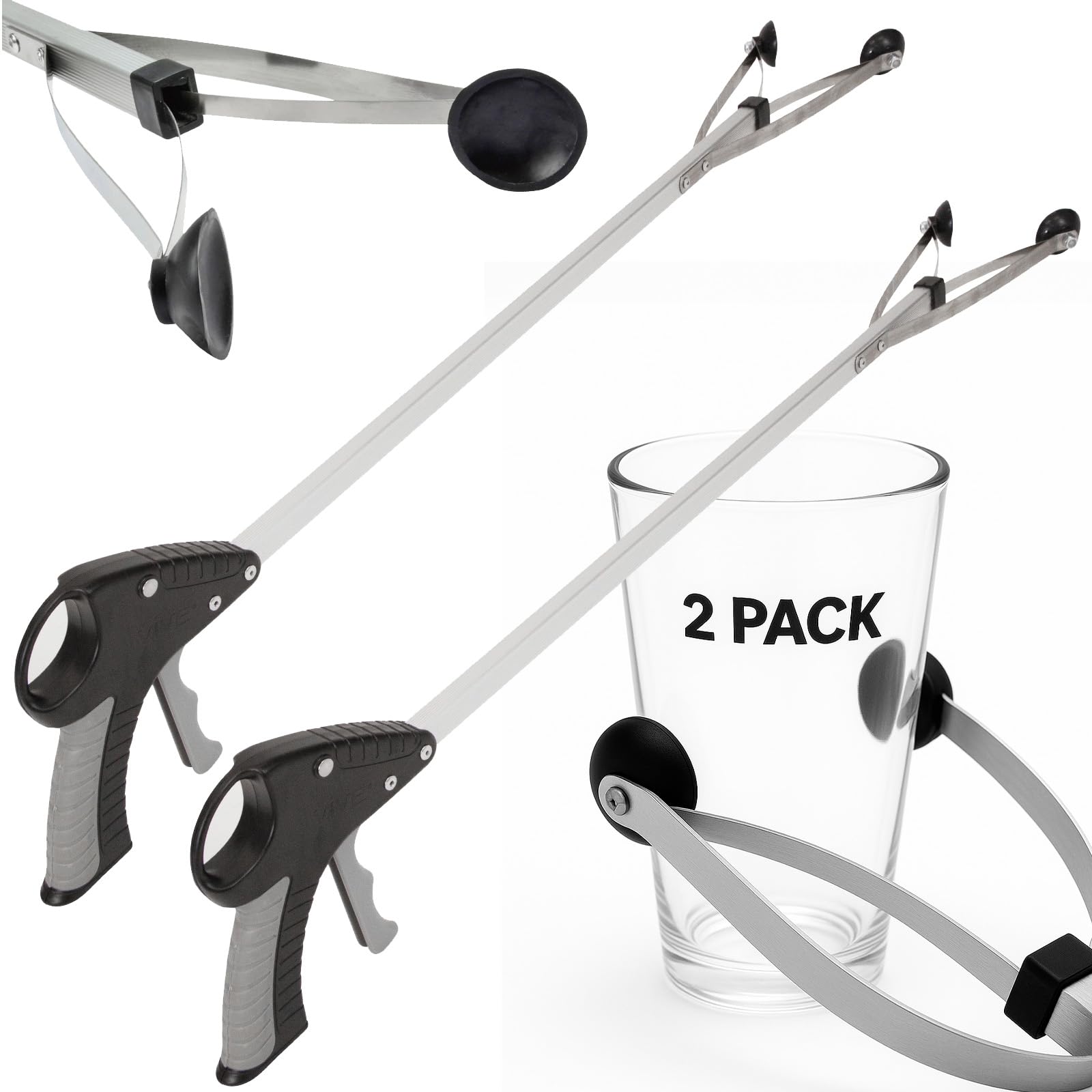
Vive Suction Cup Reacher Grabber
- Suction-cup jaws close completely around small or slippery items
- Smooth, low-force trigger
- Good for pill bottles, paper, and remote controls
- Suction jaws grip less firmly on large, heavy items than a rigid jaw
- Rubber cups can wear over time with heavy daily use

Ettore Grip'n Grab Reacher
- 360-degree rotating head reaches awkward angles
- Sturdy build handles heavier everyday items
- Good for tight spaces around furniture
- Slightly heavier than featherweight models
- Rotating mechanism is one more part that can loosen over years of use
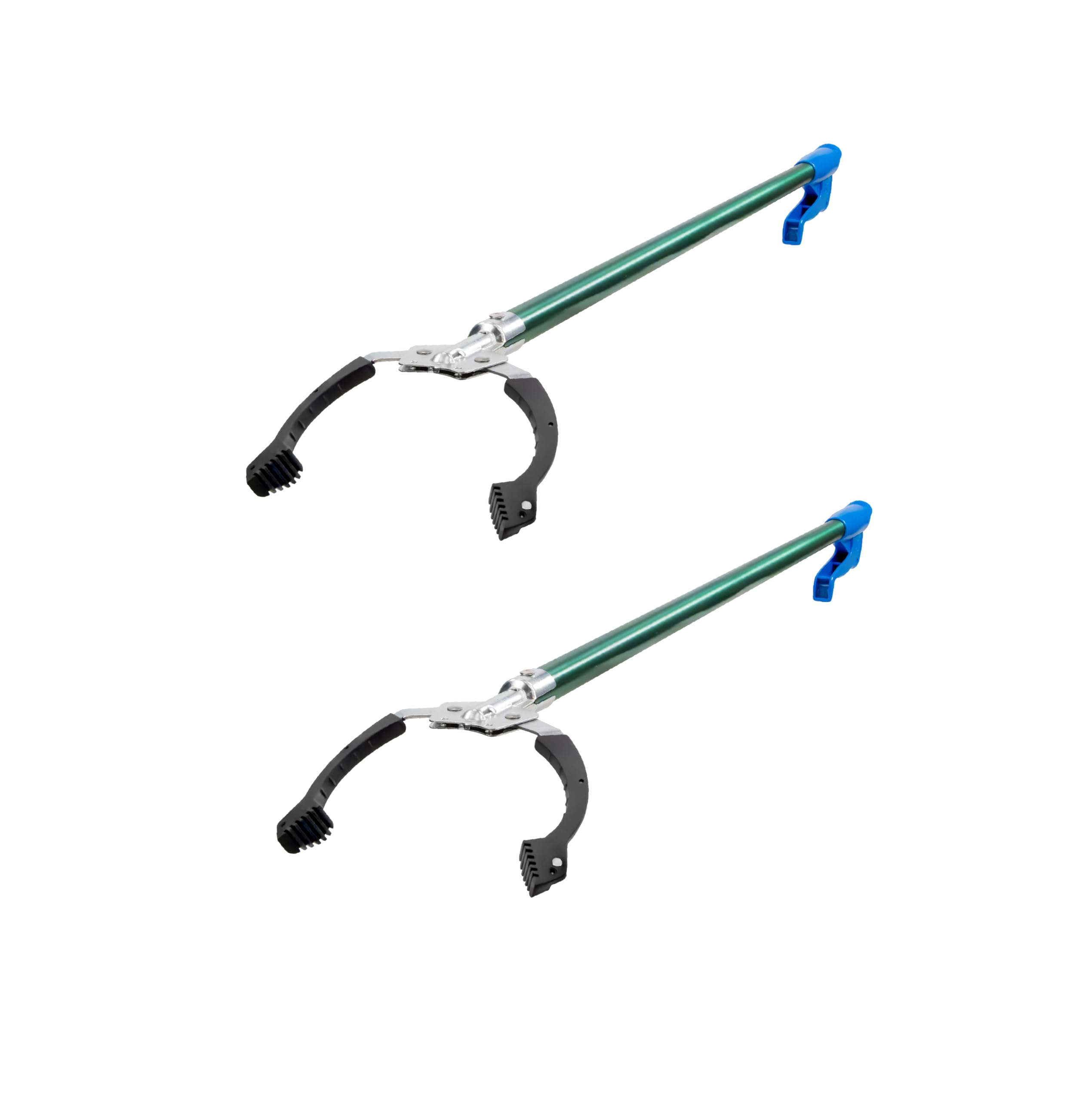
Unger Nifty Nabber Reacher
- Holds up well to yard debris and outdoor trash pickup
- Wide jaw opening handles bulkier items
- Durable build originally designed for professional use
- Less precise than narrower jaws on small indoor objects
- Bulkier to store indoors than compact models

DMI Rotating Reacher Grabber
- Often available in multi-packs — practical for keeping one per floor
- Rotating jaw covers the basics well
- Lower price point than premium picks
- Fewer refinements than the pricier picks above
- Trigger action feels less smooth than the RMS or Vive
The Short Answer
Our top pick is the RMS Featherweight Reacher Grabber — light enough for weak or arthritic hands, with a jaw strong enough for cans, bottles, and books. For small or slippery items like pill bottles and remote controls, the Vive Suction Cup Reacher closes completely rather than pinching, which makes a real difference on smooth or thin objects a standard jaw tends to drop.
Why This Is a Bigger Deal Than It Looks
A reacher grabber restores a surprising amount of daily independence — picking up a dropped pill bottle, grabbing a can from a high shelf, or retrieving laundry from the dryer without bending or stretching. Bending and reaching are two of the most common ways a fall happens at home, especially reaching into a low cabinet or up onto a step stool for something that could have stayed on the floor and been picked up safely instead. A five-dollar habit change — keeping a reacher by the favorite chair or in the kitchen — prevents a category of fall that has nothing to do with balance training or footwear.
Our Top Picks
RMS Featherweight Reacher Grabber — Best Overall
At well under a pound, the RMS reacher is easy to hold and maneuver even with limited hand strength, yet its jaw grips firmly enough for cans, bottles, and books. A magnetic tip picks up keys and coins, and it folds for travel. It's the one we'd recommend for most people as a first reacher.
Check price on AmazonRMS Featherweight Reacher Grabber
Vive Suction Cup Reacher — Best Grip for Small Items
The Vive's rubber suction-cup jaws close completely, making it excellent for small, thin, or slippery objects like pill bottles, paper, and remote controls that a standard pincer jaw can knock over or fail to grip. The trigger is smooth and requires little force, which matters as much as the jaw design for anyone with arthritis.
Check price on AmazonVive Suction Cup Reacher Grabber
Ettore Grip'n Grab — Best Rotating Head
The Ettore's head rotates 360 degrees so items can be grabbed at any angle — useful for reaching around furniture or into tight spaces where a fixed-angle jaw can't line up properly. It's sturdy and well-built for heavier everyday items, though the rotating mechanism adds a small amount of weight over the featherweight picks.
Check price on AmazonEttore Grip'n Grab Reacher
Unger Nifty Nabber Reacher — Best for Outdoor Use
Originally built for professional cleaning and yard work, the Nifty Nabber holds up to outdoor debris, weeds, and trash pickup better than the lighter indoor-focused picks above. Its jaw has a wider opening, which trades some precision on very small objects for the ability to grab bulkier yard waste or larger household items in one motion.
Check price on AmazonUnger Nifty Nabber Reacher
DMI Rotating Reacher Grabber — Best Budget Multi-Pack Value
DMI's version is often sold at a lower price point and sometimes in multi-packs, which is genuinely useful for keeping one reacher on each floor of a home or one upstairs and one down rather than carrying a single unit around. It covers the basics — a rotating jaw and a comfortable grip — without the refinements of the pricier picks, which is a fair tradeoff for a second or third unit rather than a primary one.
Check price on AmazonDMI Rotating Reacher Grabber
What to Look For
- Weight: Lighter is better for weak or arthritic hands — look for models under one pound; a reacher that's tiring to hold defeats its own purpose.
- Trigger force: An easy-squeeze trigger matters as much as jaw strength if hand strength is limited — test this in person if possible.
- Jaw design: Rubberized or suction-cup jaws grip small and slippery items best; a magnetic tip helps with keys and coins specifically.
- Length: Most run 26–32 inches; longer reaches farther but is harder to control precisely, especially one-handed.
- Locking and folding: A trigger lock holds heavy items without continuous squeezing; a folding design helps with storage and travel.
What to Look For, with Senior Needs in Mind
The specs above tell you what a reacher can lift; these details decide whether an older user actually finds it easy and pleasant to use every day:
- Trigger type (arthritis and grip): A full-hand trigger you squeeze with the whole palm demands far less finger strength than a single-finger lever. For hands with arthritis or weakness, this is the single most important feature — more important than jaw strength.
- Weight in the hand (fatigue): A reacher held out at arm's length feels heavier than its listed weight. Under a pound keeps the wrist and shoulder from tiring on repeated use.
- Grip comfort: A soft, contoured handle spreads the pressure across the palm instead of digging into it. Hard, thin handles get uncomfortable quickly for anyone using the tool often.
- A trigger lock (dexterity): A lock that holds the jaw closed means the user doesn't have to keep squeezing to carry a heavier item across the room — a real relief for weak or painful hands.
- A magnetic tip: Small metal objects — keys, coins, hairpins, a dropped fork — are exactly the things that are hardest to pinch off a hard floor. A magnet grabs them without needing a precise squeeze.
- Somewhere to hang it (habit): A wrist strap or a hook hole means the reacher can live on the arm of the chair or a cabinet knob, right where it's needed. A reacher that's always within arm's reach is the one that actually prevents the risky bend.
How to Choose the Right One for Your Situation
- Weak or arthritic hands: Prioritize the lightest body and the easiest full-hand trigger. The RMS-style featherweight picks are built around exactly this.
- Mostly small, slippery items — pills, remotes, paper: A suction-cup jaw that closes completely grips what a standard pincer drops.
- Reaching around furniture or into cabinets: A rotating head lets the jaw line up with items at awkward angles a fixed jaw can't reach.
- Yard work, trash, and outdoor debris: A rugged, wider-jaw model handles bulk and rough use the delicate indoor picks aren't meant for.
- A multi-floor home: Buy more than one. A reacher on each floor — and one by the bed — beats carrying a single unit up and down stairs, which is itself a fall risk.
Common Mistakes to Avoid
- Choosing on jaw strength alone. A powerful jaw with a stiff, finger-only trigger is useless to a hand that can't work the trigger. Match the trigger to the user's grip first.
- Buying too long. An extra-long reacher seems more capable but is harder to aim and control, especially one-handed. For most tasks, a mid-length 26–32-inch model is easier to live with.
- Owning just one for a whole house. A single reacher is never where you need it. Keeping one per floor is cheap insurance against the bend-and-fall it's meant to prevent.
- Trusting it beyond its limits. A reacher is for light, everyday items, not heavy cookware or full water jugs. Overloading the jaw drops the item and can damage the tool.
- Storing it out of reach. A reacher in a closet prevents nothing. Its whole value is being within arm's reach of where dropped things happen.
Getting Started and Everyday Use
- Place a reacher where drops actually happen: beside the favorite chair, in the kitchen, and by the bed. Convenience is what turns it into a habit.
- Practice the grip on a few easy objects first — a tissue box, a water bottle — to learn how much squeeze each item needs before relying on it for something fragile.
- Grab items near their center of gravity so they don't tip out of the jaw, and lift smoothly rather than snatching.
- Use the magnetic tip for keys, coins, and small metal objects rather than fighting to pinch them off a hard floor.
- If the model has a trigger lock, use it for carrying heavier items so the hand isn't squeezing the whole way across the room.
Where a Reacher Isn't the Right Tool
A reacher grabber is for picking things up off the floor or from a shelf — it isn't a substitute for a step stool used safely, and it doesn't help with balance while standing. If the underlying issue is reaching high shelves regularly rather than occasional dropped items, rearranging frequently used items to waist height solves the root problem better than any reacher. And if unsteadiness while standing and reaching is the real concern rather than the reach itself, that's a mobility and balance question — worth a conversation with a doctor or physical therapist rather than a tool purchase.
A reacher reduces how much grip strength a task requires right now; rebuilding that strength over time is a separate project — our hand exercisers and grip strengtheners guide covers the spring-loaded exercisers occupational therapists use for it.
Frequently Asked Questions
What is the best reacher grabber for seniors?
For most seniors, a lightweight model with an easy trigger and a strong, rubberized jaw — like the RMS Featherweight — offers the best mix of control and grip. If small items are the main challenge, a suction-cup model like the Vive is a better fit.
How long should a reacher grabber be?
A 26- to 32-inch reacher suits most people and homes. Shorter models (around 19 inches) are easier to control for close tasks; longer ones (36 inches) reach higher shelves but are harder to steady one-handed.
Are reacher grabbers good for arthritis?
Yes — a reacher with a light body and a low-force, ergonomic trigger reduces strain on the hands and shoulders, which makes it especially helpful for arthritis. Avoid heavy, stiff-trigger models, which can make grip pain worse rather than better.
Can a reacher replace a step stool?
Not entirely — a reacher extends reach by two to three feet at most, which doesn't cover a genuinely high shelf. For anything beyond that, a stable step stool with a handrail used carefully is still the right tool, not a longer reacher.
Can you use a reacher to help with getting dressed?
Yes — a reacher is genuinely useful for dressing, especially for anyone who can't bend easily after hip or back surgery. It helps pull up pants, position socks, and retrieve clothing that's out of reach. Some people pair it with dedicated dressing aids like a sock aid and a long-handled shoehorn for the trickiest steps.
How much weight can a reacher grabber hold?
It varies by model, but reachers are designed for light, everyday objects — think a can of soup, a paperback, a TV remote, a piece of clothing. They're not meant for heavy cookware, full jugs of liquid, or anything you'd normally lift with two hands. Overloading the jaw makes it drop the item and can bend or wear the mechanism.
Are folding reachers as sturdy as one-piece models?
A good folding reacher is plenty sturdy for typical light tasks, and the ability to collapse it makes it easy to pack for travel or tuck into a bag. For heavy daily use, a solid one-piece model has no hinge to loosen over time, but for most people the convenience of folding outweighs that small difference.
The Bottom Line
The RMS Featherweight Reacher Grabber is our top pick for everyday use thanks to its light weight and dependable grip. Pair it with a Vive Suction Cup Reacher if small or slippery items come up often — together they cover nearly every reaching task around the home. Keep one within reach of the most-used chair; a reacher left in a closet doesn't prevent the bend-and-fall it's meant to avoid. A reacher solves general pick-up-and-fetch tasks, but getting dressed itself — pulling on socks, buttoning a shirt, working a zipper without bending or twisting — needs a different, purpose-built tool; see our dressing aids guide for the sock aids, button hooks, and dressing sticks that cover that specific gap.