Best Hand Exercisers & Grip Strengtheners for Seniors with Arthritis 2026
Prohands Gripmaster and CanDo GripMaster compared for seniors rebuilding grip strength after arthritis, stroke, or surgery — plus when to skip hand exercises and see a doctor instead.
As an Amazon Associate I earn from qualifying purchases. We independently review products; buying through our links never costs you extra.
Best for Starting Out or Post-Injury
Prohands Gripmaster Rehab Hand Exerciser
Quick picks
| Product | Best for | Amazon |
|---|---|---|
| Prohands Gripmaster Rehab Hand Exerciser | Starting Out or Post-Injury | Check price on Amazon |
| Prohands Gripmaster Hand Exerciser (Set of 3) | Steady Progression | Check price on Amazon |
| CanDo GripMaster Hand Exerciser (Heavy Tension) | Maintaining Strength | Check price on Amazon |

Our Top Picks
Chosen for seniors based on features, specs, and verified buyer reviews.

Prohands Gripmaster Rehab Hand Exerciser
- Gentle 0.75 lb starting tension per finger
- Added palm cushion for comfort
- Isolates and trains each finger independently
- Very light resistance — will need a stronger model eventually
- Not a substitute for a therapist-directed program after surgery
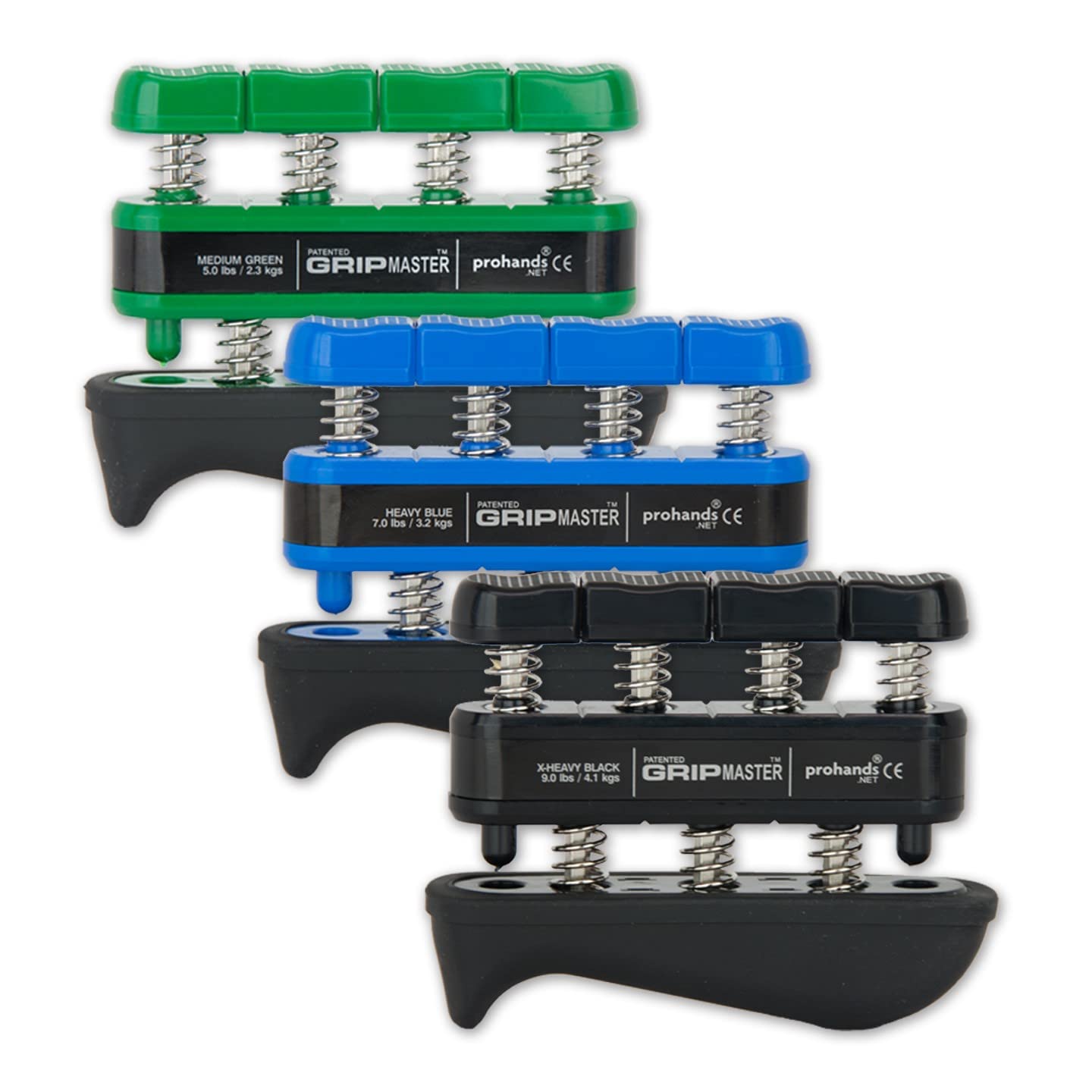
Prohands Gripmaster Hand Exerciser (Set of 3)
- Graduated tension from about 1-9 lb per finger
- Spring-loaded, finger-piston design used in hand therapy
- Set covers months of progression
- Higher starting tension than the Rehab model
- Springs can feel stiff for very weak hands initially

CanDo GripMaster Hand Exerciser (Heavy Tension)
- Higher resistance ceiling for continued progress
- Same isolated-finger design
- Good for maintenance, not just rehab
- Too difficult as a starting point for most beginners
- Single tension level, not a full graduated set
Grip strength is one of the clearest predictors of independence in later life — it's what lets someone open a jar, carry groceries, or catch themselves on a railing. Arthritis erodes it gradually, but targeted hand exercises, the kind occupational therapists actually prescribe, can slow or partly reverse the decline. Here's what's worth buying, and when to put the equipment down instead.
Why Isolated Finger Exercise Beats a Generic Stress Ball
A squeeze ball works every finger at once, which feels productive but doesn't build the individual finger strength needed for fine tasks like buttoning a shirt or turning a key. Devices built around a spring-loaded, finger-piston design — where each finger presses its own independent spring — let each digit be trained and measured separately. That's the design occupational therapists reach for in hand rehab clinics, not a coincidence: it's built around how grip actually breaks down after arthritis or stroke, one finger and one joint at a time.
Our Top Picks
1. Prohands Gripmaster Rehab — Best for Starting Out or Post-Injury
The Rehab version of the Gripmaster adds a palm cushion for comfort and starts at a genuinely gentle 0.75 lb of resistance per finger — light enough for someone just beginning hand therapy after a flare-up, surgery, or stroke, without straining an already-inflamed joint. Tension can be increased as strength returns by moving up the Gripmaster's graduated lineup rather than needing an entirely new device.
Check price on AmazonProhands Gripmaster Rehab Hand Exerciser
2. Prohands Gripmaster (Set of 3) — Best for Steady Progression
The standard three-piece Gripmaster set spans a wider resistance range — the full lineup runs from about 1 lb up to 9 lb per finger — so a household with more than one user, or a single user progressing over months, has room to grow without buying new equipment each time. Each finger works its own spring independently, so a weaker ring finger (common after arthritis) can be identified and targeted rather than compensated for by stronger fingers.
Check price on AmazonProhands Gripmaster Hand Exerciser (Set of 3)
3. CanDo GripMaster (Heavy Tension) — Best for Maintaining Strength Once Recovered
Once grip strength has been rebuilt to a comfortable baseline, the CanDo GripMaster's heavier tension option gives room to keep building rather than plateauing — useful for someone who wants to maintain hand strength for gardening, needlework, or grandchild-carrying rather than for acute rehab.
Check price on AmazonCanDo GripMaster Hand Exerciser (Heavy Tension)
When to Put the Grip Trainer Down
- During an active arthritis flare. Visible swelling, heat, or sharp pain in a joint is the body saying "not today" — exercising through it can worsen inflammation. Wait for the flare to settle, or check with a doctor or occupational therapist first.
- After hand surgery, without a therapist's plan. Post-surgical rehab has a specific sequence and timeline; self-directed grip training too early or with the wrong tension can undo the repair. Follow the surgeon's or hand therapist's protocol, which may specify exactly which device and tension to use and when.
- If numbness or tingling is present, which can indicate nerve involvement (like carpal tunnel) rather than simple joint stiffness — that calls for a diagnosis before an exercise plan, not generic grip equipment.
Hand strength is only one piece of staying steady and capable day to day — pair it with the balance and mobility work covered in our balance trainers guide, and see our reachers and grabbers roundup for tools that reduce the grip strength needed for everyday tasks in the meantime. For strength work beyond the hands — shoulders, arms, and legs — our resistance bands guide covers the equipment that rounds out a grip-strength routine with the rest of the body.
What to Look For in a Hand Exerciser
Once you've decided a spring-loaded, finger-piston design is the right tool, a few features decide whether it helps a stiff, arthritic hand or just sits in a drawer.
- A genuinely gentle starting tension. For an inflamed or recovering hand, resistance that starts around three-quarters of a pound per finger lets someone begin without straining a sore joint. A device that only comes in firm tensions is discouraging and can aggravate arthritis.
- Independent springs for each finger. This is the whole point — it lets a weaker finger (a ring finger after arthritis is common) be trained and measured on its own rather than carried by the stronger ones.
- Room to progress without buying new gear. A graduated lineup, or a set that spans light to firmer tensions, means strength can build over months without repurchasing.
- A comfortable contact surface. A palm cushion or padded piston tops matter for tender joints and thin skin; hard plastic edges can dig in and cut a session short.
- A size that fits the hand. A device built for a large hand can overstretch a smaller one and put the fingers at an awkward angle. Comfortable, natural finger placement keeps the exercise safe.
- Easy to clean and light to hold. Something that can be wiped down and doesn't tire the wrist just to hold is more likely to be used daily.
Choosing the Right Tension for the Situation
Just starting, or recovering from a flare or surgery
Begin with the lightest available tension and short sessions, and only increase when the current level feels genuinely easy and pain-free. After surgery, don't start at all without a hand therapist's or surgeon's go-ahead and their specific plan.
Rebuilding after the acute phase
A graduated set gives room to step up gradually as strength returns, and lets a weaker finger be targeted directly. Progress is measured in weeks and months, not days.
Maintaining strength once recovered
A firmer tension keeps the hand challenged for tasks like gardening, needlework, or carrying grandchildren, rather than plateauing at a rehab-level resistance.
Wanting to work the opening motion too
Spring-loaded grippers train the squeeze but not extension — opening the hand. A silicone finger-stretcher or resistance band used alongside works the opposite motion, and many therapists suggest doing both rather than picking one.
How to Use a Grip Trainer Correctly
- Warm the hands first. A minute in warm water or gently opening and closing the hands loosens stiff joints and makes the exercise safer and more comfortable.
- Move slowly and with control in both directions — press down deliberately and release slowly rather than letting the spring snap the finger back.
- Keep it short and frequent. A few minutes per hand most days beats one long, tiring session; consistency matters more than intensity for joint conditions.
- Stop at pain, not just fatigue. A mild working effort is fine; sharp or joint pain is a signal to stop and, if it persists, to check with a professional.
- Balance grip work with extension and stretching so the hand doesn't become strong at closing but tight at opening.
Common Mistakes to Avoid
- Starting too heavy. Firmer resistance is not faster progress; it's a faster route to an aggravated joint. Begin light and build.
- Training through a flare. Visible swelling, heat, or sharp pain means rest that joint, not push it.
- Skipping the therapist's plan after surgery. Post-surgical hands follow a specific sequence; self-directed training at the wrong time can undo a repair.
- Only squeezing, never stretching. Work extension too, or the hand tightens in one direction.
- Ignoring numbness or tingling. That can point to nerve involvement rather than simple stiffness and calls for a diagnosis before an exercise plan.
Safety Considerations
Hand exercisers are simple tools, but grip work sits on top of whatever is going on inside the joint, so a little caution goes a long way. If arthritis is inflamed, if there's been recent hand surgery, or if numbness, tingling, or a sudden one-sided weakness is present, the right first step is a doctor or occupational therapist, not more repetitions. Used sensibly — light to start, short and consistent, stopped at pain — a grip trainer is a low-risk way to support the hand strength that so much of daily independence quietly depends on.
Frequently Asked Questions
How often should hand exercises be done for arthritis?
Most occupational therapy guidance suggests short daily sessions — a few minutes per hand — rather than infrequent longer sessions, since consistency matters more than intensity for joint conditions. Always follow a doctor's or therapist's specific frequency recommendation if one has been given.
What resistance level should a beginner start at?
For someone recovering from a flare, surgery, or simply starting after a long period of inactivity, the lightest available tension (around 0.75-1 lb per finger, like the Gripmaster Rehab's starting level) is the safer entry point, with increases only as comfort allows.
Can grip strengtheners help with a jar-opening problem specifically?
They can improve the underlying strength over weeks to months, but they won't help immediately with a jar in hand right now — for that, a dedicated jar-opening tool is the more direct fix; our kitchen daily living aids guide covers several options.
Are silicone ring and finger-stretcher sets as effective as spring-loaded models?
They target different things — silicone rings and finger stretchers typically work extension (opening the hand) as well as grip, which spring-loaded piston devices don't, so some therapists recommend using both types together rather than choosing one exclusively.
Is it normal for grip to feel weaker on one side?
Some asymmetry is common, especially in a dominant hand that's been favored for decades, but a sudden or worsening one-sided weakness should be mentioned to a doctor, since it can occasionally signal something beyond ordinary arthritis.
Can hand exercisers make arthritis worse?
Used correctly they generally support the hand, but used at too high a tension or through an active flare they can aggravate an inflamed joint. Start light, keep sessions short, stop at sharp or joint pain, and rest any joint that's visibly swollen or hot. When in doubt, check with a doctor or occupational therapist.
How long until grip strength improves?
Strength changes are gradual — typically weeks to months of consistent, short daily sessions rather than days. Progress is easiest to notice through everyday tasks, like a jar lid or a key, feeling a little more manageable over time. Follow any specific timeline a therapist has given.
Are grip trainers safe after a stroke?
They're sometimes used in stroke rehabilitation, but only as part of a therapist-directed program, because grip and tone after a stroke need professional assessment first. Don't start self-directed grip training after a stroke without guidance from the rehab team.
Should exercises be done on both hands even if only one is weak?
Often yes — working both hands keeps the stronger side maintained and gives a useful comparison for tracking the weaker one. That said, a sudden or worsening one-sided weakness should be evaluated by a doctor rather than simply exercised.
The Bottom Line
For rebuilding grip after arthritis, a flare, or an injury, a spring-loaded exerciser that trains each finger independently is the tool occupational therapists reach for — start with a gentle tension like the Gripmaster Rehab, step up through a graduated set as strength returns, and move to a firmer model like the CanDo only for maintenance once you've recovered a comfortable baseline. Keep sessions short and daily, work the opening motion as well as the squeeze, and treat swelling, sharp pain, numbness, or recent surgery as a reason to check with a doctor or hand therapist before continuing. Used that way, a few dollars of equipment supports the everyday hand strength that so much independence depends on. Pairing exercise with heat beforehand can make the session more comfortable — a few minutes with one of the best heating pads for arthritis loosens a stiff joint before you ask it to work. The same reduced grip force that makes exercise easier also applies to everyday tasks like signing a card or filling out a form — see our guide to arthritis-friendly pens and writing aids for pens built around that same principle.

