Live Fine Automatic Pill Dispenser: A Caregiver’s Guide to Timed Meds
How Live Fine-style automatic pill dispensers fit real senior medication routines — refill rituals, alarm limits, who should skip them, and how to compare with other smart dispensers.
As an Amazon Associate I earn from qualifying purchases. We independently review products; buying through our links never costs you extra.
Timed tray for stable daily meds
Live Fine Automatic Pill Dispenser 28-Day
Our Top Picks
Chosen for seniors based on features, specs, and verified buyer reviews.

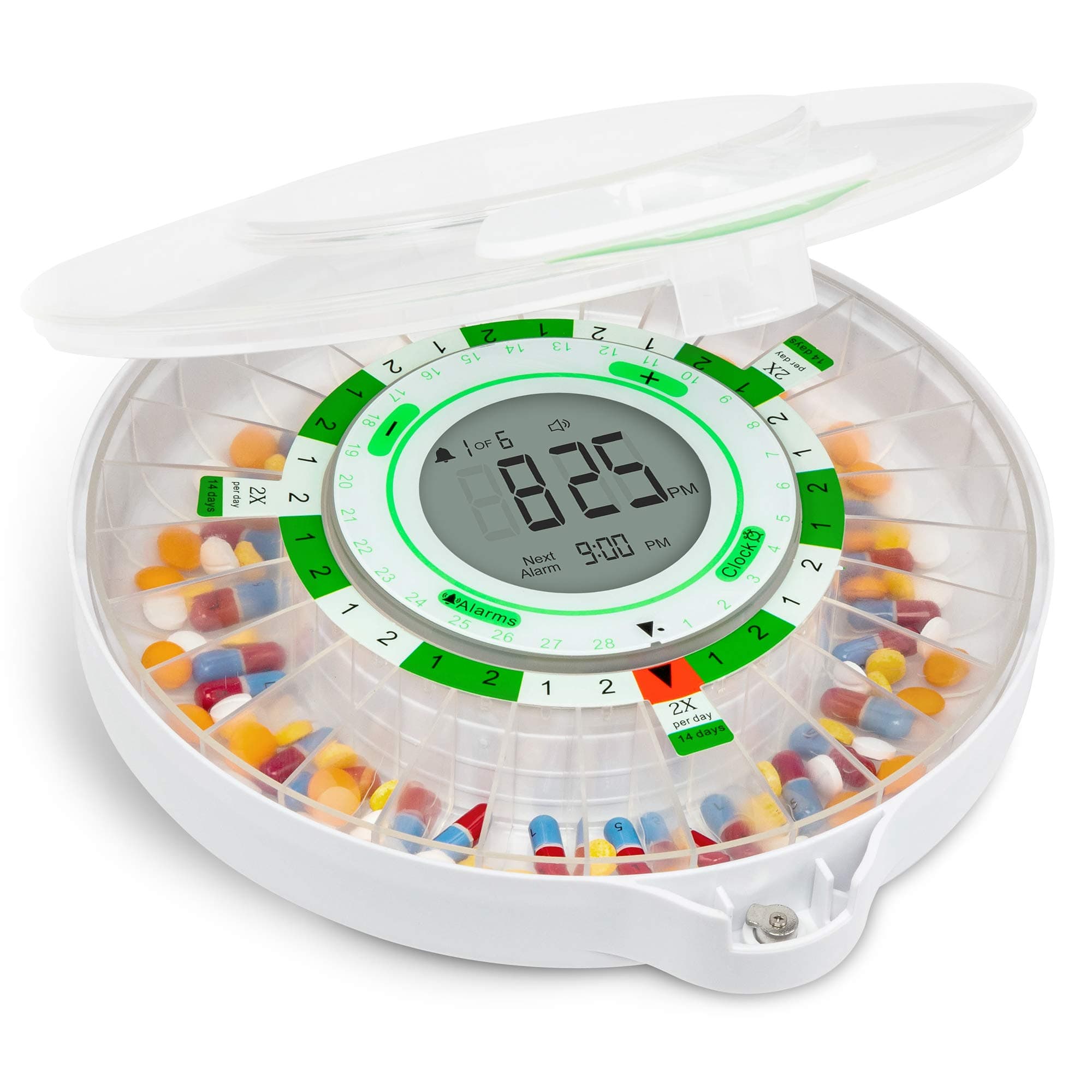
Live Fine Automatic Pill Dispenser 28-Day
- Presents doses on a schedule with alarms
- Helps reduce day-mixing mistakes versus open weekly boxes
- Fits caregivers who can own a weekly or monthly refill ritual
- Exact model features vary by listing — confirm capacity before buying
- Poor fit for rapidly changing prescriptions
- Still needs a human to fill correctly and update after med changes
Missed doses are rarely about “not caring.” They are about memory load, complicated schedules, arthritis that makes tiny caps difficult, and the quiet embarrassment of asking an adult child to check every night. Automatic pill dispensers try to turn that chaos into a locked, timed tray. This page focuses on the Live Fine automatic pill dispenser style of device — a 28-day style rotating organizer with alarms — as a concrete product example caregivers can evaluate.
For a multi-brand comparison, see smart pill dispensers compared and weekly pill organizers for seniors. Here we stay product-practical: who this category helps, how Live Fine-type units fit a real medication routine, and where they still need a human in the loop.
What an automatic dispenser changes
A classic weekly planner relies on the senior to open the correct day. An automatic dispenser aims to open (or present) only the current dose window, often with sound and light alarms. Some lock other compartments so someone cannot accidentally take Thursday’s pills on Tuesday.
That helps when:
- The schedule is the same most days.
- Someone trustworthy can fill the unit on a weekly or monthly cadence.
- The senior can hear or see the alarm, or a caregiver gets notified another way.
It does not help when medications change weekly without someone refilling, or when doses must be split in ways the tray cannot represent.
Live Fine in plain terms
Live Fine’s automatic dispensers are commonly sold as multi-day rotating trays with programmable alarms. Retail listings vary by exact model number and whether a given unit includes locking lids, multiple daily alarms, or backup battery behavior. Read the specific Amazon or manufacturer listing for the unit in your cart — capacity and alarm counts differ.
What caregivers usually care about:
- How many compartments and how many doses per day you can schedule.
- Whether unused compartments stay closed to reduce double-dosing risk.
- Alarm loudness and duration for hard-of-hearing users.
- How hard it is to refill for a caregiver with limited time on Sundays.
- Power — wall power vs batteries, and what happens during an outage.
A realistic refill ritual
- Pick one refill day (many families use Sunday evening).
- Lay out the pill bottles and a printed med list from the pharmacy.
- Fill only what the clinician schedule actually says — do not “improve” doses.
- Program alarms to match the real clock times the senior already uses.
- Run a same-day test alarm so everyone hears it once while calm.
- Put the pharmacy list under the dispenser or on the fridge.
If a medication is “as needed,” keep it out of the automatic tray unless your clinician agrees it belongs on a fixed schedule.
Who this product type fits
- Seniors on stable daily regimens who forget which day it is.
- Adult children who can visit or FaceTime through a refill every week or month.
- Households trying to reduce “Did you take it?” conflict.
Who should not rely on it alone
- People with rapidly changing prescriptions (chemo schedules, frequent titration).
- Anyone who needs caregiver confirmation for every dose (hospice protocols, high-risk meds).
- Seniors who will pry open trays or disable alarms out of frustration — fix the behavior plan first.
- Complex liquid medications or inhalers that do not fit compartments.
Safety notes families skip too often
- Automatic dispensers are organizers with timers, not clinicians.
- Keep the unit away from confused visitors or grandchildren who might treat it like a toy.
- If fall risk is high, place it where reaching does not require a stool.
- After any ER visit or medication change, rebuild the tray the same day — stale programming is dangerous.
How to evaluate Live Fine against other smart dispensers
When you compare Live Fine with units like locked Wi‑Fi dispensers or simpler day-of-week boxes, score each option on:
- Fill time for the caregiver.
- Alarm clarity for the senior.
- Locking behavior.
- What happens if power fails.
- Return policy if the senior rejects the noise or workflow.
Expensive connected dispensers can text caregivers. That is valuable for remote families and overkill for a senior who lives with a spouse who already watches the routine. Match the tech to the supervision you actually have.
Bottom line
A Live Fine-style automatic pill dispenser is a strong example of senior daily-living tech that earns its keep when the medication list is stable and a caregiver owns the refill ritual. It is a poor sole solution for chaotic prescriptions or for households that will not maintain the tray.
Start with the pharmacy med list, be honest about who will refill, then choose a dispenser that matches that reality. For brand-by-brand options, return to smart pill dispensers compared.
Mapping prescriptions into compartments without guessing
Before you buy any automatic dispenser, sit down with the current bottle labels or a pharmacy printout. Count morning, noon, evening, and bedtime doses. If the senior takes six items at 8 a.m. and two at night, you need a unit whose compartments can physically hold that morning pile. Crushing pills or splitting tablets to “make them fit” is a clinical decision, not a caregiver hack — ask the pharmacist first.
Color and shape still matter for humans checking a tray. If two white round pills look identical, ask the pharmacy whether one can be filled in a different imprint or whether blister packs are safer for those drugs.
Alarm strategy for hard-of-hearing seniors
A soft beep in a carpeted bedroom is not an alarm. During setup, stand where the senior sits and listen. If they miss it, move the unit closer, raise volume, or add a visual light cue if the model offers one. Pairing with a simple captioning or flashing alert is overkill for most homes; starting with placement and volume fixes more than buying a second gadget.
For couples, agree whether the spouse should also respond to the alarm. Sometimes a second person silencing the alarm without confirming the dose creates new mistakes.
Travel, hospital stays, and “I’ll just take them from the bottle”
Automatic dispensers hate disruption. Before a trip, decide whether you will pocket-dose with a small labeled case for travel days. After a hospital discharge, do not refill the Live Fine until you have the new list — old trays are how duplicate blood thinners happen. Build a household rule: any ER visit resets the dispenser the same day a caregiver is available.
When a simple weekly organizer is the smarter buy
If the senior still has solid day orientation, a transparent weekly box can be enough and is easier to audit visually. Automatic units earn their keep when day confusion or double-dosing risk is real. Buying the most “smart” option because it looks impressive on Amazon is how devices end up in closets.
Be especially cautious with Wi‑Fi dispensers that require accounts if the only caregiver is not comfortable maintaining apps. Live Fine-style local trays win on simplicity for many families even when they lack push notifications.
Talking with clinicians and pharmacists
Bring the dispenser plan to a pharmacist visit. Ask whether any meds are time-critical versus okay within a window. Ask which meds must stay in original bottles because of labeling laws or sensitivity to moisture. Some pharmacies will blister-pack monthly — that can replace or complement a home dispenser.
Measuring success after 30 days
Judge the purchase on missed-dose frequency, argument frequency, and whether refill day still happens. If refill day keeps slipping, the device is not the failure — the caregiving plan is. Either schedule a recurring calendar invite for the refill adult or switch back to a simpler system the household will maintain.
Arthritis, vision, and physical access
Watch the senior fill or open a sample compartment before you commit. Stiff hands may struggle with lids even when the “automatic” part works. Low vision may make printed day marks hard to see — add high-contrast labels if needed. If the unit sits on a high shelf to “keep it safe,” you have created a fall risk every time someone reaches for it. Waist height on a stable counter wins.
Combining Live Fine with blister packs or pharmacy sync
Some households use pharmacy multi-dose blister packs as the source of truth and only pour a week at a time into the automatic tray. That reduces fill errors. Others sync all refills to one day of the month so the dispenser refill matches pharmacy pickup. Either system beats improvising from half-empty bottles at midnight.
If the senior still keeps “backup” bottles in a drawer and dips into them when annoyed by the alarm, address that behavior directly. The dispenser cannot out-compete a secret stash.
What “success” looks like in week one
In the first week you want three quiet wins: the alarm is heard, the correct compartment opens or presents on time, and nobody double-doses from a bottle stash. If any of those fail, fix process before blaming the brand. Move the unit, raise volume, remove competing bottles from the counter, or simplify the schedule with the pharmacist.
Take a photo of a correctly filled tray after the first refill and keep it in the caregiver group chat. Visual reference reduces “I think this is right” errors on busy Sundays.
Affiliate disclosure: some links on Senior Tech Review may earn a commission at no extra cost to you. This page is editorial guidance; it is not a paid placement claim.