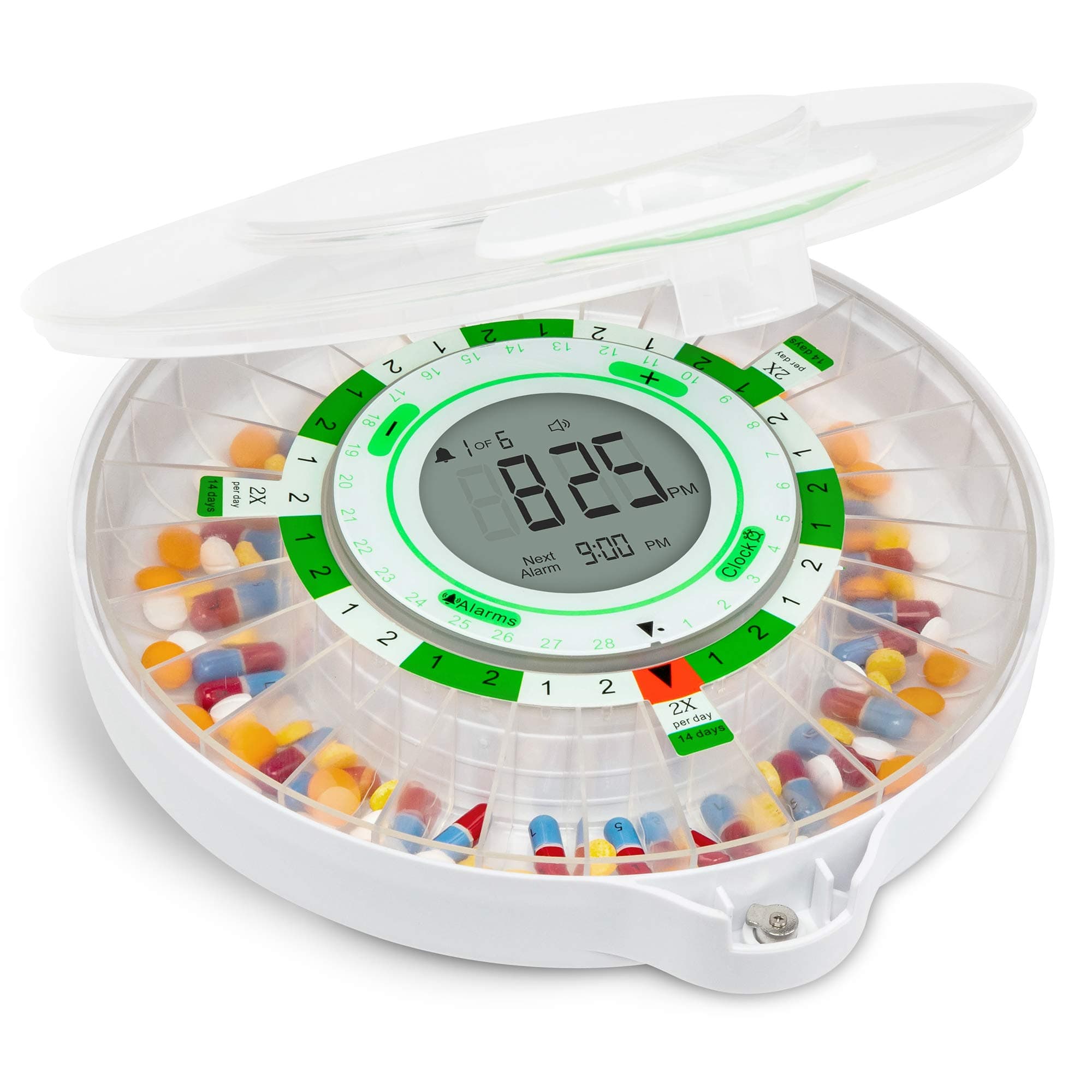
Best Weekly Pill Organizers for Seniors (2026): No App or Wi-Fi Required
Not every senior managing medications needs a smart dispenser. The best weekly pill organizers for 2026 — picked for big, arthritis-friendly lids and compartments that fit a real medication list — and how to tell if manual organizing is still enough.
As an Amazon Associate I earn from qualifying purchases. We independently review products; buying through our links never costs you extra.
Our top pick
Ezy Dose Weekly AM/PM Pill Organizer
Quick picks
| Product | Best for | Amazon |
|---|---|---|
| Ezy Dose Weekly AM/PM Pill Organizer | — | Check price on Amazon |
| MEDca Large Pill Organizer | — | Check price on Amazon |
| Vive Pill Organizer | — | Check price on Amazon |
| AUVON Pill Organizer 2-Times-a-Day | — | Check price on Amazon |

Our Top Picks
Chosen for seniors based on features, specs, and verified buyer reviews.

Ezy Dose Weekly AM/PM Pill Organizer
Check price on Amazon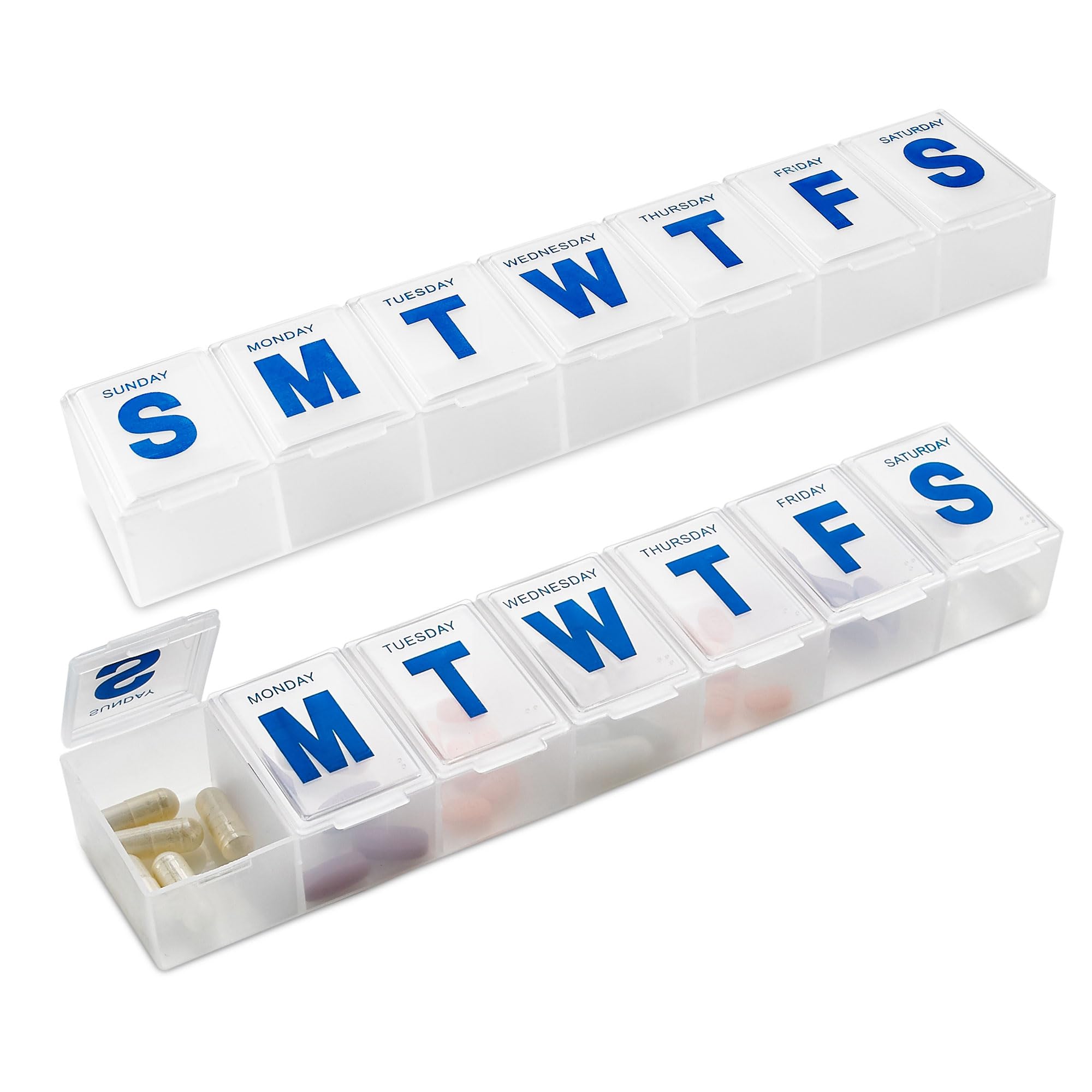
MEDca Large Pill Organizer
Check price on Amazon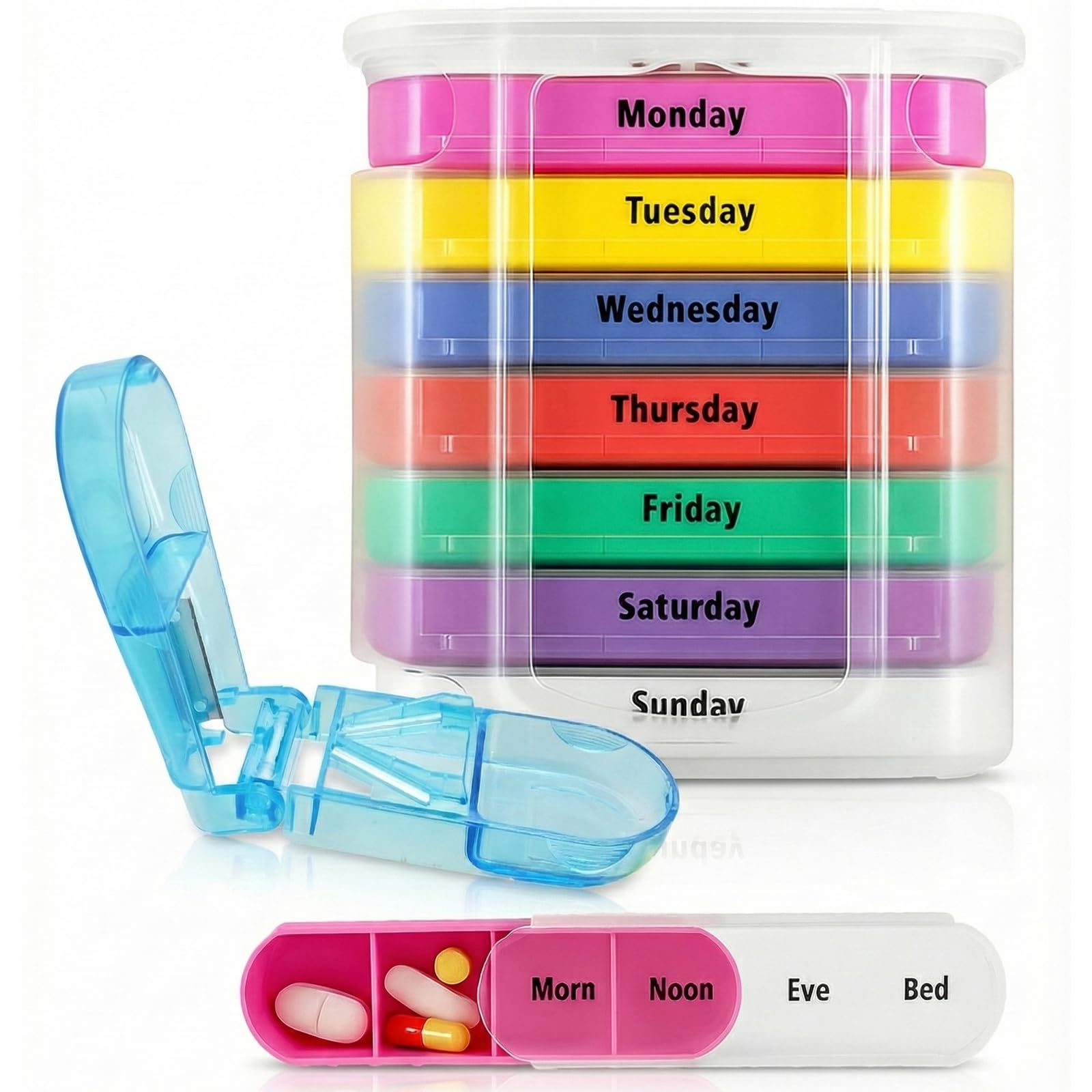
Vive Pill Organizer
Check price on Amazon
AUVON Pill Organizer 2-Times-a-Day
Check price on AmazonA smart dispenser gets recommended by default in a lot of medication-management articles, but most seniors don't need one. They need compartments big enough to see clearly, lids that don't require two working hands and steady fingers to open, and a layout a caregiver can glance at to confirm the week's doses went out. For that, our top pick is the Ezy Dose Weekly AM/PM Pill Organizer, with the MEDca Large Pill Organizer the better call for anyone managing a longer daily medication list.
Our top picks
Ezy Dose Weekly AM/PM Pill Organizer — Best Overall
Two compartments per day, morning and evening, cover the most common dosing schedule without over-complicating the box. The lids flip open on a raised tab rather than a flush edge, which matters more than it sounds like for anyone with early arthritis or reduced finger strength — a lot of cheaper organizers use flush lids that are genuinely hard to open one-handed. Each compartment is labeled in large, high-contrast text rather than small printed letters.
Check price on AmazonEzy Dose Weekly AM/PM Pill Organizer
MEDca Large Pill Organizer — Best for Longer Medication Lists
Four compartments per day instead of two, which is the difference-maker for anyone taking five or more medications spread across breakfast, lunch, dinner, and bedtime. The compartments are noticeably deeper than most weekly organizers, so it holds larger pills and capsules — and multiples of the same pill — without anything getting crushed when the lid closes. The trade-off is size: it's bulkier and less travel-friendly than a two-dose organizer.
Check price on AmazonMEDca Large Pill Organizer
Vive Pill Organizer — Best for Low Vision
Each day's compartment pops out individually from the weekly tray, so a caregiver can hand over just Tuesday's pills without the senior needing to identify the right day on a full case. The days are printed in bold raised lettering, and the compartments are a lighter color than the case itself, which creates enough contrast to help someone with reduced — but not fully low — vision.
Check price on AmazonVive Pill Organizer
AUVON Pill Organizer 2-Times-a-Day — Best Budget Pick
A straightforward AM/PM weekly case with wide compartments and snap-shut lids. It skips the raised tabs and high-contrast printing of the pricier options, so it's a better fit for a senior who's still dexterous and just wants an organized, low-cost way to sort a week of pills, rather than someone struggling to open lids at all.
Check price on AmazonAUVON Pill Organizer 2-Times-a-Day
Manual organizer or smart dispenser — how to actually decide
A weekly pill organizer only works if the person taking the medication reliably remembers to open the right compartment at the right time and can tell, at a glance, whether they already took today's dose. That's a real cognitive task, and it's exactly where manual organizers quietly fail: a senior with early memory issues can open Tuesday morning's compartment twice, or open Wednesday's by mistake, and nothing about the box itself catches the error.
If that's already happened even once, treat it as the signal to move up to a device that locks between doses and alerts a caregiver when something's missed — see our comparison of automatic pill dispensers for options. If it hasn't happened, and the senior just needs a growing medication list organized without guesswork, a manual organizer with clear labeling does the job at a fraction of the cost, with nothing to charge, sync, or troubleshoot.
What actually matters when choosing one
- Lid mechanism: Flush lids that require a fingernail to pry open are the single most common complaint from seniors with arthritis. Look for raised tabs or hinged flip-lids instead.
- Compartment depth: Anyone on five or more daily medications needs four-times-a-day compartments deep enough that pills don't get crushed when the lid shuts.
- Removable daily trays: Handing over just one day's pills, rather than the full weekly case, reduces the chance of a mix-up and is easier for a home health aide to manage.
- Print contrast: Day labels in dark ink on a light background are far easier to read at a glance than embossed or same-color lettering. If contrast alone isn't enough, our magnifiers for low vision guide covers handheld and lamp options for reading fine print on labels and bottles.
For other arthritis-friendly tools around the house, our guide to kitchen and daily living aids for seniors covers jar openers, adaptive utensils, and similar low-grip-strength gear.
How to fill and use a weekly organizer well
An organizer only helps if it's filled carefully and used the same way every week. A few habits make the difference between a system that quietly prevents errors and one that introduces them:
- Fill it at the same time each week, in a quiet, well-lit spot. Distraction is where filling mistakes happen. Line the bottles up, work through one day at a time, and double-check against the current prescription list before closing the lids.
- Keep the current medication list next to you while filling. Doses change, and refilling from memory is how an old dose keeps getting loaded after the doctor has adjusted it.
- Fill only one week at a time. Loading two or three weeks ahead may feel efficient, but it means a prescription change or a filling error goes unnoticed for longer.
- Have the same person fill it each week. Consistency catches running-low refills and changes that a rotating helper might miss.
- Store it somewhere tied to the routine — by the coffee maker for a morning dose, on the nightstand for a bedtime one — so taking the pill is anchored to something that already happens daily.
Common mistakes to avoid
- Choosing a case with lids that are too stiff. The single most common complaint is flush lids that need a fingernail to pry open. Raised tabs or hinged flip-lids are worth prioritizing for anyone with arthritis.
- Undersizing the compartments. A longer medication list needs deeper four-times-a-day compartments so pills aren't crushed when the lid closes.
- Mixing filling and taking into one blurry routine. Filling is a focused weekly task; taking is a daily one. Keeping them separate reduces errors in both.
- Relying on a manual case after a doubled or missed dose. A plain box can't catch that error. Once it happens, it's the signal to consider a locking dispenser rather than a bigger case.
- Assuming an alarm solves everything. An alarm helps with forgetting, but it doesn't confirm the right pills went into the right slot — that's still on whoever fills it.
A note on safety
A weekly organizer takes pills out of their original child-resistant bottles, so keep a filled case well out of reach of visiting grandchildren and pets — a colorful box of loose pills is exactly what a curious child reaches for. Keep the original bottles too, rather than discarding them: they carry the pharmacy label, expiration date, and dosing instructions you'll need for refills, doctor visits, and any question about what a given pill actually is. And if several medications look alike once they're out of the bottle, that's worth flagging to the pharmacist, who can sometimes adjust a shape or supply a written reference so a filling mix-up is easier to catch.
Frequently asked questions
How do I know if a manual organizer is no longer enough?
The clearest sign is a missed or doubled dose the senior didn't catch themselves — not because they forgot they were supposed to take medication, but because the box gave them no way to verify what they'd already done. At that point, an automatic dispenser with a locking mechanism and caregiver alerts is the safer choice, even though it costs more and takes longer to set up.
Should I get a two-compartment or four-compartment organizer?
Match it to the actual dosing schedule, not general preference. Two compartments per day works fine for medications taken once or twice daily. If any medication is taken with lunch or separately at bedtime, a four-compartment layout prevents doses meant for different times from getting mixed together.
Are pill organizers with alarms worth it over a plain case?
An alarm helps with forgetting, but it doesn't solve the harder problem of confirming the right pills went into the right slot in the first place — that's still on whoever fills the organizer each week. A separate phone or watch reminder often covers the alarm function without paying more for a built-in one.
How often should the organizer be refilled?
Weekly, done by the same person each time. That catches prescription changes and running-low refills before they become a problem. Refilling two or more weeks at once increases the odds that a dosing error goes unnoticed for longer.
What if the bigger issue is knowing what day it is, not just the medication?
For someone with dementia or general memory loss, a mistimed dose is often downstream of a bigger orientation problem — not knowing what day it is in the first place. Our guide to digital day clocks for dementia and memory loss covers a simple device that displays the day, date, and time-of-day, which pairs well with a weekly organizer for someone who needs both.
Are the pills still safe once they're out of the bottle in an organizer?
For most medications, yes, for the week they'll sit in the organizer. A few are sensitive to moisture, light, or air and are meant to stay in their original packaging — if you're unsure about a specific one, ask the pharmacist before transferring it. Keep the filled case out of humid spots like a bathroom, and keep it out of reach of children and pets since it no longer has a child-resistant cap.
What size compartments do I actually need?
Match the compartment count to the real dosing schedule, not a guess. Two-a-day (AM/PM) suits medications taken once or twice daily; four-a-day is worth it once anything is taken at lunch or separately at bedtime, so doses for different times don't get mixed together. Depth matters too if the list includes large pills, capsules, or multiples of the same tablet.
Can a senior with arthritis open these on their own?
It depends heavily on the lid. Flush lids that need a fingernail are the usual barrier; raised-tab or hinged flip-lids are far easier to manage with reduced grip strength. If opening is a real struggle, a case with individual pop-out daily trays lets a caregiver hand over just one day at a time.
Should I keep the original prescription bottles?
Yes. They carry the pharmacy label, dosing instructions, and expiration dates you'll need for refills and doctor visits, and they're the reliable reference for identifying a pill later. The organizer is for the daily routine; the bottles remain the record.
The bottom line
Most seniors don't need the cost or complexity of an automatic dispenser to stay on top of their medications — they need an organizer with lids they can actually open and compartments sized for their actual medication list. The Ezy Dose Weekly AM/PM Pill Organizer covers most people well; step up to the MEDca Large Pill Organizer for longer medication lists, and treat a missed or doubled dose as the signal to move to a smart dispenser instead of a bigger manual case.