Best Arthritis-Friendly Pens & Writing Aids for Seniors (2026): Signing, Note-Taking, Cards
A standard pen's thin barrel forces a tight pinch grip that's exactly what arthritic finger joints handle worst — a wider, weighted, or cushioned pen changes almost nothing about how you write and almost everything about whether it hurts to.
As an Amazon Associate I earn from qualifying purchases. We independently review products; buying through our links never costs you extra.
Best Overall
Pilot Dr. Grip Pen
Quick picks
| Product | Best for | Amazon |
|---|---|---|
| Pilot Dr. Grip Pen | Overall | Check price on Amazon |
| PenAgain ErgoSof | More Severe Grip Difficulty | Check price on Amazon |
| SenseAid Fat Heavy Weighted Pen | Tremor or Weak Grip | Check price on Amazon |
| Ableware Foam Pencil/Pen Grip | Low-Cost Add-On | Check price on Amazon |

Our Top Picks
Chosen for seniors based on features, specs, and verified buyer reviews.

Pilot Dr. Grip Pen
- Arthritis Foundation Ease-of-Use certified
- Cushioned, wider grip reduces pinch pressure
- Refillable, available in ballpoint and gel
- Still a fairly conventional barrel shape
- Not enough for very severe grip-closure difficulty
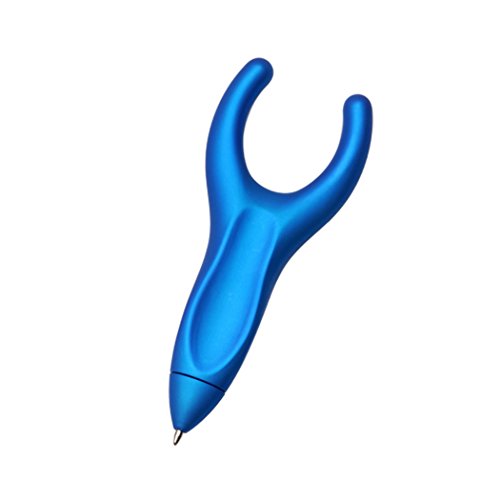
PenAgain ErgoSof
- Two-pronged design needs very little finger closure
- Marketed specifically for arthritis and carpal tunnel pain
- Very light pressure needed to write
- Unusual shape takes some getting used to
- Better for short writing tasks than long-form handwriting
SenseAid Fat Heavy Weighted Pen
- Extra-wide barrel and added weight aid stability
- Large non-slip grip surface
- Inexpensive enough to keep in multiple rooms
- Added weight can worsen wrist or shoulder fatigue
- Bulkier, won't fit a standard pen loop
Ableware Foam Pencil/Pen Grip
- Slips onto almost any existing pen or pencil
- Cheapest option, sold in multi-packs
- Lets you keep a favorite pen instead of replacing it
- Only addresses grip width and cushioning, not weight or ink flow
- Can slip on some smooth pen barrels over time
Most people don't think about pen design until gripping one starts to hurt. A standard ballpoint or gel pen is thin by default — usually around 8 to 10 millimeters across — because that's cheap to manufacture and fine for hands without joint pain. For someone with arthritis in the fingers, thumb, or wrist, that narrow barrel forces exactly the grip pattern that hurts most: a tight pinch between thumb and forefinger, held for as long as it takes to sign a card, fill out a form, or write a grocery list. Switching to a wider, weighted, or differently-shaped pen doesn't change how writing works. It changes how much pressure the hand has to apply to hold the thing steady, and for a lot of people with joint pain, that's the entire problem.
Why this matters more than it sounds like it should
Writing by hand hasn't disappeared the way some assume. Signing checks and cards, filling out medical forms at every doctor's visit, addressing envelopes, writing a grocery list on the counter, signing for a delivery — these are small tasks that add up to real daily friction when every one of them hurts. Some people quietly stop doing them: skipping the card, asking someone else to fill out the form, avoiding handwritten notes altogether. That's a bigger loss than it sounds like, both practically (a shaky, painful signature can actually cause problems with banks and official documents) and in the smaller sense of not being able to write a birthday card to a grandchild without it turning into a wince. A five- or fifteen-dollar pen swap solves more of this than most people expect before they try it.
What actually makes a pen easier on arthritic hands
Four things matter, roughly in order of impact. Barrel width is first — a fatter barrel means fingers can rest around it in a more open curve instead of pinching tightly to keep a thin one from rolling out of the hand. Grip material is second — a soft, slightly tacky cushioned grip needs less squeezing pressure to keep from slipping than a bare plastic or metal barrel. Weight is third, and it cuts both ways: some people with weak grip strength but not much tremor do better with a heavier pen that feels more stable and requires less active control; people with wrist or shoulder fatigue, or a tremor, often do worse with anything heavy, since extra weight over a longer writing session tires the muscles that are holding it up. Ink flow is fourth and easy to overlook — a pen that requires pressing hard to get ink out (some cheap ballpoints) forces exactly the grip force everything else here is trying to reduce, while a smooth gel or rollerball tip lays down ink with very light pressure.
Our top picks
Pilot Dr. Grip — Best Overall
Dr. Grip is the pen line the Arthritis Foundation has specifically recognized with its Ease-of-Use certification, and it's the sensible starting point for most people because it doesn't ask for a big adjustment — it still looks and functions like a normal retractable pen, just with a noticeably wider, cushioned grip section and a weight distribution designed to reduce the muscle tension needed to hold it steady. It comes in ballpoint and gel versions and is refillable, so it's not a disposable one-time buy. The limitation is that it's still a fairly conventional pen shape — for someone who can't close their fingers around any barrel comfortably, even a wide cushioned one, this won't be enough on its own, and one of the more specialized options below is a better fit.
Check price on AmazonPilot Dr. Grip Pen
PenAgain ErgoSof — Best for More Severe Grip Difficulty
This pen looks unusual, and that's the point: instead of a straight barrel you wrap your fingers around, it has a forked, two-pronged shape that rests across the first two fingers, closer to how you'd hold a pair of chopsticks than a traditional pen. That design means very little grip strength or finger closure is needed to keep it stable, which makes it a genuinely different option for arthritis, carpal tunnel, or conditions like Ehlers-Danlos that cause joint pain from a standard pinch grip. It takes a few minutes of practice to get used to — long-time traditional-pen users sometimes find the first few tries awkward — and it's better suited to short writing tasks like signatures, addressing envelopes, and lists than to long-form handwriting like journaling.
Check price on AmazonPenAgain ErgoSof
SenseAid Fat Heavy Weighted Pen — Best for Tremor or Weak Grip
This is the option for someone whose main issue isn't joint pain from pinching but instability — a hand that shakes or a grip that's too weak to keep a light pen from wobbling. The extra-wide barrel and added weight give the hand something substantial to stabilize against, and some people genuinely write more legibly with a heavier pen than a standard one for exactly that reason. It's not the right choice for everyone, though — if the issue is more about fatigue in the wrist or shoulder over a longer writing session, added weight works against that person rather than for them, and a lighter cushioned-grip option like the Dr. Grip is the better fit.
Ableware Foam Pencil/Pen Grip — Best Low-Cost Add-On
Not everyone wants to replace a favorite pen — sometimes the actual goal is keeping the specific pen already in the house (a certain brand, a certain ink color, a pen with sentimental value) and just making it easier to hold. This foam sleeve slips over almost any standard pen or pencil barrel and instantly widens and softens the grip section for a few dollars, sold in multi-packs cheap enough to put one on every pen in a junk drawer. It only solves the width and cushioning problem, not weight or ink flow, and it can slip or rotate on some smooth pen barrels over months of use, so it's worth checking periodically that it's still seated snugly rather than assuming it'll stay put forever.
Matching the pick to the actual problem
The mistake most people make is buying the most popular option without matching it to what's actually causing the difficulty. Painful pinching with otherwise adequate strength points toward the Dr. Grip first — it's the least disruptive change and solves the pinch-grip problem directly. Real difficulty closing the fingers around any barrel, even a wide one, points toward the PenAgain's fundamentally different grip shape. A hand that shakes or simply can't hold steady points toward added weight, like the SenseAid pen — but only if fatigue over a longer session isn't also a factor, in which case lighter is better despite the instability. And if the goal is minimal change — keep the familiar pen, just make it easier to hold — the foam grip sleeve is the cheapest, least disruptive first thing to try before buying a whole new pen.
Beyond pens: the rest of the writing task
A better pen solves gripping, but two other common friction points are worth knowing about even without a specific product recommendation here. Signature guides — a plastic card with a cutout window — help someone whose hand wanders off the line stay within a signature box on a form, which matters more than it sounds like for anything requiring a bank-matching signature. And for anyone whose hands make any handwriting genuinely impractical rather than just uncomfortable, voice-to-text has gotten good enough on most phones and tablets that dictating a text message, email, or note and having it typed automatically is a realistic full replacement for a lot of the writing that used to require a pen — worth exploring with whichever tablet or phone is already in the house before assuming handwriting is the only option.
Common mistakes worth avoiding
The most common mistake is buying a single pen and giving up if that one doesn't help — grip problems vary enough between individuals that the first pick genuinely doesn't work for everyone, and it's worth trying a second style (say, a foam grip sleeve at a few dollars) before concluding nothing helps. The second is defaulting to a heavier pen because it sounds like it should feel more substantial and controlled, when for a lot of people the opposite is true and a heavier pen just tires the hand faster. The third is overlooking ink flow — a beautiful ergonomic pen with a scratchy or hard-starting ballpoint tip still requires real pressure to write with, which undoes most of the benefit of the wider grip; a smooth gel or rollerball refill matters as much as the barrel shape.
Frequently asked questions
Will insurance or Medicare cover an adaptive pen?
No — these are inexpensive consumer items, typically under $15, not durable medical equipment, so they're an out-of-pocket purchase rather than something to submit to insurance.
Are pencils easier than pens for arthritic hands?
Not inherently — a standard pencil has the same thin-barrel problem as a standard pen. The same fixes apply: a wider grip pencil or a foam sleeve on a favorite pencil solves the same pinch-grip issue that a wider pen does.
What if handwriting is painful no matter what pen is used?
That's worth mentioning at the next doctor's visit rather than just working around it — ongoing pain with any grip task can be a sign the arthritis has progressed to a point where hand therapy, splinting, or a medication adjustment is worth discussing, not just a pen problem to shop your way out of. In the meantime, our hand exercisers and grip strengtheners guide covers gentle exercises some people use alongside their doctor's guidance, and voice-to-text is a legitimate full alternative for anyone where writing itself is the problem, not just the pen.
The bottom line
Start with the Pilot Dr. Grip if the main issue is a painful pinch grip with otherwise adequate hand strength — it's the least disruptive change and the one option here with Arthritis Foundation recognition behind it. Move to the PenAgain ErgoSof if a wide cushioned grip still isn't enough and the fingers genuinely struggle to close around any barrel. Reach for the SenseAid weighted pen specifically for tremor or weak-grip instability, not general joint pain. And if the goal is keeping a favorite pen rather than replacing it, a pack of Ableware foam grips is the cheapest thing worth trying first. This pairs naturally with the rest of a daily-living setup — see our kitchen and daily living aids guide and dressing aids for limited dexterity guide for the same wider-grip, less-pinch-force logic applied to can openers, zippers, and buttons.