Best Kitchen & Daily Living Aids for Seniors 2026: Maintain Independence at Home
Expert reviews of adaptive utensils, jar openers, can openers, reachers, and essential tools that make daily tasks easier and safer for seniors living independently.
As an Amazon Associate I earn from qualifying purchases. We independently review products; buying through our links never costs you extra.
Best Overall
Cuisinart Electric Can Opener
Quick picks
| Product | Best for | Amazon |
|---|---|---|
| Cuisinart Electric Can Opener | Overall | Check price on Amazon |
| Hamilton Beach Smooth Touch Can Opener | Budget | Check price on Amazon |
| Kichwit Jar Opener for Arthritis | Value | Check price on Amazon |
| OXO Good Grips Twisting Jar Opener | Handheld | Check price on Amazon |
| RMS Reacher Grabber (32-inch) | Reacher | Check price on Amazon |
| Vive Reacher Grabber (32-inch) | Limited Hand Strength | Check price on Amazon |

Our Top Picks
Chosen for seniors based on features, specs, and verified buyer reviews.

Cuisinart Electric Can Opener
- One-touch automatic operation
- Hands-free cutting
- Nonslip weighted base
- Easy for limited grip strength
- Corded — needs an outlet
- Takes up counter space
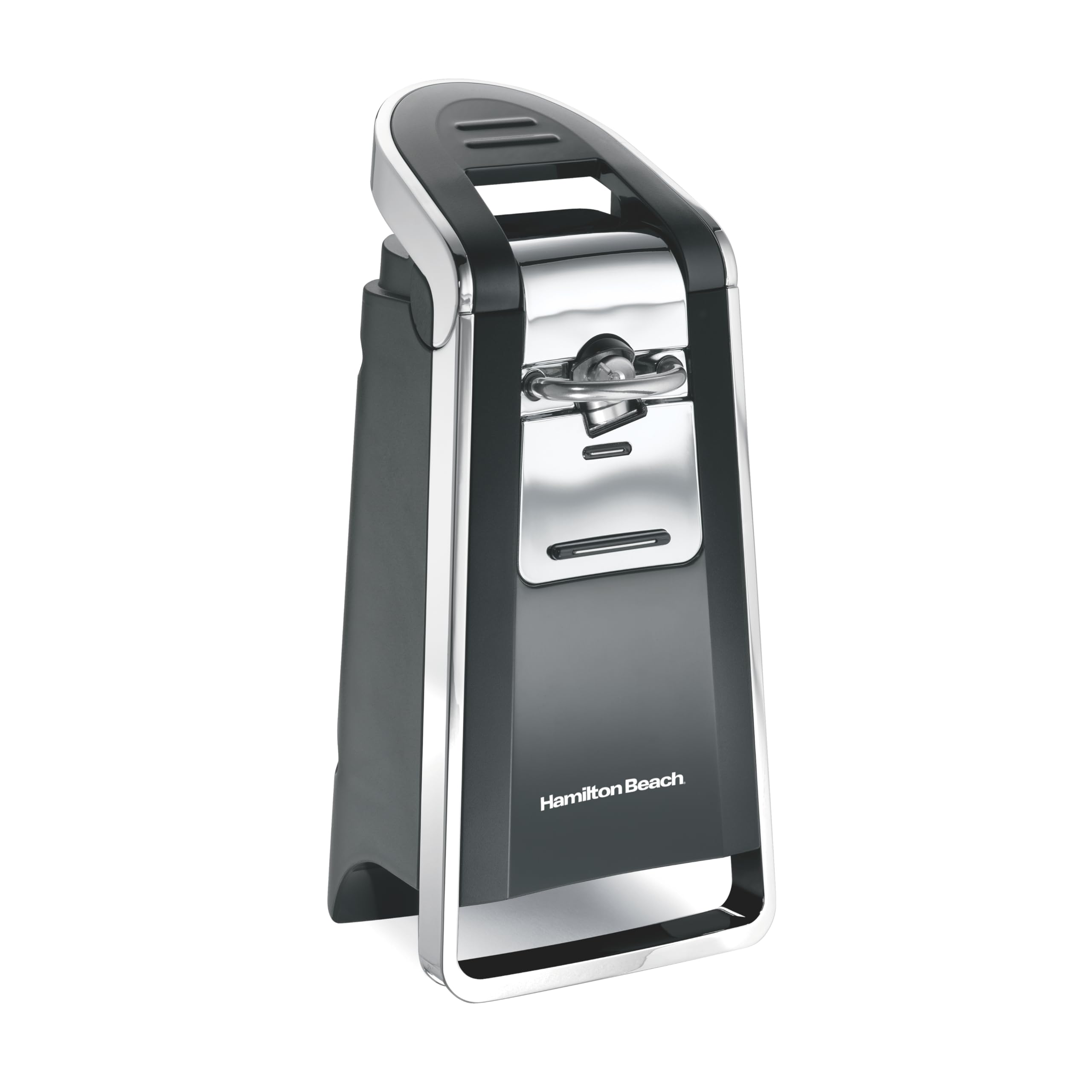
Hamilton Beach Smooth Touch Can Opener
- Simple push-down lever
- Leaves smooth, safe edges
- Removable blade for cleaning
- Budget-friendly
- Corded, not portable
- Larger footprint on the counter
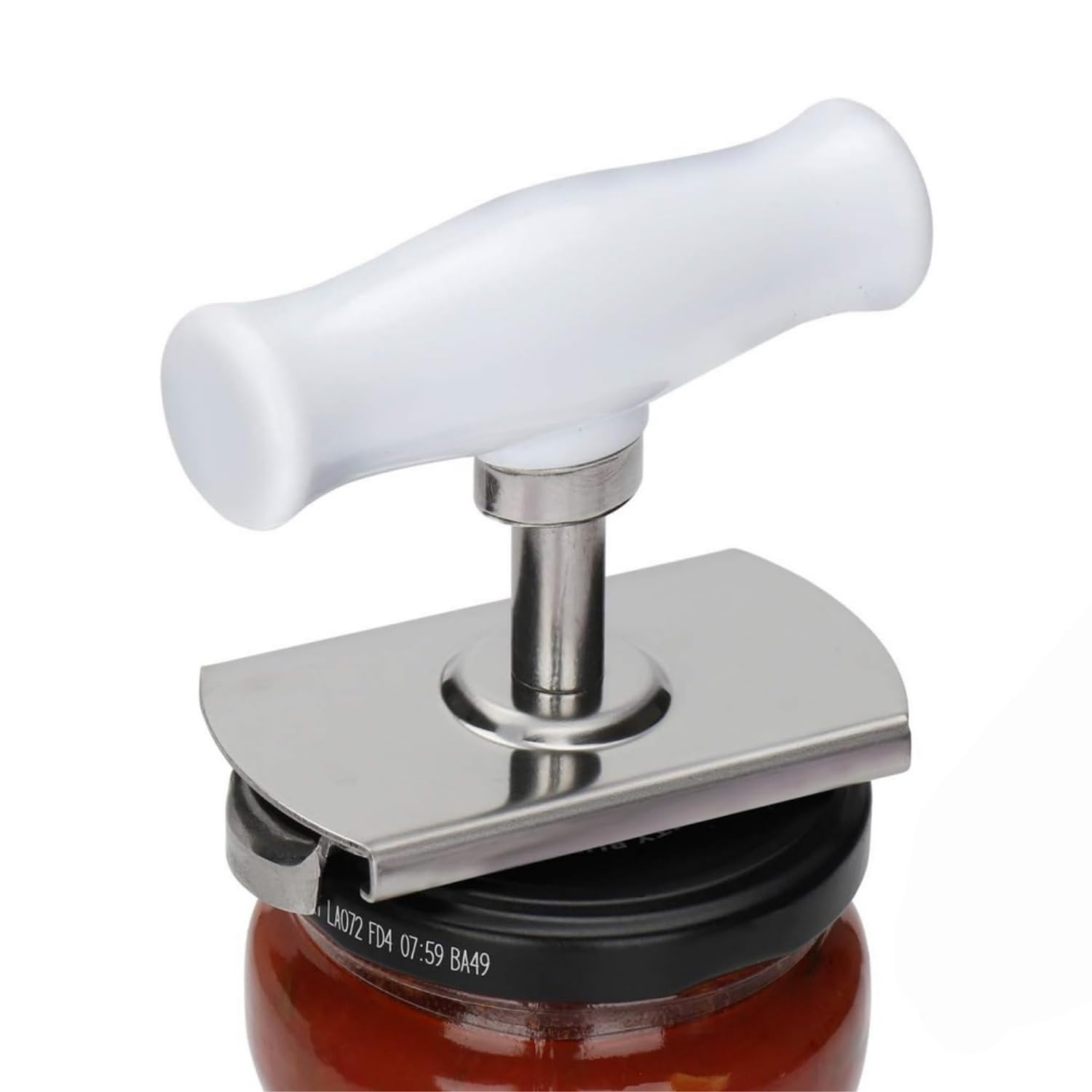
Kichwit Jar Opener for Arthritis
- Stainless steel build
- Grips a range of lid sizes
- Good mechanical leverage
- Arthritis-friendly
- Requires two hands
- Still needs some manual effort

OXO Good Grips Twisting Jar Opener
- Soft non-slip handle
- Included base pad for stability
- Adjusts to different lid sizes
- Compact, stores in a drawer
- Still needs some grip strength
- Manual, not powered
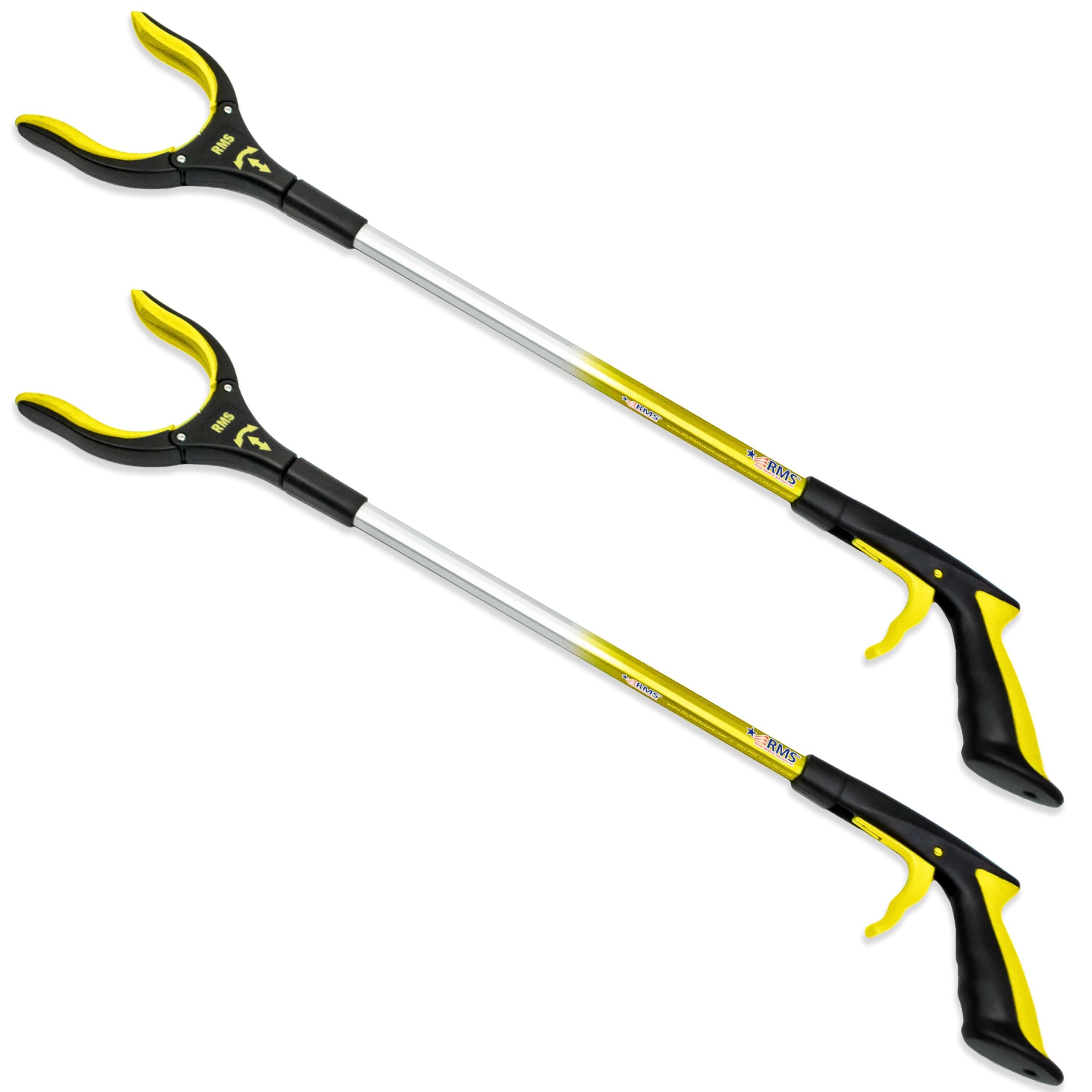
RMS Reacher Grabber (32-inch)
- Extra-long 32-inch reach
- Rotating jaw grabs at any angle
- Lightweight aluminum
- Reduces bending and reaching
- Not meant for heavy objects
- Grip needs a firm squeeze
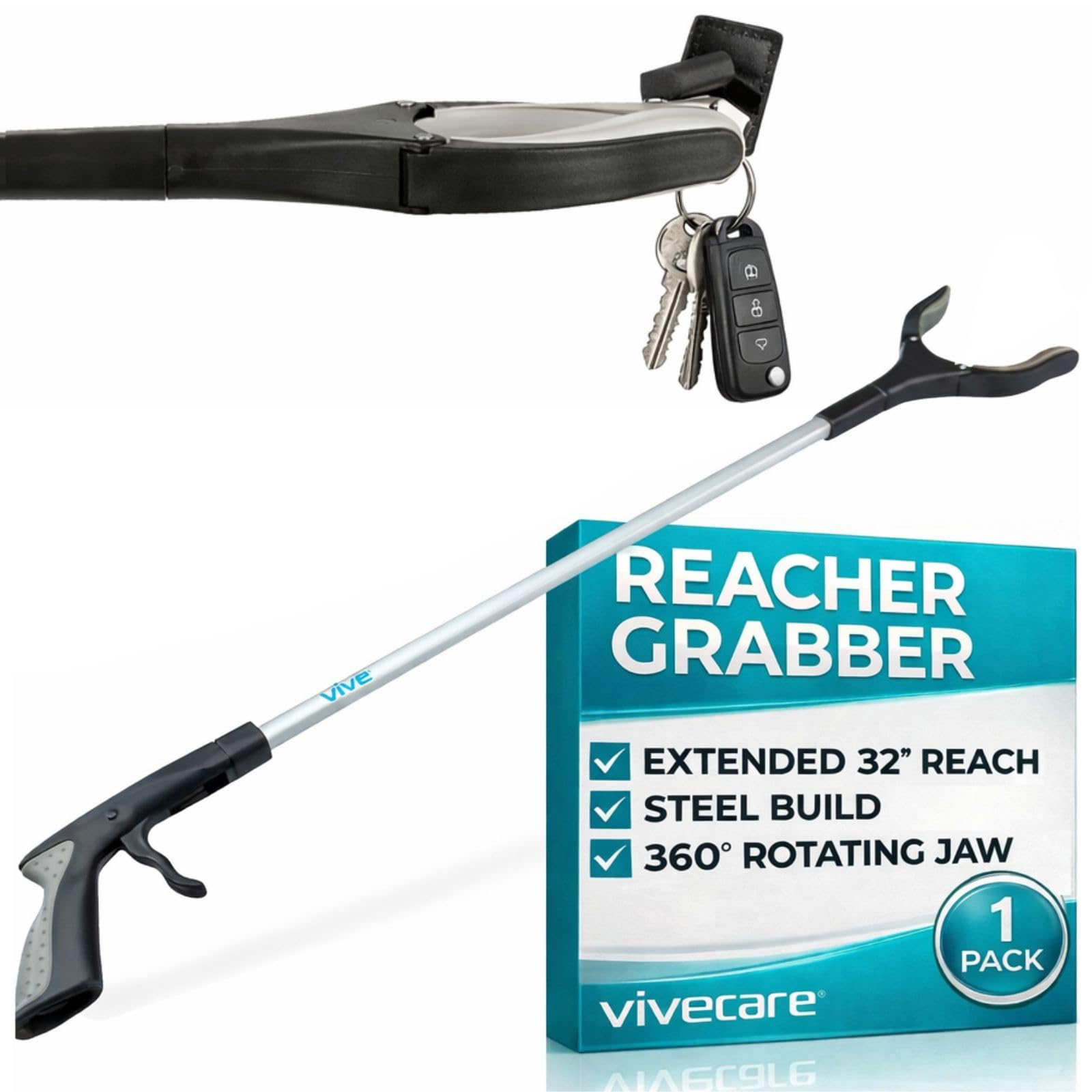
Vive Reacher Grabber (32-inch)
- Ergonomic trigger handle
- Rotating head
- Magnetic tip for metal items
- Durable heavy-duty build
- Trigger requires a light squeeze
- Long length awkward in tight spaces
The Importance of Daily Living Aids
Maintaining independence in daily activities is crucial for seniors' quality of life, dignity, and mental health. However, age-related changes in strength, dexterity, and mobility can make routine tasks increasingly challenging. Fortunately, adaptive equipment and assistive devices can bridge this gap, allowing seniors to continue living independently in their own homes.
Drawing on product specifications, manufacturer details, and published buyer reviews, we've identified the most effective daily living aids across multiple categories. This comprehensive guide focuses on practical, affordable solutions that genuinely improve daily life without feeling institutional or stigmatizing.
Kitchen Aids: Essential Tools for Meal Independence
The kitchen presents numerous challenges for seniors, from opening containers to safely preparing meals. The right tools can transform these frustrations into manageable tasks.
Can Openers: Manual vs. Electric
Traditional manual can openers require significant hand strength and coordination, making them increasingly difficult for seniors with arthritis or reduced grip strength.
Cuisinart Electric Can Opener — Best Overall
This countertop electric opener takes the strength and coordination out of opening cans. One-touch operation does the work for you — press the lever and it cuts around the can, then stops on its own, so there is no twisting or squeezing. The weighted, nonslip base keeps it steady on the counter and lets you operate it with one hand.
It cuts along the side seam and leaves a smooth edge rather than a sharp one, an important safety feature for anyone with reduced dexterity or arthritis. The cutting lever detaches for easy cleaning, and the simple two-button layout is quick to learn.
Because it runs on a cord, you never deal with batteries — though it does need a nearby outlet and a bit of dedicated counter space. For seniors who open cans regularly, the hands-free operation makes it one of the easiest options available.
Check price on AmazonCuisinart Electric Can Opener
Hamilton Beach Smooth Touch Can Opener — Best Budget
For those seeking a more affordable electric option, this Hamilton Beach model performs admirably. It's plug-in rather than battery-operated, which means consistent power but less portability.
The knife blade removes for cleaning, and the smooth touch design leaves safe edges. It's typically priced well below the OXO while delivering solid performance. The main trade-off is the less ergonomic design and the need for an outlet nearby.
Check price on AmazonHamilton Beach Smooth Touch Can Opener
Jar Openers: Solving the Grip Challenge
Jar opening combines multiple challenges: grip strength, hand dexterity, and twisting force. Arthritis makes this particularly difficult.
Kichwit Multi-Function Jar Opener — Best Value
This under-cabinet mounted opener handles jar lids from 1 to 4 inches in diameter, covering virtually all common jar sizes. The V-shaped design grips the lid securely while you rotate the jar itself, using larger muscle groups rather than just hand strength.
Installation takes about 10 minutes with the included hardware. Mount it under a cabinet in easy reach, ensuring enough clearance below for tall jars. The stainless steel construction feels sturdy, and buyers report it holds up well to daily use.
Buyers particularly appreciate the non-slip gripping teeth, which work even on oily or wet lids. The ability to use it one-handed is crucial for those with limited function in one hand. The opener works equally well for loosening stuck lids and tightening new ones.
The only limitation: it's not portable. For seniors who need jar opening help away from home, a handheld option is better suited.
Check price on AmazonKichwit Jar Opener for Arthritis
OXO Good Grips Jar Opener — Best Handheld
For portable jar opening or those who prefer not to install under-cabinet models, this handheld opener excels. The stainless steel teeth grip securely, and the soft handles provide leverage without requiring excessive strength.
It adjusts to fit lids from 1 to 3.5 inches. While it requires two hands to operate, the technique is straightforward and requires less force than twisting manually. The compact size fits easily in a drawer or purse.
Check price on AmazonOXO Good Grips Twisting Jar Opener
Reacher Grabbers: Extended Reach Without Bending
Bending and reaching are among the most dangerous activities for seniors, often resulting in falls or back strain. Reacher grabbers extend your reach both up and down, reducing the need for precarious positions.
RMS Rotating Reacher Grabber — Best Overall
At 32 inches long, this reacher provides excellent reach for retrieving items from high shelves or picking things up from the floor. The rotating head (360 degrees) allows you to approach items from any angle, crucial for grabbing objects in tight spaces.
The jaw opening is generous at 4 inches, handling everything from coins to clothing. Textured rubber grips on the jaws secure items without damage. The magnetic tip picks up small metal objects like pins or paperclips that would be difficult to grasp otherwise.
The grabber handles items weighing up to about 5 pounds. The ergonomic handle requires only moderate squeeze force thanks to the internal mechanism design. For those with very weak hands, a pistol-grip style might be easier, but most buyers find this comfortable.
The reacher folds to 19 inches for storage or travel. Build quality is solid, with an aluminum construction that's lightweight (8 ounces) yet durable. Buyer reviews indicate the gripping mechanism stays tight and responsive with daily use.
Check price on AmazonRMS Reacher Grabber (32-inch)
Vive Reacher Grabber (26-inch) — Best for Limited Hand Strength
This shorter reacher (26 inches) features a pistol-grip design that requires less squeezing force than traditional models. It's an excellent choice for those with severe arthritis or limited hand strength.
The vertical grip orientation feels more natural for many users, and the wider jaw (5 inches) handles larger objects. The trade-off is the shorter length, which may not work for very high shelves or deep floor reaches.
Check price on AmazonVive Reacher Grabber (32-inch)
Adaptive Utensils: Making Eating Easier
Tremors, arthritis, and limited hand function can make standard utensils difficult to use. Adaptive utensils address these challenges with larger grips, weighted designs, and specialized angles.
Adaptive Utensil Set with Built-Up Handles
The Vive utensil set includes a fork, spoon, and knife with built-up foam handles that are 1.5 inches in diameter. This larger grip is significantly easier to hold for those with arthritis or weak grip strength.
The lightweight design (2.5 ounces per utensil) reduces fatigue during meals. The stainless steel heads are durable and dishwasher safe, though the foam handles should be hand-washed. The handles are ribbed for better grip, even with wet hands.
Buyers report less hand fatigue and improved control compared to standard utensils. The larger grip allows you to hold the utensil in a fist grip rather than requiring fine finger control.
Weighted Utensils for Tremors
For those with tremors or Parkinson's disease, weighted utensils can provide greater stability. The Bunmo weighted utensil set features 7-ounce handles that help dampen hand tremors through increased inertia.
Buyers with essential tremor report significant improvement in eating independence. The weight does require adequate arm strength, so they're not suitable for everyone. The contoured, rubber-coated handles provide excellent grip.
Automatic Stove Shutoffs: Kitchen Fire Prevention
Cooking-related fires are a serious concern for seniors, particularly those with memory issues. Automatic stove shutoff devices provide crucial safety.
FireAvert Electric Stove Shut-Off
This device monitors stovetop temperature and automatically cuts power if temperatures exceed safe levels or if you leave the kitchen. It installs in your breaker box and connects to sensors placed near the stovetop.
Installation requires an electrician (not included in the purchase price), but the peace of mind is invaluable for families concerned about cooking safety. The system includes motion sensors that detect if someone has left the kitchen, shutting off the stove after a preset time (adjustable 5-15 minutes).
The temperature sensor activates at 400°F (adjustable), well before fire ignition point. The motion sensor works reliably, though it requires line-of-sight to the stove area.
FireAvert Gas Stove Shut-Off
A more affordable option, this device monitors for overheating but doesn't include motion sensing. It's suitable for those who remain in the kitchen while cooking but may forget to adjust heat levels.
Easy-Grip Kitchen Tools
Beyond can openers and jar openers, numerous specialized tools make kitchen tasks easier.
OXO Good Grips Angled Measuring Cups
These innovative measuring cups feature angled surfaces that let you read measurements from above, eliminating the need to bend down to eye level. The large, soft handles are easy to grip, and the non-slip base prevents sliding.
Buyers particularly appreciate these for reducing back strain. The angled design is genuinely useful, not just a gimmick.
Kuhn Rikon Auto Safety Master Opener
This manual can opener requires significantly less force than traditional models. The oversized turning knob and ergonomic handles make it manageable for many seniors, though electric openers are still easier.
The smooth-edge cutting leaves safe lids. It's a good middle ground for those who prefer manual tools but need assistance.
Good Grips Vegetable Peeler
Peeling vegetables can be surprisingly difficult with arthritis. This peeler features a large, cushioned handle that's comfortable to grip. The sharp, stainless steel blade requires less pressure than cheaper peelers.
The wide handle accommodates different grip styles, and the built-in potato eye remover is a useful addition.
Pill Organizers and Medication Management
While we have a dedicated article on automated pill dispensers, simple weekly organizers remain useful for many seniors. If small print on labels or organizer lids is the actual sticking point rather than the organizer itself, our guide to magnifiers for low vision covers handheld and hands-free options worth pairing with whichever organizer you choose.
MEDca Weekly Pill Organizer (4 Times Per Day)
This organizer features 28 compartments (7 days x 4 times daily), clearly labeled with day and time. Each compartment holds approximately 30 aspirin-sized pills. The individual compartments snap out for portability.
The lids require moderate force to open, preventing accidental spills but remaining manageable for most users. Color-coding (different colored lids for morning, noon, evening, and bedtime) helps those with vision or memory issues.
Buyer reviews indicate the lids stay secure and the labeling holds up over time.
For a closer look at lid design, compartment depth, and which weekly organizers hold up best for arthritic hands, see our full roundup of the best weekly pill organizers for seniors.
Dressing Aids: Independence in Getting Dressed
Getting dressed can become challenging with limited mobility, arthritis, or balance issues. The tools below help work a standard button, zipper, or sock — for a different approach that removes the fastener problem entirely, see our guide to adaptive clothing with magnetic and Velcro closures.
Dressing Stick and Sock Aid Combo
This RMS combo kit includes a dressing stick for pulling on shirts and pulling up pants, plus a sock aid that eliminates bending to put on socks.
The dressing stick (24 inches) features a large C-hook on one end for pulling and a smaller hook on the other for pushing. The sock aid uses a flexible plastic form you insert into the sock, then slip your foot into, pulling the sock up with attached cords.
Buyers find these particularly useful after hip or knee surgery, when bending is restricted. They reduce fall risk by eliminating the need for precarious balancing positions while dressing.
Long-Handled Shoehorn
A quality long-handled shoehorn (24-30 inches) allows you to put on shoes without bending. Look for models with a hanging loop for easy storage.
The Drive Medical shoehorn (27 inches) features a comfortable handle and durable plastic construction. It's long enough to reach comfortably while standing or seated.
Reachers for Personal Care
Bottom Buddy Toilet Tissue Aid
For those with limited reach due to obesity, surgery recovery, or mobility issues, personal hygiene can be challenging. The Bottom Buddy features a soft, flexible head that holds toilet tissue securely.
The 11-inch extension allows independent toileting. The release button drops used tissue into the toilet. The design is ergonomic and surprisingly easy to use after a brief learning curve.
Button Hooks and Zipper Pulls
For those with arthritis or limited finger dexterity, buttons and zippers can be frustrating obstacles.
DMI Button Hook and Zipper Pull
This simple tool features a wire loop that hooks through buttonholes and pulls the button through. The opposite end has a hook for pulling zippers up or down.
The built-up foam handle (1 inch diameter) is easy to grip. While it takes practice to develop the technique, many buyers find it valuable for maintaining independence in dressing.
Key Turners and Door Knob Grips
Universal Key Turner Aid
This device adds a large handle to small keys, providing leverage and a larger grip surface. It's particularly helpful for arthritic hands that struggle with small key grips.
The turner accommodates most standard keys. The plastic construction is lightweight and durable.
Door Knob Extenders
These simple add-ons convert round doorknobs (which require gripping and twisting) into lever-style handles. They install with a setscrew and require no doorknob replacement.
The Maddak Door Knob Extension is our top pick, featuring a cushioned grip and simple installation.
Frequently Asked Questions
Are daily living aids covered by insurance?
Coverage varies significantly. Medicare Part B may cover some items if deemed medically necessary and prescribed by a doctor. Medicaid coverage varies by state. Many items are FSA/HSA eligible. Check with your specific insurance provider for coverage details.
How do I know which aids I need?
An occupational therapist can assess your specific needs and recommend appropriate equipment. Many hospitals offer free or low-cost home safety assessments for seniors.
Will using assistive devices make me weaker?
No, properly selected assistive devices help you maintain independence and activity levels. They prevent injury and conserve energy for activities you enjoy.
Where can I try devices before buying?
Some medical supply stores have demonstration areas. Occupational therapy clinics often have devices you can try during assessments. Home health agencies may loan equipment for trial periods.
How do I maintain and clean these devices?
Most devices clean with soap and water. Dishwasher-safe components are noted in product descriptions. Regular inspection for wear is important, particularly for weight-bearing devices.
Building Your Independence Toolkit
Creating a comprehensive set of daily living aids is best approached gradually. Start with the challenges that most affect your daily life and independence.
Essential Starter Kit:
- Reacher grabber
- Jar opener
- Electric can opener
- Built-up utensils
- Weekly pill organizer
Expanded Kit:
Add to starter kit:
- Long-handled shoehorn
- Dressing aids
- Button hook
- Key turner
- Weighted utensils
- Angled measuring cups
Comprehensive Kit ($500+):
Add to expanded kit:
- Automatic stove shutoff
- Additional reachers for multiple rooms
- Specialized utensils for specific conditions
- Professional occupational therapy assessment
The Psychology of Acceptance
Many seniors resist using assistive devices, viewing them as symbols of decline. Address this by:
- Reframing the conversation: These are tools that support independence, not signs of weakness.
- Emphasizing aesthetics: Modern adaptive equipment is increasingly attractive and normalized.
- Starting small: Begin with one useful tool to demonstrate value.
- Focusing on benefits: Emphasize what these tools enable you to do, not what they help you with.
- Involving them in selection: Give seniors control over choosing devices.
Automating Floor Care
Vacuuming is another daily task worth taking off the list entirely rather than adapting. A robot vacuum handles crumbs, pet hair, and dust without anyone bending over or dragging a canister across the room — see our best robot vacuums for seniors guide for which models run from a single physical button, no app required.
Final Thoughts
Daily living aids represent relatively modest investments that can significantly extend independent living. The key is matching the right tools to individual needs and ensuring proper use.
Start with an honest assessment of current challenges. Which daily activities are difficult, frustrating, or potentially dangerous? Prioritize solutions for these issues first. Don't wait for a crisis - proactive adoption of assistive devices prevents problems rather than responding to them.
Remember that needs change over time. Reassess every 6-12 months and adjust your toolkit accordingly. What works today may need modification tomorrow, and that's perfectly normal.
Independence isn't about doing everything exactly as you did at age 30. It's about safely and comfortably maintaining control over your daily life. These tools aren't crutches - they're enablers that help you live life on your terms.
The same wider-grip, less-pinch-force thinking behind an easier jar opener applies to handwriting too — see our guide to arthritis-friendly pens and writing aids for pens designed around the same problem.