Best Blood Pressure Monitors with Irregular Heartbeat Detection for Seniors (2026)
Not every home blood pressure monitor flags an irregular heartbeat. Here's how that detection actually works, which monitors include it, and what to do (and not panic about) when the icon shows up.
As an Amazon Associate I earn from qualifying purchases. We independently review products; buying through our links never costs you extra.
Our top pick
Omron Platinum Blood Pressure Monitor
Quick picks
| Product | Best for | Amazon |
|---|---|---|
| Omron Platinum Blood Pressure Monitor | — | Check price on Amazon |
| Withings BPM Core | — | Check price on Amazon |
| Omron Evolv | — | Check price on Amazon |
| iHealth Track Blood Pressure Monitor | — | Check price on Amazon |

Our Top Picks
Chosen for seniors based on features, specs, and verified buyer reviews.
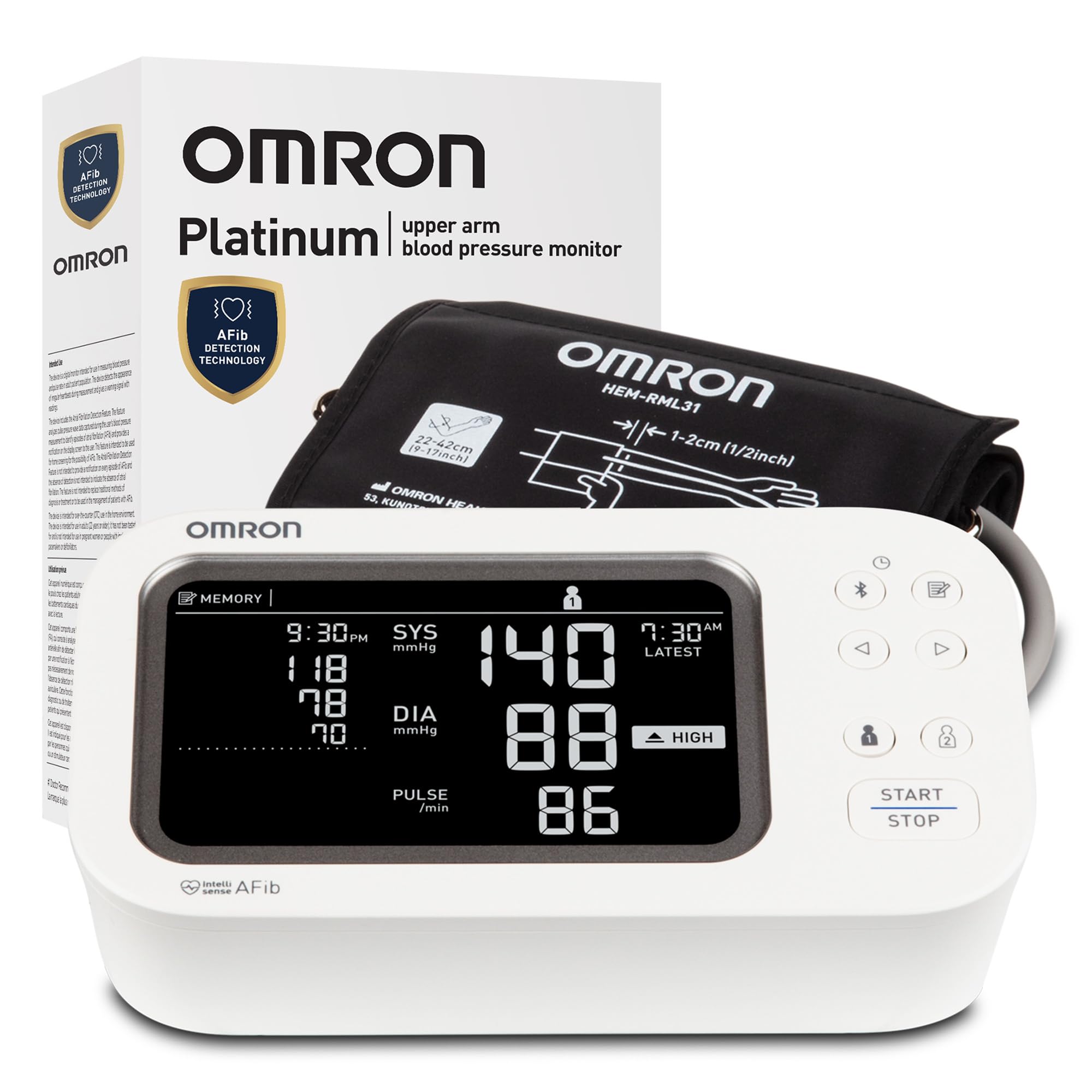
Omron Platinum Blood Pressure Monitor
Check price on Amazon
Withings BPM Core
Check price on Amazon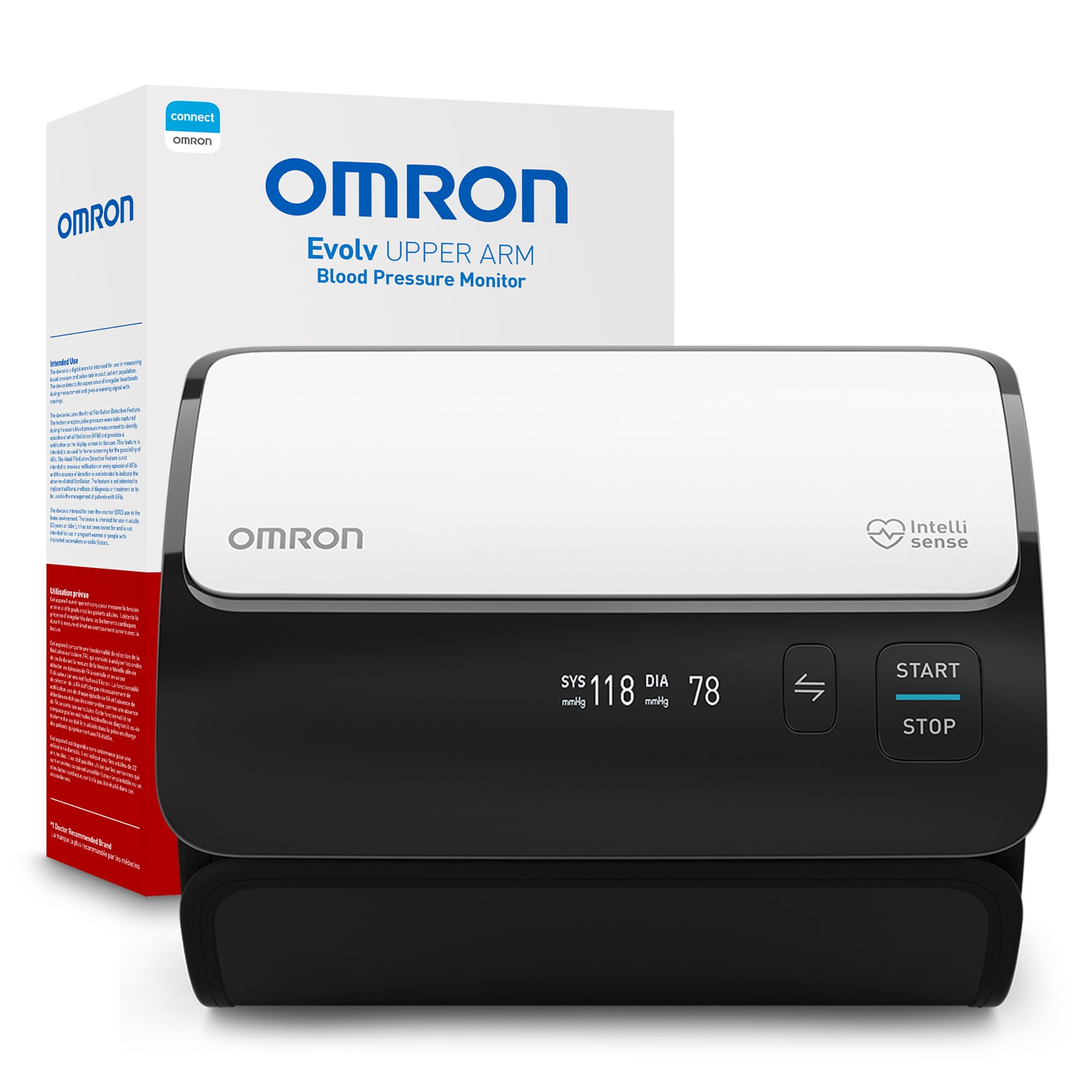
Omron Evolv
Check price on AmazoniHealth Track Blood Pressure Monitor
Check price on AmazonAn irregular heartbeat (IHB) icon on a home blood pressure monitor is one of the more useful features on the market and one of the most misunderstood. It isn't a diagnosis, and the monitor isn't reading your heart's electrical activity the way an EKG does — it's flagging that your pulse rhythm during the reading was uneven enough to be worth mentioning to a doctor. For most seniors who want that flag as a standing feature rather than an occasional app upsell, our top pick is the Omron Platinum Blood Pressure Monitor, with the Withings BPM Core the better call for anyone who wants an actual single-lead ECG alongside the cuff reading.
Our top picks
Omron Platinum Blood Pressure Monitor — Best Overall
Omron has built irregular heartbeat detection into its monitors for years, and the Platinum is the current top-tier upper-arm model with it standard. The cuff inflates and reads as normal; if the rhythm during that reading is irregular, a small heart-shaped icon appears next to the numbers. It stores multiple readings per user and syncs to Omron's app for two people, which matters if a spouse also needs to track their own numbers on the same device.
Check price on AmazonOmron Platinum Blood Pressure Monitor
Withings BPM Core — Best for an Actual ECG, Not Just a Flag
The BPM Core goes a step further than pulse-rhythm detection: it includes a single-lead ECG built into the cuff itself, plus a digital stethoscope function that listens for heart valve sounds. That's meaningfully more data than a standard monitor's irregular-heartbeat flag, and it's worth the higher price for a senior with a known heart condition or a cardiologist who's asked for more frequent monitoring. It requires the Withings Health Mate app and a smartphone to view results, which is a real barrier for a senior without a phone-comfortable family member nearby.
Check price on AmazonWithings BPM Core
Omron Evolv — Best Compact, Wireless Option
The Evolv folds the entire monitor into the cuff itself — no separate base unit or cords — and still includes irregular heartbeat detection alongside Bluetooth sync. It's a good fit for a senior who travels between homes or wants something easy to store in a drawer rather than leave out on a counter. The display sits on the cuff itself rather than a full-size console, which is more compact but also smaller and harder to read than a traditional monitor for anyone with significant vision loss.
Check price on AmazonOmron Evolv
iHealth Track — Best Budget Pick With the Feature Included
Irregular heartbeat detection tends to get reserved for a brand's higher-tier models, which is what makes the iHealth Track worth calling out — it includes the flag at a price closer to a basic monitor than a premium one. The trade-off is a smaller cuff range and a simpler app experience than Omron or Withings, so it's a better fit for someone with an average arm size who mainly wants the detection feature without paying for smart-home extras.
What the irregular heartbeat icon actually means
These monitors detect an uneven pulse rhythm during the (roughly 30-second) cuff reading — most commonly associated with atrial fibrillation, but not exclusively. Movement, talking, a mistimed reading right after exercise, or simply an occasional skipped beat can all trigger the same icon. One flagged reading isn't an emergency and isn't a reason to call 911 on its own. A pattern of flagged readings, especially alongside symptoms like dizziness, shortness of breath, or a racing or fluttering feeling in the chest, is what's worth bringing to a doctor.
None of these monitors replace an EKG or a cardiologist's workup. The Withings BPM Core's built-in ECG is the closest to actual diagnostic data in this category, but even that's meant to inform a conversation with a doctor, not to be self-interpreted.
What actually matters when choosing one
- Consistency over one-off flags: A monitor that shows the icon rarely, then suddenly several days in a row, is giving more useful information than a single flagged reading. Keep a log rather than reacting to any one result.
- Cuff fit still matters most: Irregular heartbeat detection depends on a clean pulse signal, and a poorly fitted cuff introduces the same kind of noise that can trigger false positives. Measure your arm and match it to the monitor's stated cuff range before assuming the detection feature is unreliable.
- App dependency: Omron and Withings both push detailed history and trends to a companion app. If there's no one nearby to help set that up, look at the monitor's on-device display and memory before assuming the app features will get used.
- Two-user memory: Households with two people tracking blood pressure should confirm the monitor stores separate histories per user rather than mixing both people's readings together.
What to look for beyond the irregular-heartbeat flag
The detection icon is the headline feature, but for an older adult using a monitor daily, a few other things determine whether it becomes a trusted habit or a frustration in a drawer:
- A clinically validated cuff. The whole point of home monitoring is numbers a doctor will act on. Favor a monitor from an established brand with a validated upper-arm cuff over an unbranded bargain unit, because a poorly validated device undermines both the blood pressure reading and the rhythm flag.
- The right cuff size. Fit matters more than almost anything else. Measure the upper arm and match it to the monitor's stated range before buying — a cuff that is too small or too large produces inaccurate readings and can trigger false irregular-heartbeat flags from a noisy signal.
- A large, high-contrast display. Big, clearly labeled systolic, diastolic, and pulse numbers, ideally backlit, make readings easy to record correctly, which matters when a decision may hinge on them.
- Simple one-button operation. Automatic inflation and a single start button suit stiff or arthritic hands far better than a monitor with several modes to navigate.
- Adequate memory, per user. On-device storage with time stamps lets trends be reviewed without an app, and separate histories for two people keep a couple's readings from mixing together.
- Honest app dependence. Smart features are helpful only if someone will set them up. If not, make sure the on-device screen and memory cover everything the household actually needs.
How to choose the right one for your situation
The best monitor depends on why the rhythm flag matters and who is managing the data:
If a doctor simply wants the flag as a standing feature, a reliable upper-arm monitor with irregular-heartbeat detection built in covers it without any app or extra cost, and it works straight out of the box.
If a cardiologist has asked for closer monitoring, a model that adds an actual single-lead ECG provides meaningfully more data to bring to appointments — worth the higher price and app setup for someone with a known heart condition.
If the monitor moves between homes or gets stored in a drawer, a compact all-in-one cuff is easier to live with than a unit with a separate base and cords.
If budget is tight but the flag is still wanted, a value model that includes detection at a lower price works well for an average arm size, as long as the cuff range fits and smart-home extras are not the priority.
If a family member or caregiver tracks the numbers, lean toward a monitor whose app shares history cleanly into something that person already uses.
How to get an accurate reading
A rhythm flag is only as trustworthy as the reading it came from, and technique drives accuracy on both fronts:
- Rest first. Sit quietly for about five minutes before measuring, and avoid caffeine, smoking, and exercise beforehand. Empty the bladder, since a full one can nudge the reading up.
- Sit correctly. Back supported, feet flat on the floor, legs uncrossed, and the arm resting on a table so the cuff sits at heart level.
- Bare the arm. Place the cuff on bare skin about an inch above the elbow crease, not over a sleeve, and follow the fit guidance so it is snug but not tight.
- Stay still and quiet. Do not talk, move, or look at a phone during the reading. Movement and talking are common causes of both inflated numbers and false rhythm flags.
- Take more than one reading. Measure two or three times, a minute apart, at the same times each day, and log the results. A pattern is far more useful than any single reading.
Common mistakes to avoid
- Panicking over one flagged reading. Movement, talking, or an occasional skipped beat can trigger the icon. Re-take after resting before treating it as meaningful.
- Using the wrong cuff size. A poor fit produces bad numbers and false flags. Measure the arm and match the range.
- Choosing a wrist monitor when accuracy matters. Upper-arm monitors give a cleaner signal for both blood pressure and rhythm detection; wrist units are more position-sensitive.
- Talking or moving during the reading. Both can raise the numbers and confuse the rhythm detection. Stay silent and still.
- Reacting to a single reading instead of a trend. Keep a log. A run of flagged readings tells a doctor far more than one isolated result.
- Adjusting medication on your own. Never change a prescription based on a home flag or reading. That is a conversation for a doctor.
When to talk to your doctor
None of these monitors diagnose anything, and none replace a cardiologist's workup — even the models with a built-in ECG are meant to inform a conversation, not to be self-interpreted. Bring a log of flagged readings and blood pressure trends to appointments so a doctor can see the pattern. Call a doctor sooner if the irregular-heartbeat icon appears repeatedly, especially alongside dizziness, chest discomfort, shortness of breath, or a racing or fluttering feeling in the chest. And treat a hypertensive-crisis-level reading, chest pain, severe headache, vision changes, or trouble speaking as an emergency worth calling 911 for, regardless of what the rhythm icon shows. The monitor's role is to surface useful data early so the right medical conversation happens sooner.
Frequently asked questions
Should I be worried the first time the irregular heartbeat icon shows up?
Not automatically. Re-take the reading after resting quietly for a few minutes, since talking, recent activity, or an awkward position can all trigger a false flag. If it happens once and doesn't recur, mention it at your next appointment rather than treating it as urgent. If it happens repeatedly, or comes with dizziness, chest discomfort, or shortness of breath, call your doctor sooner.
Is a monitor with irregular heartbeat detection a substitute for an EKG?
No, with the partial exception of the Withings BPM Core, which includes an actual single-lead ECG rather than just a rhythm flag. Even that isn't a substitute for a full diagnostic workup — it's a way to bring more useful data to a doctor sooner.
Does this feature work the same on wrist monitors as upper-arm monitors?
Upper-arm monitors are generally more reliable for this feature, for the same reason they're more accurate overall — positioning at heart level and a larger cuff produce a cleaner pulse signal. If irregular heartbeat detection matters to you, an upper-arm monitor is the safer choice over a wrist unit.
Do I need Bluetooth or an app for this feature to work?
No. The icon displays directly on the monitor's screen regardless of whether it's paired with an app. The app mainly adds history tracking and the ability to share trends with a doctor electronically, which is convenient but not required for the detection itself to function.
Can the irregular-heartbeat flag actually detect AFib?
It can flag an uneven pulse rhythm that is often associated with atrial fibrillation, but it does not diagnose it. The monitor is reading pulse timing, not the heart's electrical activity the way an EKG does. A repeated flag is a reason to see a doctor for proper testing, not a diagnosis on its own.
Is an upper-arm or wrist monitor better for this feature?
Upper-arm monitors are the better choice. They produce a cleaner pulse signal because the cuff sits at heart level and is less sensitive to position, which makes both the blood pressure reading and the rhythm detection more reliable. Wrist units are more prone to false flags from positioning.
Do I need the app for the detection to work?
No. The icon appears on the monitor's own screen whether or not it is paired with a phone. The app mainly adds history tracking and easy sharing with a doctor. If no one will set it up, the on-device display and memory are enough for the feature itself.
How is this different from a smartwatch ECG?
A blood pressure monitor flags an irregular pulse rhythm during a normal cuff reading, while a smartwatch ECG records a single-lead trace of the heart's electrical activity from the wrist. They are complementary. Neither diagnoses a condition, and a doctor's clinical ECG remains the standard for confirmation.
The bottom line
For most seniors, the Omron Platinum covers the irregular heartbeat flag well without requiring anything beyond a normal daily reading. Step up to the Withings BPM Core if a cardiologist has asked for closer monitoring and an actual ECG reading is worth the added cost and app setup. Whichever monitor you choose, pair it with our full guide to home blood pressure monitoring for proper technique — a bad reading habit undermines even the best detection feature.

