Best Electric Can Openers for Seniors With Arthritis (2026): Countertop and Hands-Free Picks
Four electric can openers for weak grip and arthritic hands, from a countertop model that won America's Test Kitchen's test to hands-free battery openers, with what each asks of your hands and the limits to know before you buy.
As an Amazon Associate I earn from qualifying purchases. We independently review products; buying through our links never costs you extra.
Best Countertop Opener
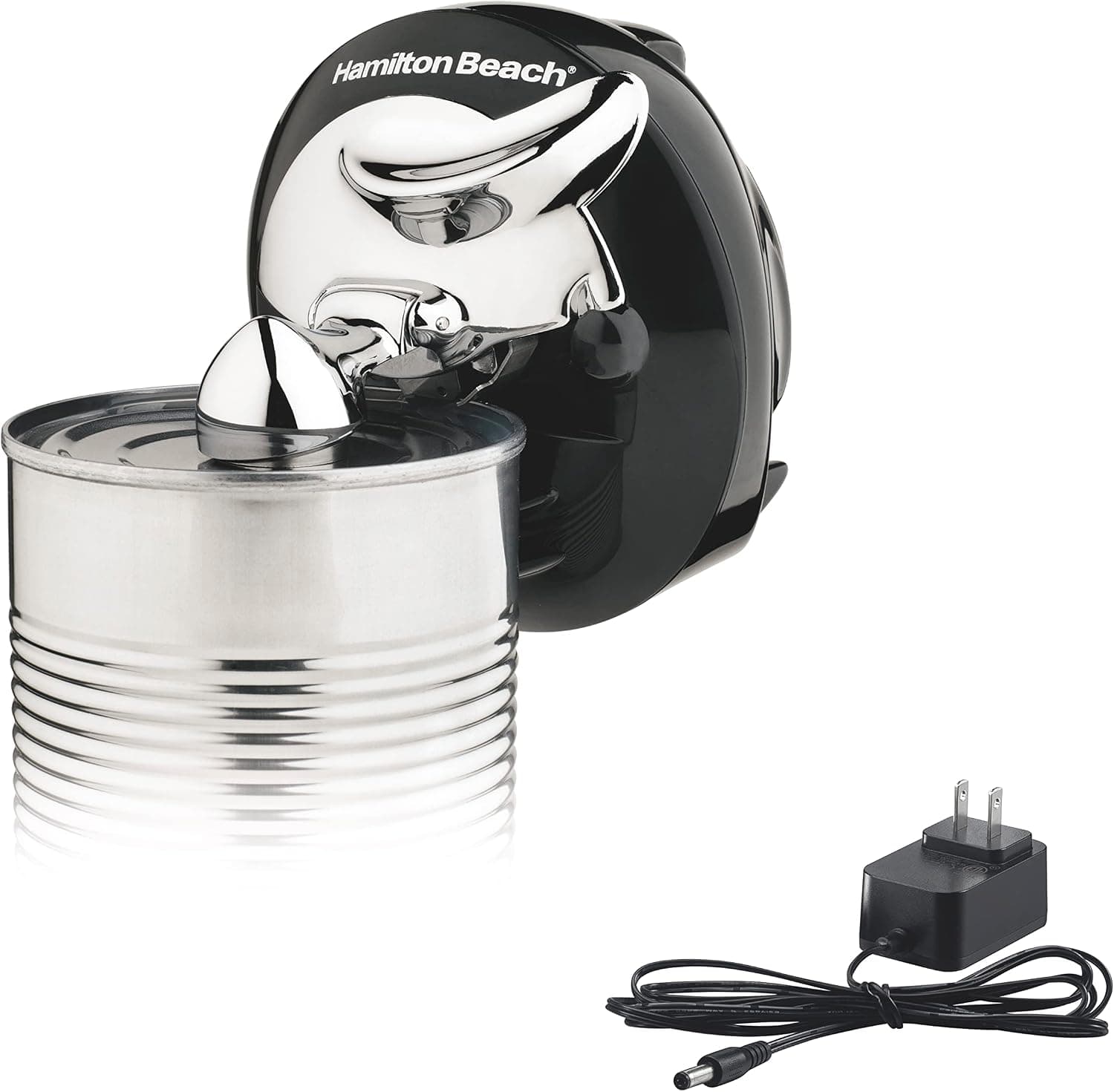
Hamilton Beach Smooth Touch Electric Can Opener (76606AG)
Quick picks
| Product | Best for | Amazon |
|---|---|---|
| Hamilton Beach Smooth Touch Electric Can Opener (76606AG) | Countertop Opener | Check price on Amazon |
| Hamilton Beach Walk 'n Cut Hands-Free Cordless Electric Can Opener | Hands-Free Cordless | Check price on Amazon |
| Kitchen Mama Auto Electric Can Opener (CO1100-R) | Battery-Powered, Tested | Check price on Amazon |
| Kitchen Mama Auto 2.0 Electric Can Opener | Curved Cans | Check price on Amazon |
Our Top Picks
Chosen for seniors based on features, specs, and verified buyer reviews.

Hamilton Beach Smooth Touch Electric Can Opener (76606AG)
- Side-cutting design leaves smooth lid and can edges, per the listing
- Opens pop-top and regular cans; the lid can be reused to cover leftovers
- Easy-touch lever works one-handed with a light press
- You hold the lever down for one full turn of the can
- Corded, so it needs a spot near an outlet

Hamilton Beach Walk 'n Cut Hands-Free Cordless Electric Can Opener
- Moves around the lid by itself and shuts off automatically
- Rechargeable and cordless, so no outlet is needed
- Magnet holds the lid out of the food; cutting assembly detaches to clean
- F&W's tester found a learning curve for the first few cans
- Needs a few seconds to clamp on correctly before it is let go

Kitchen Mama Auto Electric Can Opener (CO1100-R)
- One large button; the opener travels around the rim on its own
- Blade cuts along the side so the lid and can edges are smooth
- Small enough for a drawer; no cord
- Battery-powered, with mixed durability feedback in Amazon reviews
- Sits on top of the can, so very small or dented cans can give it trouble

Kitchen Mama Auto 2.0 Electric Can Opener
- Listing says the upgraded tilted blade handles curved cans such as soda cans
- One-button start and stop
- Compact and cordless; stores in a drawer
- Needs 4 AA batteries, which are not included
- Plastic body; battery openers as a group have been less durable in tests
Updated November 4, 2026. We did not hands-on test these can openers. Features come from each product's Amazon listing, checked November 4, 2026, and from the independent tests cited in the sources. We don't list prices because they change; use the Amazon links for today's price. This guide is general information, not medical advice. As an Amazon Associate we earn from qualifying purchases.
The Short Answer
For most people with arthritis or weak grip, the best electric can opener is a countertop model with a side-cutting blade, because it stays put on the counter and does the turning for you. Our pick is the Hamilton Beach Smooth Touch, the model name America's Test Kitchen (ATK) crowned its winner in a 2021 test that included a tester with arthritis. If you would rather not hold a lever at all, or you have no counter space, a hands-free battery model such as the Hamilton Beach Walk 'n Cut or the Kitchen Mama Auto clamps onto the can and cuts around it by itself. The trade-off is durability and a slower job, which is why we put the countertop opener first.
Why Opening a Can Is a Real Problem for Many Older Adults
A manual can opener asks for three things at once: a firm pinch on the handle, a repeated twisting motion, and enough strength to keep the cutter seated on the rim. Those are exactly the movements that painful, stiff or swollen hands struggle with. The numbers show how common that is. A CDC report on 2019–2021 survey data estimated that 21.2% of U.S. adults, about 53.2 million people, had doctor-diagnosed arthritis, and that 47.3% of adults aged 65 and older did. Nearly half of all adults with arthritis (48.3%) were 65 or older.
That is a lot of kitchens where a pantry full of canned beans, soup and tuna is quietly hard to use. People respond by buying fewer cans, skipping meals that need one, or opening them with a manual tool on days when their hands hurt. An electric opener will not fix a medical condition, but it takes the grip and the twist out of the job, which is often the difference between making dinner and giving up on it.
What We Looked For
We started from two outside sources: the independent testing at America's Test Kitchen and the everyday-product advice from the Arthritis Foundation, whose Ease of Use program certifies products independently tested for easy use. From them we built a short checklist:
- Little or no grip. A good opener starts with one press of a large button or a light lever, not a squeeze or a crank.
- Stable on the can. ATK found that light countertop models tipped when hands came off them and that some battery openers wobbled on the rim. A can that is not secure is a spill or a cut waiting to happen.
- Smooth edges. ATK preferred openers whose wheel cuts through the seal at the rim and leaves smooth edges on the can and the lid. That matters more when the hand holding the can is less steady.
- Pull-top and dented cans. ATK found that only two of its eight openers handled pull-top cans well and that dents stopped three models.
- Few parts to maintain. The Arthritis Foundation's own tip is to go minimal: gadgets that need a lot of cleaning or fiddling add strain instead of removing it.
- Honest limits. If a model's best feature depends on a technique you must learn, or on batteries you must keep fresh, we say so.
We did not rank anything on price or on star ratings. Neither is stable enough to publish, and neither tells you whether a lever will be easy on your hands.
Quick Comparison
| Model | Style | Power | What your hands do | Main caution |
|---|---|---|---|---|
| Hamilton Beach Smooth Touch | Countertop | Plug-in | Press and hold a lever for one rotation | Corded; needs an outlet |
| Hamilton Beach Walk 'n Cut | Handheld, hands-free | Rechargeable | Clamp on, then let go | Learning curve |
| Kitchen Mama Auto (CO1100-R) | Handheld, hands-free | Batteries | Press one button | Durability reports are mixed |
| Kitchen Mama Auto 2.0 | Handheld, hands-free | 4 AA (not included) | Press one button | Batteries to replace |
Our Picks, Explained
Hamilton Beach Smooth Touch: the countertop opener to start with
ATK tested eight electric openers in 2021, five countertop and three battery-powered, with a tester who has arthritis in the mix, and named the Hamilton Beach Smooth Touch Electric Can Opener the winner. Its write-up says the opener latched onto cans of all sizes easily, was sturdy enough to open heavy 28-ounce cans without tipping, handled pull-top and dented cans, and passed the durability tests. ATK's chart lists it at 8 seconds for a 28-ounce can, the quickest of the group. ATK tested the model sold under that name in 2021, so check that the listing you click is the 76606AG we link and not a look-alike.
The Amazon listing describes a side-cutting design that leaves a smooth, reusable lid, an extra-tall frame, and an easy-touch lever that opens cans with a light touch using one hand. That last point is the one to weigh against your hands. Hamilton Beach's own instructions say operation requires little grip strength, but you do hold the lever down until the can has made one full rotation, and ATK noted that all of the countertop models it tested needed pressure on the lever to keep the motor running. If holding a lever for ten seconds hurts, go to the hands-free picks below. If it does not, this is the steadier, faster and, in ATK's tests, more durable choice.
Check price on AmazonHamilton Beach Smooth Touch Electric Can Opener (76606AG)
Hamilton Beach Walk 'n Cut: the cordless opener that works by itself
The Walk 'n Cut is the one for people who want to clamp a tool onto the can and take their hands away. The listing says the rechargeable opener moves itself along the lid while cutting and then stops and shuts off automatically, that a magnet holds the lid up out of your food, and that the cutting assembly detaches for cleaning. It is cordless and compact enough for a drawer, so you can use it at a table, over the sink or away from an outlet.
Food & Wine's tester liked that it did as well as some countertop models, but described a learning curve the first couple of times: it takes a moment to lock into place correctly, and once clamped it felt stable on small, oversized and dented cans. That setup moment still uses your hands, so try it with a dummy can on a good day before you rely on it on a bad one. Because it carries a rechargeable battery rather than a cord, remember to put it back on its charger after use.
Check price on AmazonHamilton Beach Walk 'n Cut Hands-Free Cordless Electric Can Opener
Kitchen Mama Auto (CO1100-R): the battery opener ATK tested
This is the model number ATK tested: CO1100-R. ATK named it the best of the battery-powered group, saying it left smooth lid and can edges, was easy to run with a few presses of a single large button, and stayed stable on cans of all sizes, even narrow 6-ounce tomato paste cans. It was also slower than a countertop model: 29 seconds for a 28-ounce can in ATK's chart, against 8 for the Smooth Touch. After opening more than a dozen cans, ATK reported the cutting wheel was slightly bent, though the opener still worked, and it docked points for durability.
Two other sources add caveats worth knowing. A Prudent Reviews tester wrote that you have to press the button again to stop it or it keeps spinning, and a second tester could not open a small 6-ounce tomato paste can despite several tries. The Amazon listing's customer-review summary also describes mixed feedback on durability, with some buyers reporting it stopped working early. None of that makes it a bad choice, but it is why it sits below the countertop pick: a tool you rely on for daily meals should not be the one you replace twice a year.
Check price on AmazonKitchen Mama Auto Electric Can Opener (CO1100-R)
Kitchen Mama Auto 2.0: the newer version with a tilted blade
The Auto 2.0 is the follow-up. The listing says its upgraded tilted blade cuts along the side of the lid, handles curved cans such as soda cans, and leaves no sharp edge, with one-button start and stop and a cordless, compact body. It takes four AA batteries, which are not included. Food & Wine's tester picked it as the hands-free option and said it took a full year of typical use before the batteries needed changing, with the usual drawback that someone has to remember to replace them.
We include it as the alternative to the original if you want the newer blade, and we note that ATK's testing covered the original model, not this one. Treat it the same way: a good fit for light use and for people who want the least hand effort on each can, with the battery and durability caveats above.
Check price on AmazonKitchen Mama Auto 2.0 Electric Can Opener
Countertop or Handheld: How to Choose
Choose a countertop opener if you open cans often, you can hold a lever for about ten seconds without pain, and you have a spot near an outlet. In ATK's tests the plug-in models were faster (an average of 12 seconds on a 28-ounce can versus 34 for the battery models) and every countertop model came through the durability run.
Choose a hands-free battery opener if holding a lever is itself the problem, you cook in a small kitchen, or you use cans at a table or away from the counter. You trade speed and some durability for the least effort per can.
Think twice about both if your main trouble is not cans but the other things on the shelf: jars, pull-tabs and bottle caps. A can opener solves one task. For the rest, see our guide to kitchen and daily living aids for seniors, which covers jar openers and reachers, and our picks for hand exercisers and grip strengtheners if you are working on strength under your clinician's guidance. Other kitchen items that spare the same grip are in our guides to electric kettles for seniors and lightweight vacuums for arthritis.
Using an Electric Opener Safely
- Smooth does not mean harmless. Side-cutting openers leave smooth edges, but the lid and can are still metal. Lift the lid with the magnet or with a spoon, not with your fingertips.
- Set the can down level first. On a countertop model, let the can hang freely and keep your free hand away from the blade.
- Know how it stops. Learn whether yours shuts off by itself or needs a second press. A handheld that keeps spinning can drag the lid around the can.
- Keep the blade clean. Label glue and food build up on the cutting wheel. A model with a detachable cutting assembly, like the Walk 'n Cut, is easier to wipe down.
- Use fresh batteries. The Kitchen Mama Auto 2.0 listing says to use fresh alkaline batteries for best performance. Weak batteries are a common reason a battery opener stalls.
- Pick a spot you can reach. Store it at waist height, not on a high shelf. The Arthritis Foundation's advice to keep tools close to your body applies to appliances too.
Pull-Top Cans, Dented Cans and Small Cans
These are the cans that separate good openers from frustrating ones. ATK's finding that only one countertop and one battery opener did well with pull-top cans, and that dents stopped three of eight models, is a reminder to match the tool to what is in your pantry. If you eat a lot of small tuna or tomato paste cans, ATK's note that the best battery model still handled a narrow 6-ounce can is encouraging, while Prudent Reviews' second tester struggling with that same size is a reminder that results vary by sample. If you buy mostly pull-tab cans, an opener is a backup, not the first move, since the pull ring can be the harder part for weak fingers. A ring-pull aid or a spoon slipped under the tab are low-tech helps; ask an occupational therapist about options if the ring is your main obstacle.
Common Mistakes to Avoid
- Buying a look-alike. Several Amazon listings reuse a famous model name or number. Check the brand and the model number against the ones above before you click.
- Choosing hands-free for every case. A battery opener that wobbles on a can is worse than a plain countertop model. ATK saw two such openers and did not recommend them.
- Ignoring weight. A light countertop opener can tip when you let go of it. ATK's winner weighed about 3 pounds and held a 28-ounce can without help.
- Forgetting the lid. Even a smooth lid can be hard to lift off a wet can. Use the magnet and keep a spoon handy.
- Treating a gadget as a treatment. An opener makes a task easier. It does not replace a medical or occupational-therapy review if your hand function is changing.
Frequently Asked Questions
What is the best electric can opener for someone with arthritis?
For most people, a stable countertop opener such as the Hamilton Beach Smooth Touch is the best starting point: ATK named it the winner of a test that included a tester with arthritis, and it handled pull-top and dented cans. If holding a lever is too hard, a hands-free battery opener such as the Kitchen Mama Auto or the Hamilton Beach Walk 'n Cut removes the need to hold anything while it cuts.
Are electric can openers safe for seniors?
Side-cutting models are safer than many manual openers because they cut at the seal and leave smooth edges on both the can and the lid. They are not risk-free. Keep fingers away from the blade, lift lids with the magnet or a spoon, and pick a model that sits securely on the can.
Do hands-free can openers really work without any effort?
They cut by themselves once clamped on, but you still position them and, on some models, press a button to stop. ATK found the battery-powered Kitchen Mama slower than a countertop model and noted that its blade bent slightly after a dozen cans. Expect less effort per can, not zero.
Can an electric opener open pull-top cans?
Some can. The Hamilton Beach Smooth Touch listing says it opens pop-top and regular cans, and ATK reported its winner handled pull-top cans. ATK found that most of the openers it tested could not, so check the listing before you buy if pull-tops are common in your kitchen.
Is a countertop or battery can opener better for arthritis?
A countertop model is steadier and faster, but you hold a lever for the full rotation. A battery model asks less of your hands but is slower and, in ATK's tests, less durable. Pick the one that matches where your hands hurt most.
Does the Arthritis Foundation endorse any of these can openers?
None of the listings we reviewed claims the Arthritis Foundation's Ease of Use seal. The Foundation says certified products are independently tested for ease of use and suggests looking for the seal when you shop. Check its Ease of Use list for current certified products.
How do I know if the opener I am buying is the model that was tested?
Match the model number. ATK tested the Kitchen Mama model CO1100-R, which is the model number on the Auto listing above, and a Hamilton Beach Smooth Touch sold under that name. Listings can change, so confirm the model on the page before you order.
The Bottom Line
If you have the counter space and can hold a lever for a few seconds, buy the countertop Hamilton Beach Smooth Touch: it won ATK's test, handled pull-top and dented cans, was the quickest of the group on a 28-ounce can, and passed ATK's durability tests. If a lever is the problem, go hands-free with the Walk 'n Cut or a Kitchen Mama, and accept the slower cut, the learning curve and the batteries. Before you buy, check the current price of the Hamilton Beach Smooth Touch on Amazon and compare it with the other picks above.
Sources
- America's Test Kitchen, The Best Electric Can Openers (Chase Brightwell, April 15, 2021)
- Food & Wine, The 5 Best Electric Can Openers, According to Our Tests
- Prudent Reviews, Best Can Opener? I Tested OXO, Kuhn Rikon, KitchenAid & More
- CDC, Prevalence of Diagnosed Arthritis — United States, 2019–2021, MMWR 72(41), Oct. 13, 2023
- Arthritis Foundation, Ease of Use certification and tips for finding arthritis-friendly products
- Hamilton Beach, SmoothTouch Can Opener, model 76606AG
- Amazon product listings for each pick, checked November 4, 2026