Best Hearing Aid Compatible Cell Phones for Seniors 2026
Not every phone that's easy to use is actually easy to hear through a hearing aid. Here's what the FCC's M/T rating means, three phones that score well, and why a big speaker isn't the same thing as compatibility.
As an Amazon Associate I earn from qualifying purchases. We independently review products; buying through our links never costs you extra.
Best for Telecoil Hearing Aids
Lively Jitterbug Flip2
Quick picks
| Product | Best for | Amazon |
|---|---|---|
| Lively Jitterbug Flip2 | Telecoil Hearing Aids | Check price on Amazon |
| Apple iPhone 16 | Made-for-iPhone Hearing Aids | Check price on Amazon |
| Samsung Galaxy S25 | Android and Galaxy Buds Households | Check price on Amazon |

Our Top Picks
Chosen for seniors based on features, specs, and verified buyer reviews.
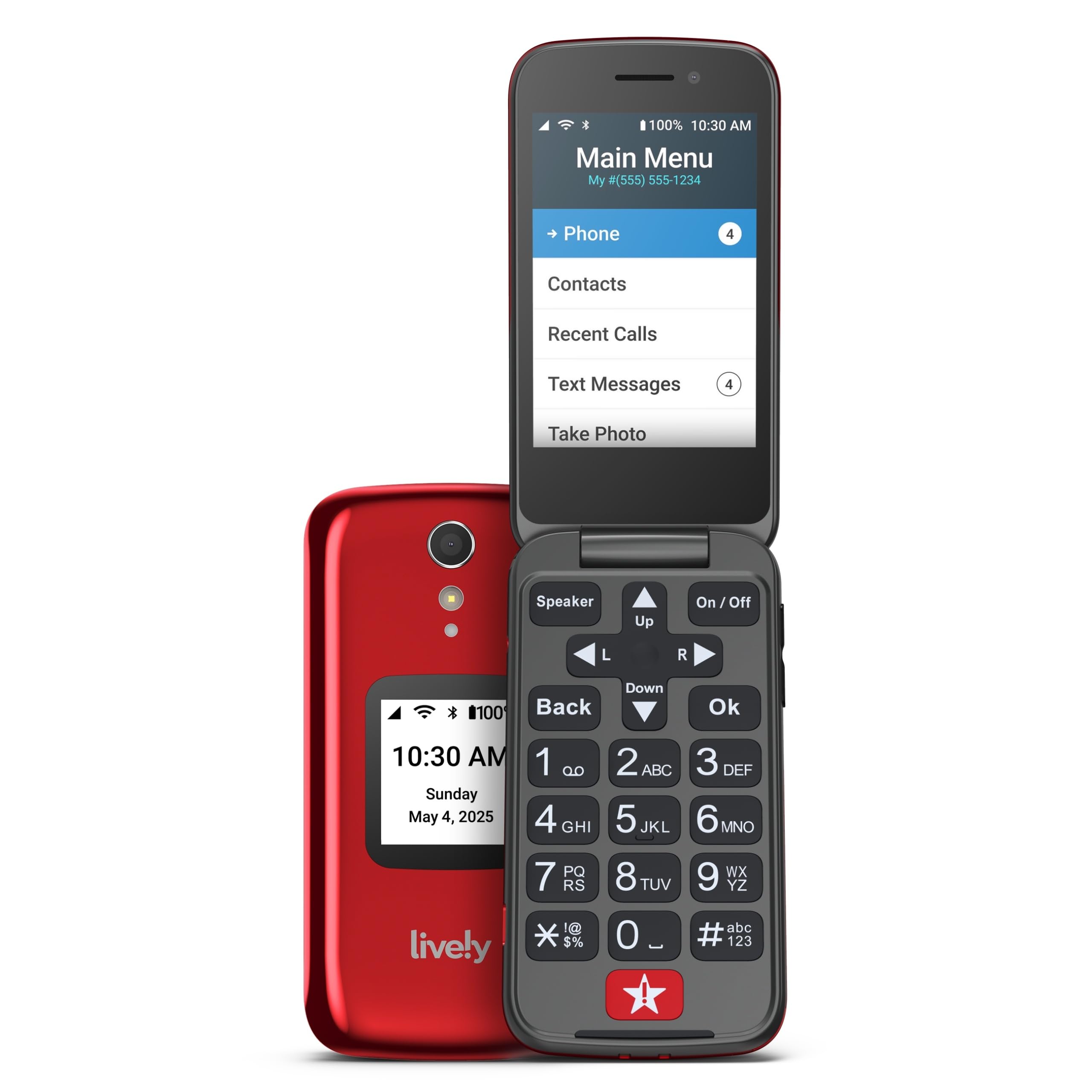
Lively Jitterbug Flip2
- M4/T4 hearing aid rating — the highest possible on both scales
- Large physical buttons and a flip design that's hard to misdial
- Up to 12 hours of talk time
- Optional 24/7 Urgent Response button built into the phone
- Requires a Lively service plan, not bring-your-own-carrier
- No smartphone apps or Bluetooth hearing aid streaming
Apple iPhone 16
- M3/T4 rating meets FCC hearing aid compatibility on both scales
- Direct Bluetooth streaming with Made-for-iPhone certified hearing aids
- Live Listen turns the phone into a remote microphone
- Wide accessibility settings (larger text, sound recognition, magnifier)
- Higher price than a phone built specifically for seniors
- Full smartphone interface can overwhelm a first-time user
Samsung Galaxy S25
- Certified hearing aid compatible (meets M3/T3 or better)
- Auracast Bluetooth broadcast audio support for compatible hearing aids
- Works with any Android-friendly senior cell phone plan
- Familiar Android/Google ecosystem for families already using it
- No published numeric M/T score, only a pass/fail HAC label
- Auracast is only useful where hearing aids and venues both support it
A phone can have giant buttons, a bright screen, and a simple menu, and still buzz, whine, or drop out the moment someone with hearing aids holds it to their ear. That's a separate problem from "easy to use," and it's one families usually discover by accident, after buying a phone specifically because it looked senior-friendly. The fix isn't a louder phone. It's a phone that's been tested and rated for how it interacts with a hearing aid's microphone or telecoil, which is a specific, measurable thing the FCC requires manufacturers to disclose.
What "Hearing Aid Compatible" Actually Means
Every phone sold in the US is tested against a technical standard (ANSI C63.19) and given two ratings. The M-rating measures interference with a hearing aid's microphone setting — how much buzzing or static the phone's radio introduces when held up normally. The T-rating measures how well the phone works with a hearing aid switched into telecoil mode, which picks up the phone's signal magnetically instead of through the air. Both scales run 1 to 4, and the FCC considers a phone hearing aid compatible if it scores M3 or M4, and separately T3 or T4. Higher is better on both; M4/T4 is the ceiling.
Some newer phones are tested under an updated 2019 ANSI standard and simply labeled "Hearing Aid Compatible" without a numeric score — that label means the phone performs at M3/T3 or better, it's just reported as pass/fail rather than a number. Either way, the rating is printed in the phone's FCC filing and usually in its accessibility or specifications page, not on the retail box, so it takes a little digging to find before buying.
This isn't a niche concern the industry is ignoring. The FCC adopted an order in October 2024 requiring that essentially all new wireless handset models sold in the US become hearing aid compatible, with manufacturers given a 24-month transition window and nationwide carriers 30 months to comply. Practically, that means the pool of phones that fail HAC testing entirely is shrinking fast — the real decision now is which HAC-rated phone fits the person, not whether one exists.
Three Phones Worth Buying in 2026
1. Lively Jitterbug Flip2 — Best for Telecoil Hearing Aids
The Flip2 carries an M4/T4 rating, the best score on both scales, which matters most for anyone whose hearing aids have a telecoil and who relies on it for calls. It's a flip phone with large physical buttons, a bright inside screen, and up to 12 hours of talk time, aimed squarely at someone who wants calls and texts and nothing else to manage. Lively's optional Urgent Response service adds a 24/7 agent a button-press away, which is a genuinely different feature from a medical alert pendant — it rides on the phone the person already carries rather than adding a second device to remember. The tradeoff is that it's a Lively-network phone, so it needs a Lively service plan rather than bringing your own carrier.
Check price on AmazonLively Jitterbug Flip2
2. Apple iPhone 16 — Best for Made-for-iPhone Hearing Aids
The iPhone 16 rates M3/T4, which meets the FCC's HAC bar on both scales, but its bigger advantage for hearing aid users is Bluetooth, not the telecoil. Hearing aids certified "Made for iPhone" — a long list from Phonak, Oticon, ReSound, Starkey, and others — pair directly with the phone and stream calls, music, and Siri responses straight into the aids as if they were wireless earbuds, no telecoil needed. Apple's Live Listen feature goes a step further: it turns the iPhone's microphone into a remote mic, so it can be set on a table across a noisy restaurant and stream that audio directly to the hearing aids. For a household that's already in Apple's ecosystem, or where the hearing aids were bought with iPhone pairing in mind, this combination usually beats a higher HAC number on paper.
3. Samsung Galaxy S25 — Best for Android and Galaxy Buds Households
The Galaxy S25 is certified hearing aid compatible under the newer pass/fail standard, meaning it meets M3/T3 or better, though Samsung doesn't publish a specific numeric score the way older phones do. Its advantage is Auracast, an emerging Bluetooth LE Audio broadcast feature Samsung has been rolling into recent Galaxy phones, which lets compatible hearing aids receive a direct audio stream in places — some airports, theaters, and pharmacies — that broadcast it. That's forward-looking rather than universally useful today, since Auracast-enabled hearing aids and venues are still spreading, but it's worth knowing about for anyone shopping for new hearing aids and a new phone at the same time. For a household that's already on Android and Google services, it's the natural pick.
Bluetooth Streaming vs. Telecoil — Which One Actually Matters Here
Families often assume the M/T rating alone answers the question, but the honest answer depends on the hearing aid itself, not just the phone. If the hearing aids are older analog-style aids with a telecoil and no Bluetooth radio, the T-rating is what determines call clarity, and a phone like the Flip2 with T4 will outperform a phone with T2 regardless of anything else it does well. If the hearing aids are modern and Bluetooth-capable — most aids sold in the last five years are — direct streaming from an iPhone or a compatible Android phone usually sounds clearer than even a good telecoil connection, because it skips the small amount of interference telecoils pick up from fluorescent lights and other electronics. The right move before buying either phone is checking the hearing aid's own manual or asking the audiologist which connection method the aids actually support — the phone should be chosen to match the hearing aid, not the other way around.
Common Mistakes Families Make
- Assuming "loud" and "hearing aid compatible" are the same thing. An amplified phone cranks up volume for everyone, including people without hearing aids. A HAC-rated phone specifically reduces the interference a hearing aid picks up from the phone's internal radio — a loud phone with a poor M-rating can still buzz painfully through a hearing aid at high volume.
- Buying the phone before checking what the hearing aids support. A brand-new iPhone bought for someone with a telecoil-only aid and no Bluetooth pairing support won't deliver the Made-for-iPhone experience the salesperson may have implied — it'll just be a phone with a decent HAC rating.
- Skipping the FCC or manufacturer spec page. Retail listings almost never print the M/T rating. It has to be looked up directly, usually under "accessibility" or "regulatory" in the phone's official specs, or in the FCC's own equipment authorization database by searching the model's FCC ID.
- Ignoring carrier coverage in the excitement over the phone itself. A Lively-locked Flip2 won't work on a family's existing Verizon or AT&T plan, and a Galaxy or iPhone bought unlocked still needs a compatible senior-friendly plan — see our cell phone plans for seniors guide for options that don't require a second contract.
Setting Up the Phone So the Rating Actually Helps
A HAC-rated phone still needs a few settings adjusted to perform at its best. On iPhone, hearing aid pairing lives under Settings > Accessibility > Hearing Devices, and it's worth doing this together in person once rather than over the phone, since the pairing process expects the hearing aids to be in a pairing mode that varies by brand. On Android, the path is usually Settings > Accessibility > Hearing aids, though Samsung and other manufacturers sometimes bury it under a different accessibility submenu. For telecoil users on any phone, checking that the phone's earpiece — not the speakerphone — is held directly over the ear during calls matters more than people expect; even a T4-rated phone won't couple well with a telecoil if it's held loosely or off to the side. Finally, if the household is also dealing with general volume or clarity beyond what the phone itself can fix, pairing the phone with a good OTC hearing aid or reviewing earbuds with a hearing aid feature covers the gap for someone who isn't ready for a full hearing aid yet.
Frequently Asked Questions
Does a higher M/T rating always mean a better phone?
Not necessarily — the rating only measures interference and telecoil performance, not the phone's screen size, button layout, camera, or overall ease of use. A phone can score M4/T4 and still be a poor fit if it's otherwise too complicated for the person using it. Treat the HAC rating as a minimum requirement to check, not the only factor in the decision.
Where can I actually find a phone's HAC rating before buying?
Check the manufacturer's official specifications or accessibility page for the exact model, or search the FCC's equipment authorization database using the phone's FCC ID, usually printed in the phone's settings under "Regulatory" or on a sticker under a removable back cover on older phones.
Can a phone with a low HAC rating still be used with hearing aids at all?
Often yes, just with more buzzing or interference than a highly-rated phone, and results vary by the specific hearing aid model. Some people don't notice a difference; others find a poorly-rated phone unusable for calls. There's no substitute for testing the actual phone with the actual hearing aids in the store before buying, if that's possible.
Do all hearing aids work with Bluetooth streaming from a phone?
No — only hearing aids specifically built with a Bluetooth or Bluetooth Low Energy radio support direct streaming, and even among those, "Made for iPhone" certification and Android compatibility aren't automatically the same list. Checking the hearing aid's own documentation, or asking the dispensing audiologist directly, is the only reliable way to know.
Is a captioned telephone a better option than a HAC cell phone?
They solve different problems. A captioned phone shows real-time text of what the other person is saying, which helps with comprehension regardless of hearing aid compatibility, but it's typically a landline-style device for the home. See our captioned telephones guide if the bigger issue is understanding speech rather than physical interference with hearing aids on the go.
Will a screen protector or phone case affect hearing aid compatibility?
A thick case can occasionally reduce telecoil coupling slightly since it increases the distance between the phone's internal antenna and the hearing aid, though the effect is usually minor. If someone notices new buzzing after adding a case, trying a call without it is a quick way to rule that out before assuming the phone itself is the problem.


