Best Hearing Amplifiers Under $200: Hear Better Without Breaking the Bank
Over-the-counter hearing amplifiers have improved dramatically. We compared affordable options on specs and owner reviews to find which deliver clear, comfortable sound.
As an Amazon Associate I earn from qualifying purchases. We independently review products; buying through our links never costs you extra.
Best Value RIC Design
Banglijian BL04RD OTC Hearing Aids
Quick picks
| Product | Best for | Amazon |
|---|---|---|
| Banglijian BL04RD OTC Hearing Aids | Value RIC Design | Check price on Amazon |
| MSA 30X Sound Amplifier | Budget Option | Check price on Amazon |

Our Top Picks
Chosen for seniors based on features, specs, and verified buyer reviews.
Sony CRE-C20 OTC Hearing Aid
- FDA-regulated OTC hearing aid, not a simple amplifier
- Nearly invisible in-canal design
- App-guided hearing assessment and custom profiles
- USB-C charging case
- No Bluetooth streaming
- Needs nightly charging
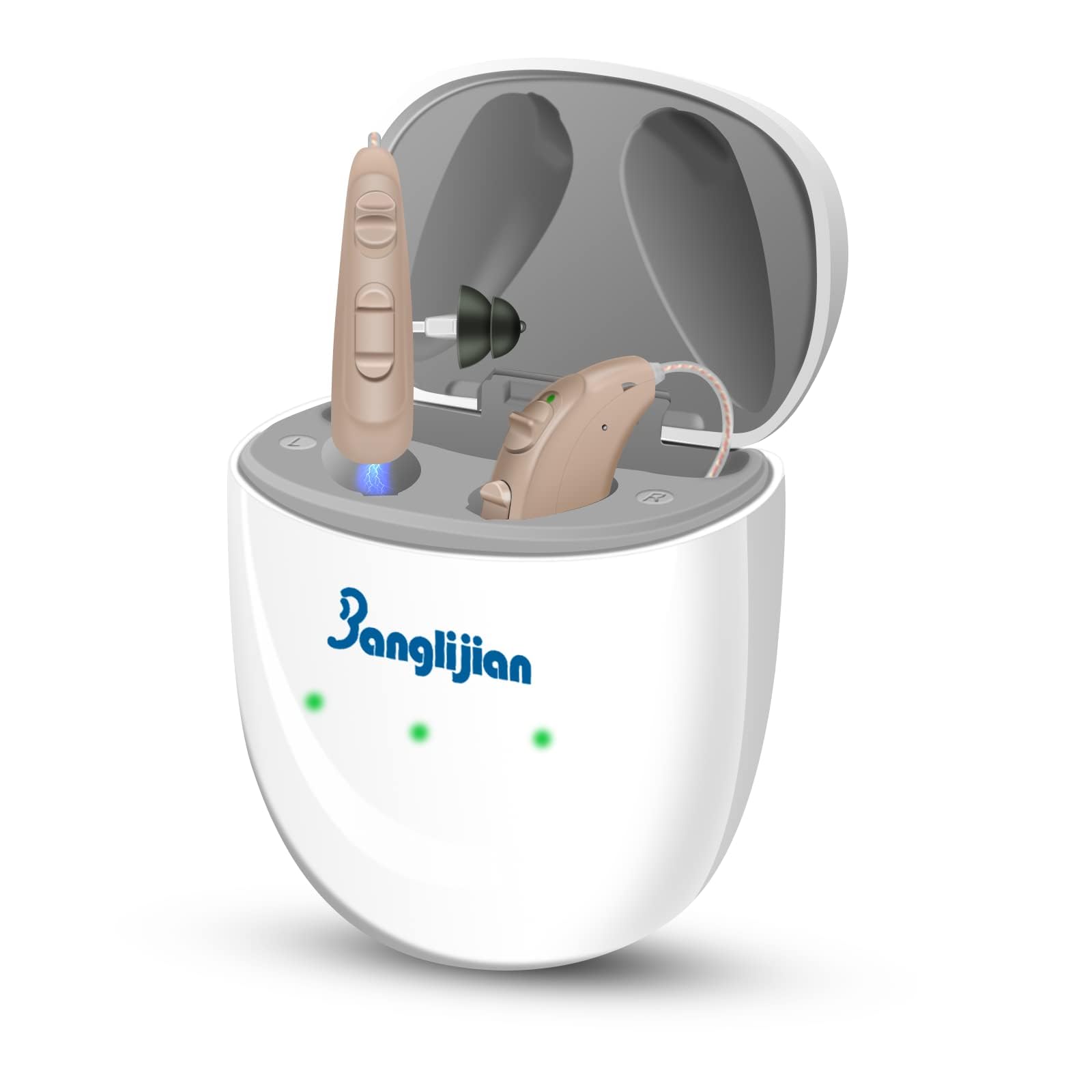
Banglijian BL04RD OTC Hearing Aids
- 16-channel processing
- Four listening programs
- Rechargeable with USB-C case
- Physical buttons plus app
- Behind-ear unit is more visible
- Inconsistent quality control per user reviews
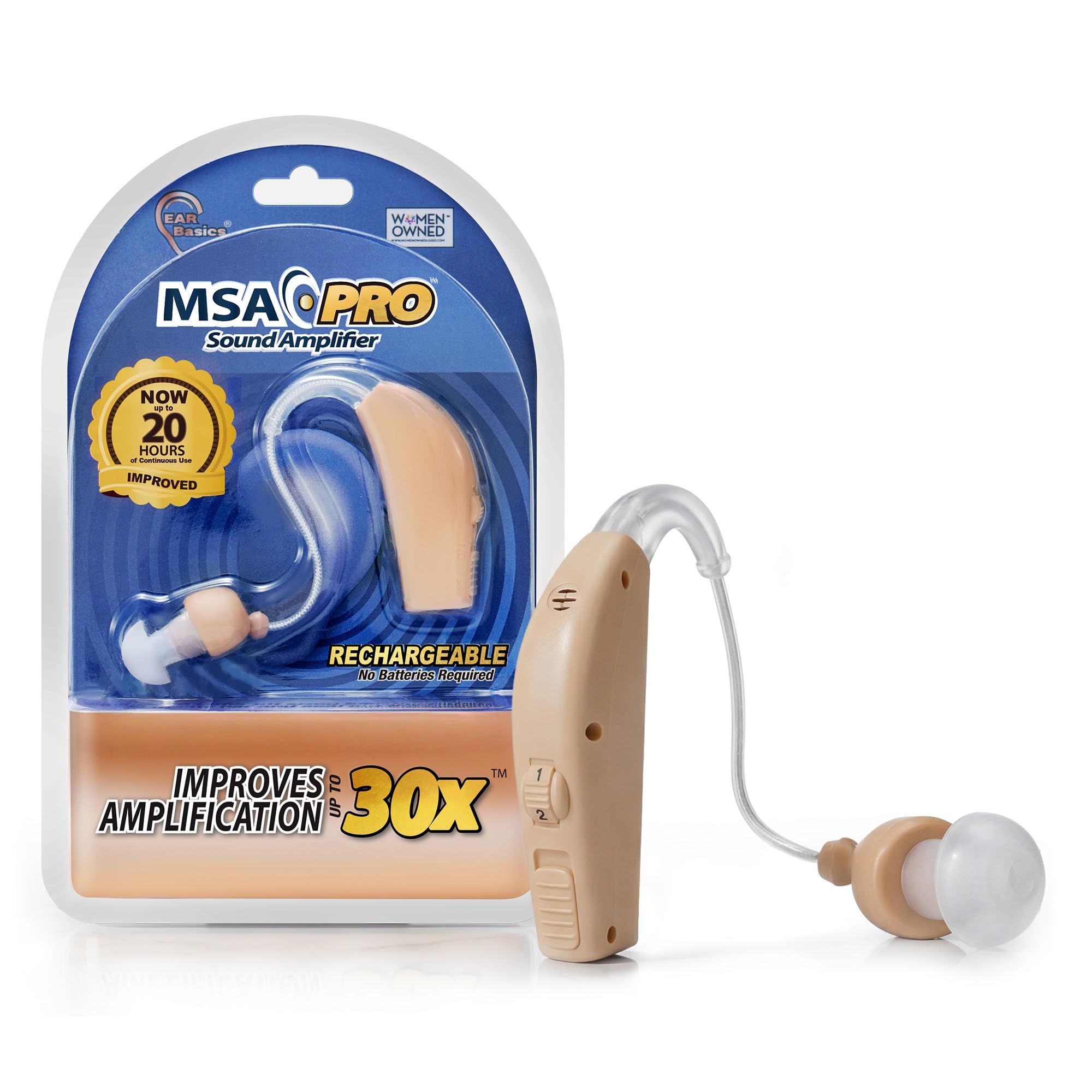
MSA 30X Sound Amplifier
- Simple single volume dial
- Up to 30x amplification
- Lightweight behind-ear design
- Uses common A10 batteries
- A PSAP, not an FDA-regulated hearing aid
- Amplifies background noise too
The Hearing Amplifier Revolution
Thanks to recent FDA changes, you no longer need a prescription for hearing assistance devices. This has opened up a world of affordable options — but quality varies enormously.
How We Chose
We compared hearing amplifiers and OTC hearing aids at different price points, weighing their specifications and published owner reviews across quiet rooms, noisy restaurants, and phone calls. Based on that research, we've identified three standout options that stand out on performance and value.
Important Note
Hearing amplifiers are not the same as hearing aids. If you have significant hearing loss, please consult an audiologist. These devices are best for mild to moderate hearing difficulty.
Understanding Hearing Loss in Seniors
Hearing loss affects 1 in 3 adults over 65 and half of those over 75. It's not just about volume—it's about clarity, especially understanding speech in noisy environments.
Signs You May Need Hearing Help
- Frequently asking people to repeat themselves
- Turning TV volume higher than others prefer
- Difficulty following conversations in restaurants
- Missing doorbells, phone rings, or alarms
- Feeling exhausted after social situations
OTC Hearing Aids vs. Personal Sound Amplifiers (PSAPs)
OTC Hearing Aids (FDA-regulated since 2022):
- Designed specifically for mild-to-moderate hearing loss
- Include features like noise reduction and feedback cancellation
- Self-fitting with app-based customization
- Price range: $200-$1,500 per pair
Personal Sound Amplifiers (PSAPs):
- Amplify ALL sounds (not selective)
- Not regulated as medical devices
- Better for occasional use (TV, lectures)
- Price range: $20-$300
What to Look for in Hearing Amplifiers
1. Sound Quality Features
- Noise reduction — Reduces background noise in conversations
- Feedback cancellation — Eliminates whistling
- Directional microphones — Focus on sounds in front of you
- Multiple programs — Settings for different environments
2. Fit and Comfort
- In-the-ear (ITE) — Custom fit, more visible
- Receiver-in-canal (RIC) — Small behind-ear unit with tiny speaker in ear
- Behind-the-ear (BTE) — All components behind ear
3. Battery Life
- Rechargeable — More convenient, typical 16-24 hours per charge
- Disposable batteries — Cheaper devices but ongoing cost
4. Connectivity
- Bluetooth — Stream calls and audio directly
- TV streamers — Send TV audio directly to hearing aids
- Smartphone apps — Adjust settings discreetly
Our Top Picks
Sony CRE-C20 — Best Overall OTC Hearing Aid
Sony's entry into the OTC hearing aid market is nothing short of remarkable. The CRE-C20 delivers prescription-grade sound quality in a virtually invisible design that sits completely inside your ear canal.
Why it stands out: These are true FDA-regulated OTC hearing aids, not simple amplifiers. The sound processing is sophisticated, with adaptive noise reduction designed to work in challenging environments like restaurants. Reviewers report that conversations in noisy settings become noticeably clearer compared to basic amplifiers.
The completely-in-canal (CIC) design makes them nearly invisible when worn. Each device is tiny — about the size of a coffee bean — and sits deep enough in the ear canal that most people won't notice you're wearing them. This discretion is a major selling point for many seniors who feel self-conscious about visible hearing devices.
Setup is straightforward through Sony's smartphone app. The app guides you through a hearing assessment that customizes the sound profile to your specific hearing needs. You can fine-tune settings for different environments (quiet home, restaurant, outdoor) and save your preferences.
Battery life is solid at approximately 28 hours per charge. The compact charging case provides an additional 2.5 full charges, giving you several days of use between plugging in the case. The case itself charges via USB-C.
Comfort and fit: Sony includes four different ear tip sizes to ensure proper fit. Getting the right seal is crucial both for comfort and sound quality. Reviewers note it typically takes a few days to get used to the in-canal fit, but after that adaptation period, many barely notice wearing them.
Limitations: The tiny size means small batteries, so you'll need to charge nightly. The completely-in-canal design also means no Bluetooth streaming — these are hearing-only devices. And they're a significant investment for an OTC device, though still far cheaper than prescription hearing aids.
Best for: Seniors with mild-to-moderate hearing loss who want premium sound quality and discreet design, and who can afford the higher price point.
Banglijian BL04RD — Best Value RIC Design
The Banglijian BL04RD offers an impressive feature set at a mid-range price. These receiver-in-canal (RIC) hearing aids provide 16-channel sound processing — a specification you'd typically find in much more expensive devices.
Design and comfort: The RIC design places a small unit behind your ear with a thin wire running to a tiny speaker (receiver) that sits in your ear canal. This design has several advantages: longer battery life than in-canal models, better sound quality, and easier handling for those with dexterity issues.
The behind-ear unit is small and subtle, available in beige to blend with most skin tones. The thin wire is nearly invisible. Reviewers generally find them comfortable for all-day wear, though some mention initial irritation that resolves within a week as they adjust.
Sound quality: The 16-channel processing means the device can analyze and adjust different frequency ranges independently, resulting in more natural sound. Background noise reduction works well — reviewers report much better speech comprehension in moderately noisy environments compared to basic amplifiers.
The devices include four listening programs: normal conversation, noisy environment, outdoor, and TV/music. You switch programs with a small button on the behind-ear unit. Reviewers note that after a week or so of use, choosing the right program for each situation becomes second nature.
Battery and charging: Rechargeable lithium batteries provide approximately 20 hours of use per charge. The included charging case holds a full charge and uses USB-C. Most owners settle into an easy routine of placing the devices in the charger at bedtime.
App control: The companion smartphone app (iOS and Android) allows volume adjustment, program switching, and some sound customization. The app interface is straightforward, though not as sophisticated as premium brands. Importantly, you can control everything from the physical buttons if you prefer not to use the app.
Limitations: While the sound quality is good, it's noticeably less refined than the Sony CRE-C20. Sound can seem slightly artificial in very quiet environments. The behind-ear design is more visible than in-canal models. And quality control seems inconsistent based on user reviews — some units work flawlessly while others have issues.
Best for: Budget-conscious seniors who want advanced features like multi-channel processing and noise reduction without paying premium prices, and who don't mind the slightly larger RIC design.
MSA 30X Sound Amplifier — Best Budget Option
The MSA 30X is a basic personal sound amplifier that costs less than a nice dinner out. It won't match the performance of true OTC hearing aids, but it serves specific use cases well.
What it does well: Simple amplification. The device provides up to 30x sound amplification with a single volume control dial. That's it. No apps, no programs, no complexity. For seniors who just need help hearing the TV or conversations in quiet rooms, this simplicity is a feature, not a bug.
The behind-ear design is lightweight and comfortable for extended wear. The unit runs on A10 hearing aid batteries (included), with each battery lasting approximately 5-7 days of regular use. Batteries are inexpensive and widely available at drugstores.
Sound quality: Let's be honest — this is basic amplification. It makes everything louder, including background noise. There's no selective frequency enhancement, no noise reduction, no sophisticated processing. In quiet environments, it works fine. In noisy restaurants, it becomes overwhelming.
Reviewers find it helpful for specific situations: watching TV alone, attending quiet church services, one-on-one conversations at home. It's not a solution for all-day wear or complex listening environments.
Who should consider it:
- Seniors on very tight budgets who need some hearing help
- Those wanting to try amplification before investing in proper hearing aids
- People who only need help in specific, quiet situations (TV watching)
- Backup device for travel or emergencies
Who should skip it:
- Anyone with moderate-to-severe hearing loss
- Those who need help in noisy environments
- Seniors looking for all-day wearable solution
- People who want Bluetooth or smartphone connectivity
Important caveat: This is a personal sound amplifier (PSAP), not an OTC hearing aid. It's not FDA-regulated as a medical device and shouldn't be considered a hearing loss solution. Think of it as reading glasses versus prescription eyeglasses — helpful for minor issues, inadequate for significant problems.
Check price on AmazonMSA 30X Sound Amplifier
Setting Up for Success
- Start in quiet environments — Don't begin in noisy restaurants
- Wear consistently — Brain needs time to adjust (2-4 weeks)
- Start at lower volumes — Increase gradually
- Practice conversations — Watch speakers' faces
- Keep a journal — Note difficult situations to adjust settings
When to See an Audiologist
- Sudden hearing loss (medical emergency)
- Hearing loss in only one ear
- Ringing in ears (tinnitus)
- Dizziness with hearing loss
- No improvement with OTC aids
A Cheaper Fix If It's Just the TV
If the amplifier you're considering is really only meant to solve trouble hearing the television, skip general amplification and look at a device built specifically for that job — our guide to the best TV listening devices for seniors covers wireless headsets and speaker systems that isolate dialogue without amplifying the whole room.
The Bottom Line
The Sony CRE-C20 represents the best that OTC hearing aid technology offers — prescription-grade performance at a fraction of prescription prices. The Banglijian BL04RD provides solid performance and advanced features for budget-conscious buyers. And the MSA 30X serves as an entry-level option for simple amplification needs.
For most seniors with mild-to-moderate hearing loss, we recommend starting with the Banglijian BL04RD. It offers the best balance of performance, features, and price. Give it 30 days of consistent wear. If you're not satisfied or need more refinement, step up to the Sony CRE-C20 or consult an audiologist about prescription options.
Worth knowing: an amplifier is not the same thing as an FDA-registered OTC hearing aid. If you want real hearing-aid processing rather than basic sound boosting, see our guide to the best OTC hearing aids for seniors.