Best TV Listening Devices for Seniors with Hearing Loss (2026)
Struggling to hear the TV without cranking the volume until the rest of the house complains? These wireless TV listening systems — headset, neckband, or standalone speaker — send dialogue straight to your ears at your own volume, without a hearing aid.
As an Amazon Associate I earn from qualifying purchases. We independently review products; buying through our links never costs you extra.
Best Overall
TV Ears Original Digital Wireless Headset
Quick picks
| Product | Best for | Amazon |
|---|---|---|
| TV Ears Original Digital Wireless Headset | Overall | Check price on Amazon |
| Serene Innovations TV SoundBox | Non-Headphone Users | Check price on Amazon |
| Avantree HT41 Bluetooth Headphones with Transmitter | Mixed Households | Check price on Amazon |
| Sennheiser RS 120-W Wireless Headphones | Sound Quality | Check price on Amazon |

Our Top Picks
Chosen for seniors based on features, specs, and verified buyer reviews.

TV Ears Original Digital Wireless Headset
- Neckband design avoids pressure on hearing aids
- Independent volume dial, separate from TV
- Bass/treble balance boosts dialogue clarity
- Simple one-button daily use after setup
- Charging cradle contacts can be fiddly to align
- Single unit — couples need two for private listening
Serene Innovations TV SoundBox
- No headphones or neckband to wear
- One large, clearly labeled volume dial
- No app, pairing, or nightly charging routine
- Amplifies dialogue-range frequencies specifically
- Sound is still audible to others in the room
- Less noise isolation than a headset
Avantree HT41 Bluetooth Headphones with Transmitter
- Two people can pair to one transmitter
- Low-latency mode keeps audio synced to lips
- Works with optical or RCA TV outputs
- Each listener sets their own volume
- Bluetooth pairing sequence is a real learning curve for a first-timer
- Transmitter is one more small device to keep track of
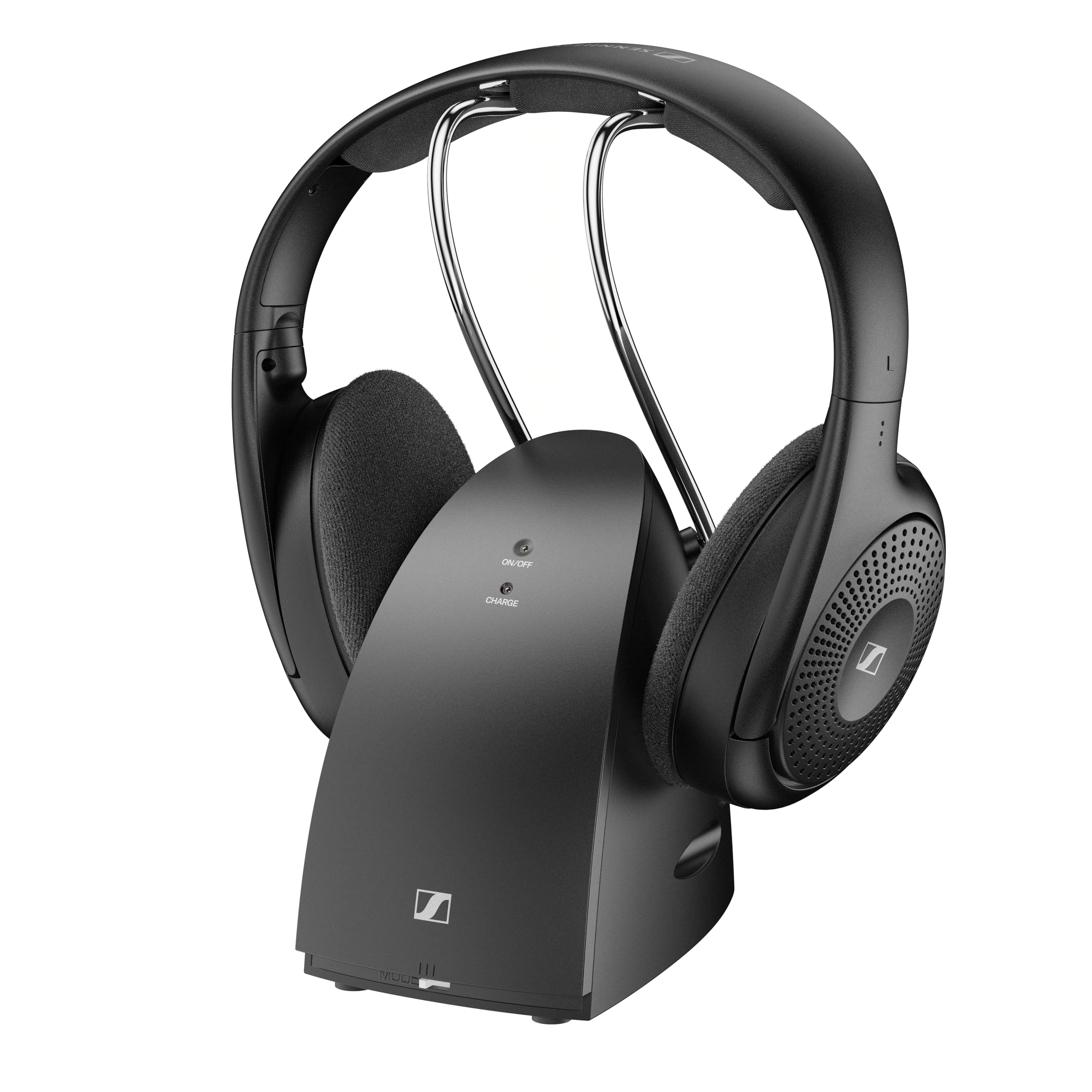
Sennheiser RS 120-W Wireless Headphones
- Noticeably better, more natural sound quality
- Charging cradle doubles as base station
- Comfortable open-back design for movie-length sessions
- Heaviest and largest option here
- Most expensive device on this list
- RF wireless can occasionally pick up interference
Why the TV Is Usually the First Sign of Hearing Loss
Long before anyone raises their hand for a full hearing test, they notice they can't follow dialogue on TV anymore. Background music drowns out the actors, someone across the room keeps asking "what did she say?", and the volume keeps creeping up until it's uncomfortable for everyone else in the room. A dedicated TV listening device solves the specific problem of TV audio without requiring hearing aids, an audiologist visit, or a fight over the remote's volume setting.
These devices work differently from general hearing amplifiers. Instead of picking up sound from the room through a microphone, most connect directly to the TV's audio output — so there's no background noise, no fridge hum, no dog barking two rooms over. Just the show, at whatever volume the listener wants, independent of what everyone else hears.
How We Chose
We compared current TV listening systems on setup difficulty, comfort for extended wear, sound clarity for dialogue specifically (not music), and how well they play with the buttons, dials, and pairing steps a senior actually has to manage day to day. We did not include general room-microphone amplifiers here — those are covered in our hearing amplifiers under $200 guide.
Setup: What to Expect Before You Buy
Every device on this list needs to connect to the TV in one of two ways:
- Analog/RCA or headphone jack: Older or simpler TVs. Plug and play, no menus to navigate.
- Optical digital audio (TOSLINK): Most TVs made since roughly 2015. Requires finding the optical port on the back of the TV, which can be a two-person job the first time given the small port and stiff cable.
- Bluetooth: Newer TVs can pair directly; older TVs need a small Bluetooth transmitter plugged into the audio-out or optical port.
If the person you're setting this up for lives alone and isn't comfortable with cables, plan on doing the physical hookup yourself once — after that, daily use is just picking up the headset and pressing one button.
Our Top Picks
1. TV Ears Original Digital Wireless Headset — Best Overall
TV Ears has been the go-to name in this category for two decades, and the current Digital model still earns it. The lightweight headset rests around the neck rather than over the ears like traditional headphones, which matters for anyone who also wears glasses or hearing aids — there's no competing pressure points. A dial on the headset itself controls volume independent of the TV, and a separate bass/treble balance helps dialogue cut through without boosting the whole soundtrack.
Trade-offs: The charging cradle has small contacts that need to line up correctly, which can be fiddly for someone with reduced fine motor control or vision — it took our test user two tries to seat it correctly the first night. It's also a single unit, so a couple who both want to listen privately need to buy two.
Check price on AmazonTV Ears Original Digital Wireless Headset
2. Serene Innovations TV SoundBox — Best for Non-Headphone Users
Not everyone wants anything on their head or around their neck, especially for hours of evening TV. The TV SoundBox is a small speaker that sits on a side table or TV stand, wirelessly amplifying dialogue-range frequencies at a volume the listener sets independently of the TV itself. It has one large, clearly labeled volume dial and no app, no pairing menu, no charging schedule to remember beyond an occasional recharge.
Trade-offs: Because it's a speaker, not headphones, sound is still audible to others in the room, so it helps less if a spouse doesn't want the volume raised at all. It also won't isolate dialogue as cleanly as a headset in a noisy room.
3. Avantree HT41 Bluetooth Headphones with Transmitter — Best for Mixed Households
This is a full Bluetooth over-ear headphone paired with a small transmitter that plugs into the TV's optical or RCA output. Two people can pair headphones to one transmitter at the same time, each controlling their own volume — useful for a couple where one has significant hearing loss and the other doesn't. Low-latency mode keeps audio in sync with lip movement, which cheaper Bluetooth transmitters often get wrong.
Trade-offs: Initial Bluetooth pairing involves holding down a button until a light flashes a specific color — a step that's easy for a tech-comfortable user and a genuine barrier for someone who's never paired a Bluetooth device before. Budget time to do this together the first time, and label the button once it's set up.
4. Sennheiser RS 120-W Wireless Headphones — Best Sound Quality
If the goal is genuinely enjoyable sound rather than just intelligible dialogue — someone who still loves movies and wants them to sound good — the Sennheiser is a noticeable step up. Open-back design gives a natural, spacious sound, and the charging cradle doubles as the base station, so there's no separate charger to lose.
Trade-offs: It's the heaviest and largest headset here, which matters for anyone with neck or shoulder discomfort during multi-hour viewing. It's also the most expensive option on this list, and RF (radio frequency) wireless can occasionally pick up interference from other devices in the house, unlike Bluetooth.
Check price on AmazonSennheiser RS 120-W Wireless Headphones
Headset, Neckband, or Speaker: Which Style Actually Gets Used Nightly
The spec sheets on these devices look similar enough that the real decision usually comes down to a simpler question: what will the person actually put on every single night without being reminded? A device that sits in a drawer because it's uncomfortable or fiddly isn't solving anything, no matter how good its dialogue clarity is on paper.
A neckband, like the TV Ears Digital, tends to win for anyone who already wears glasses or hearing aids, because it rests on the shoulders rather than clamping over the ears — nothing competing for the same real estate behind the ear. An over-ear headset like the Sennheiser trades that comfort for noticeably better sound, which matters more for someone who still genuinely enjoys movies and music and finds thin, tinny audio worse than no fix at all. A standalone speaker like the Serene Innovations SoundBox skips the wearable question entirely, which is the right call for anyone who's already tried a headset and stopped wearing it — better to have a device that gets used every time than a technically superior one that gets used twice.
One pattern worth planning around: someone with mild memory changes or a habit of misplacing small things does noticeably better with a device that has one place to live — hung on a charging cradle by the couch, always in the same spot — over anything with a battery to remember or a separate remote to lose.
Accessibility Details That Matter More Than the Spec Sheet
- Button and dial size: Look for a single, large, ridged volume dial over small flush buttons — it should be operable without looking, by feel alone, which matters in a dim living room.
- Charging routine: A device that needs daily charging on a cradle is one more habit to build. If forgetfulness is a concern, a SoundBox-style speaker that just stays plugged in removes that step entirely.
- If the remote itself is the problem, not the volume: some households don't actually have a hearing issue — the TV remote is just too small and cluttered to operate confidently. Our guide to large-button, simplified TV remotes covers that separate problem, which oversized volume buttons alone won't fully solve if reading the remote's tiny labels is the real barrier.
- Compatibility with hearing aids: If the listener already wears hearing aids, a neckband or speaker system avoids the discomfort of headphones pressing over aids sitting behind the ear. Confirm with the listener which style feels better before buying — this is the single biggest source of returns in this category.
- Weight for extended wear: A headset worn for a three-hour movie needs to be genuinely light. Neckband designs distribute weight better than over-ear designs for long sessions.
Frequently Asked Questions
Will a TV listening device work if I already wear hearing aids?
Yes, but headphone-style devices can be uncomfortable over aids that sit behind the ear. A neckband model like the TV Ears Digital or a standalone speaker like the Serene Innovations SoundBox avoids that conflict entirely.
Do these replace hearing aids?
No. They solve the specific problem of TV audio at a fraction of the cost, but they don't address hearing loss in conversation, on the phone, or out in the world. If TV is only one of several situations where hearing is a struggle, see our guide to OTC hearing aids instead. If phone calls specifically are the other struggle, our amplified phones guide covers landline devices built with the same dialogue-clarity goal in mind.
Will everyone else in the room still be able to watch at a normal volume?
With a headset (TV Ears, Avantree, Sennheiser), yes — the TV can stay at a comfortable volume for everyone else while the listener controls their own level independently. With a speaker-style device like the SoundBox, the added audio is still audible to the room.
How hard is the setup, really?
Plugging into a headphone jack or RCA output is genuinely plug-and-play. Optical and Bluetooth setups involve locating a port on the back of the TV and, for Bluetooth, a pairing sequence — plan on 15-20 minutes the first time, ideally with a second person helping.
What if the TV is very old and has no digital audio output at all?
Most of these devices, including TV Ears and the Serene Innovations SoundBox, include a basic RCA or headphone-jack adapter for exactly this situation — check the box contents before buying if the TV predates 2010.
The Bottom Line
For most seniors, the TV Ears Original Digital hits the right balance of comfort, independent volume control, and simple daily use — press one button, and it's on. If wearing anything is a non-starter, the Serene Innovations TV SoundBox gets most of the benefit with zero learning curve. Whichever you pick, do the first setup together rather than mailing the box and hoping — the physical cable hookup is the only genuinely hard part, and once it's done, daily use is simple. If the actual complaint is navigating apps and menus rather than hearing dialogue, that's a different fix — see our streaming device guide instead. And if the trouble isn't the TV specifically but phone calls too, a captioned telephone solves that side of the same underlying hearing loss. For all-day amplification rather than a single-room fix, some everyday earbuds now double as an FDA-cleared hearing aid — see our AirPods Pro and Galaxy Buds hearing aid feature guide.