Best Smart Rings for Seniors: Sleep & Heart Tracking Without a Watch (2026)
No screen to squint at, no touchscreen to fight with arthritic fingers, and days instead of hours between charges — a smart ring solves the exact problems that make seniors stop wearing smartwatches. Here's which of the three real no-subscription-or-not options actually fits an older wearer, and what a ring still can't do.
As an Amazon Associate I earn from qualifying purchases. We independently review products; buying through our links never costs you extra.
Best No-Subscription Pick
Samsung Galaxy Ring
Quick picks
| Product | Best for | Amazon |
|---|---|---|
| Samsung Galaxy Ring | No-Subscription Pick | Check price on Amazon |
| RingConn Gen 2 | Value, No Subscription | Check price on Amazon |
| Oura Ring 5 | Sleep-Tracking Depth | Check price on Amazon |

Our Top Picks
Chosen for seniors based on features, specs, and verified buyer reviews.
Samsung Galaxy Ring
- No monthly or annual fee for any tracking feature
- Lightest ring in this group at 2.3–3 grams
- Syncs with a Galaxy Watch into one Samsung Health picture if both are owned
- Free sizing kit before purchase
- Full feature set assumes a Samsung or Android phone
- Premium price with no display and no SOS or fall detection
RingConn Gen 2
- Lowest price here (plus a lighter, cheaper Gen 2 Air option)
- Longest battery life in the group at roughly 12 days per charge
- No subscription, ever
- Works with both iPhone and Android
- App and health insights less detailed than Oura or Samsung
- Smaller company than Apple/Samsung — less brand-name family tech support
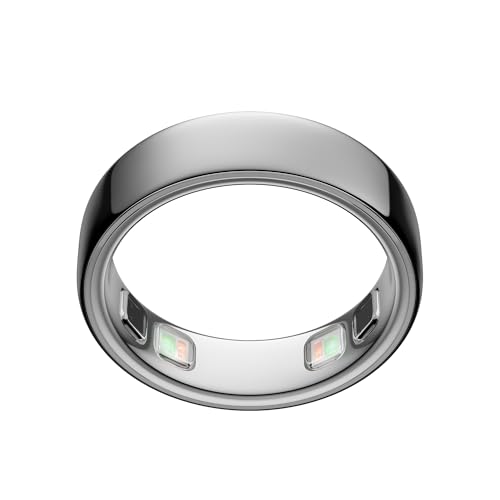
Oura Ring 5
- Most detailed and longest-refined sleep-staging and readiness algorithm in the category
- Longitudinal trend data (resting heart rate, temperature) useful for catching early illness signs
- Works with both iPhone and Android
- Full insights require an active paid membership on top of the hardware cost
- One more recurring bill for a household already tracking a medical alert subscription
Most smartwatch reviews for seniors circle back to the same complaint: the display is fine, the fall detection is genuinely useful, but the daily charging routine is the thing that actually breaks — someone forgets one night, and the watch that's supposed to call for help in an emergency is a dead weight on the nightstand instead. A smart ring sidesteps that specific failure point. No screen to squint at, no touchscreen menu to navigate with arthritic fingers, and battery life measured in days or weeks rather than hours. It's not a replacement for a fall-detection watch or a medical alert pendant — none of the three rings below can call for help on their own — but for tracking sleep quality and resting heart rate trends, which is genuinely useful early-warning information for an aging body, a ring is often the more realistic device to actually keep wearing.
Why a ring instead of a watch, specifically for an older wearer
Nothing to charge every night
An Apple Watch or most Android smartwatches need daily or near-daily charging, which turns into a habit that has to be maintained perfectly to be useful — miss one night and there's no data, or worse, no fall-detection coverage, for the next day. Every ring below runs multiple days to nearly two weeks per charge, which is a meaningfully lower bar to clear consistently.
Nothing to read or tap
A smartwatch face is a small screen with small text and touch targets that assume steady fingers and reasonable near vision — exactly what a lot of older users find frustrating about the category. A ring has none of that. All the data lives in a phone app, checked on the family member's or the wearer's own schedule, rather than demanding an in-the-moment interaction on a tiny wrist-mounted screen.
Comfort for arthritic or sensitive wrists
A watch strap sits on skin for 24 hours a day and can irritate wrists with arthritis, edema, or thin, fragile skin common with age. A ring is lighter and, for a lot of people, simply more comfortable to wear continuously — though ring fit brings its own wrinkle, covered below.
What a ring can't do
Be direct about this with anyone considering one instead of a watch: none of these three rings have a screen, a speaker, a cellular radio, or an SOS button. There is no fall detection and no way to call for help from the ring itself. If the primary safety concern is a fall while alone, a ring is a health-tracking supplement to sit alongside a real fall-detection device or medical alert system — not a substitute for one.
Our picks
Samsung Galaxy Ring — Best No-Subscription Pick
The Galaxy Ring is not cheap, but the number that matters more is $0 — there's no monthly or annual fee for any of its tracking features, ever. It's also the lightest ring in this roundup at 2.3 to 3 grams depending on size, which matters for someone with reduced hand strength or sensory changes who notices weight on a finger more than they used to. It logs sleep stages, resting heart rate, and skin temperature trends into the Samsung Health app, and if the household already has a Galaxy Watch, the two devices' data reconciles into one health picture rather than two separate apps to check.
The trade-off is ecosystem lock-in: the full feature set assumes a Samsung or at least Android phone, and an iPhone household will get a noticeably thinner experience. There's also no fall detection or SOS — this is a pure background tracker, and the price is a lot to spend on a device with no display and no emergency features.
RingConn Gen 2 — Best Value, No Subscription
RingConn undercuts both competitors on price — both the standard Gen 2 and the Gen 2 Air, a lighter, less expensive version with a slightly trimmed feature set — while matching the "no subscription, ever" model. Its standout spec is battery life: roughly 12 days per charge, the longest of any ring here, which in practice can mean charging it twice a month instead of managing a weekly or nightly routine. It works across both iPhone and Android, which the Galaxy Ring doesn't.
The app and its health insights are less polished and less clinically detailed than Oura's or Samsung's, and RingConn is a smaller company than Apple or Samsung — worth knowing for a family used to walking an older relative through tech support by referencing a name they recognize. Like the others, no SOS, no fall detection.
Check price on AmazonRingConn Gen 2
Oura Ring 5 — Best Sleep-Tracking Depth (If a Subscription Is Acceptable)
Oura has been refining its sleep-staging algorithm longer than any other ring maker, and it shows: its readiness score and longitudinal trend data — resting heart rate drift, overnight temperature trend, sleep consistency over weeks and months — are the most detailed and most often cited by name in sleep research of anything in this category. For a family specifically trying to catch early signs of illness or a developing health issue through subtle heart-rate or temperature shifts, that depth is the real reason to pick Oura over the alternatives. It works with both iPhone and Android.
The catch is real and ongoing: the $399 hardware only includes full readiness, sleep, and trend insights with an active Oura Membership, $5.99 a month or $69.99 a year. For a household already paying for a medical alert subscription and a phone plan, that's one more recurring charge to track, cancel, or forget about — worth weighing against RingConn or the Galaxy Ring's flat, one-time cost if ongoing bills are the bigger practical obstacle.
Check price on AmazonOura Ring 5
The fit problem nobody mentions in the spec sheet
Every ring in this category needs an accurate size, and getting it wrong matters more here than it does with a watch. All three brands sell (or ship free) a sizing kit before the actual purchase — use it rather than guessing from a jewelry ring size, since smart ring sizing runs differently due to the internal sensor housing. Aging hands also change size through the day and across seasons more than people expect, from mild swelling, arthritis-related joint changes, or simple weight fluctuation, and a ring sized perfectly in a cool morning can feel tight by a warm afternoon or loose after a few months. A ring that's too loose is also genuinely easy to lose — down a drain while washing hands, left on a napkin at a restaurant, slipped off in a pool — in a way a strapped watch simply isn't. If the household includes someone who takes rings on and off through the day out of habit, a ring is going to be a worse fit for this than a watch that stays on the wrist.
Two-year cost, all in
Sticker price alone is misleading here because two of the three rings charge nothing after the initial purchase and one keeps billing. Over two years, the Galaxy Ring and RingConn Gen 2 cost exactly what they cost on day one, full stop. Oura's hardware plus 24 months of the $5.99 membership adds roughly $144 to the sticker price — more than either no-subscription option, and a bill that keeps recurring past year two as well. That math doesn't make Oura the wrong choice; its sleep-trend depth is genuinely the best of the three, and for a family specifically watching for early illness signs through resting heart rate or temperature drift, that may be worth paying for indefinitely. But it's worth doing this arithmetic before buying rather than after, especially in a household already stacking a medical alert subscription, a phone plan, and possibly a streaming or app subscription set up for the same person.
Who should skip a ring entirely
A ring is the wrong call for someone with diagnosed cognitive decline significant enough that they'd forget to keep it on, since unlike a watch there's no visual reminder on the wrist and no strap to notice missing — a ring slipped off during handwashing and left by a bathroom sink is easy to lose track of for someone who wouldn't remember taking it off in the first place. It's also the wrong call as a first purchase for anyone whose primary risk is falling while alone; buy the fall-detection watch or the medical alert pendant first; a ring is a smart second device for sleep and heart-rate trend tracking once that base is covered, not a starting point on its own. And for anyone who takes rings on and off throughout the day as a lifelong habit — before washing dishes, before applying lotion, before gardening — the constant removal defeats the continuous tracking that's the entire point of wearing one.
Frequently asked questions
Can a smart ring replace a medical alert system?
No. None of these rings have an SOS button, speaker, cellular connection, or fall detection. They're background health trackers, not emergency devices — keep a medical alert pendant or fall-detection watch in place for that job.
Is a ring harder to put on and take off with arthritis than a watch?
It depends on the hand. A ring that fits well slides on with less fine-motor effort than buckling a watch strap, but sizing has to be right — too snug, and swollen joints make it genuinely difficult to remove, which is why using the manufacturer's sizing kit matters more than it does for a watch with an adjustable strap.
Which one is easiest for a family member to check on remotely?
All three sync to a phone app that a family member can review with permission, but Samsung Health and Oura's app are generally considered the more polished, easier-to-read dashboards of the group for someone checking trends rather than raw numbers.
Do any of these track blood pressure?
No smart ring on the market, including these three, provides medically validated blood pressure readings. For blood pressure monitoring, a dedicated home blood pressure monitor remains the accurate option — a ring's heart rate and temperature trends are a different, complementary kind of data.
What if a ring doesn't fit well, or I'd rather have a screen?
A wrist-worn fitness tracker solves the same core tracking goals with a small display to check readings directly rather than through a phone app. Our fitness trackers for seniors guide compares three current options, including a budget pick under $60.

