Best Foot Antiperspirants and Sweat/Odor Products for Older Adults (2026)
Foot antiperspirants, sprays, and powders compared for older adults: which reduce sweat and which only absorb it, grip and bending demands, bathroom slip risk from powder, and kidney and diabetes cautions.
As an Amazon Associate I earn from qualifying purchases. We independently review products; buying through our links never costs you extra.
The short answer: For sweaty, damp feet, a true antiperspirant, meaning one with a Drug Facts label listing an aluminum-based active ingredient, reduces sweat, while powders and most sprays only absorb it or cover odor. For older adults, format matters as much as formula. Sticks and lotions avoid the powder dust that can make a bathroom floor slippery. Our first and second picks are Dryello's glide-on foot antiperspirant sticks, For Him and For Her, which are featured first because Dryello is a paid client of this site (see the disclosure at the end). The other products are listed in our editorial order, with honest pros and cons for each. If you have kidney disease or diabetes, talk to your doctor before using a foot antiperspirant.
Key takeaways
- Antiperspirants reduce sweat. Deodorants and most powders don't, according to the American Academy of Dermatology.
- Every antiperspirant label we reviewed says to ask a doctor first if you have kidney disease and not to use it on broken or irritated skin.
- Loose powder on bathroom tile can add slip risk. Apply powder seated, over a towel, and wipe up spills.
- Sticks need no squeezing or fingertip rubbing. Lotions and sprays each need some grip. Choose what your hands can manage.
- If you have diabetes, check your feet daily and ask your clinician before starting new foot products (ADA, NIDDK).
- Dryello For Him and For Her are listed first because Dryello pays this site. We did not lab-test any product.
How we evaluated these products
We didn't lab-test these products, run trials, or collect ratings. We compared them using their FDA-listed Drug Facts labels on DailyMed (where one exists), the manufacturers' product pages, and guidance from the AAD, the CDC, the American Diabetes Association, and the NIDDK. For older adults, these factors mattered most:
- Does it reduce sweat, or just absorb it or mask odor? Only products with an antiperspirant active ingredient on a Drug Facts label reduce sweat.
- Grip and reach. How much pinching, squeezing, or bending does it take?
- Bathroom floor safety. Does it create a powder cloud or leave residue where you walk?
- Skin sensitivity and fragrance. Is it fragrance-free, and what does the label say about irritated skin?
- Label warnings that matter more with age, especially kidney disease, and cautions for people with diabetes.
Comparison at a glance
| # | Product | Type | Active ingredient (label) | Form | Grip / bending demands | Floor-residue risk |
|---|---|---|---|---|---|---|
| 1 | Dryello For Him (sponsored) | Antiperspirant (Drug Facts) | Aluminum zirconium tetrachlorohydrex gly 6% | Solid glide-on stick | Low grip; no squeezing | Low |
| 2 | Dryello For Her (sponsored) | Antiperspirant (Drug Facts) | Aluminum zirconium tetrachlorohydrex gly 6% | Solid glide-on stick | Low grip; no squeezing | Low |
| 3 | Certain Dri Foot Lotion | Antiperspirant (Drug Facts) | Aluminum chloride 15% | Lotion | Squeeze plus 15-second rub | Low |
| 4 | Carpe Foot Lotion | Antiperspirant (Drug Facts) | Aluminum sesquichlorohydrate 15% | Lotion (optional applicator) | Squeeze plus rub; applicator helps | Low |
| 5 | Dr. Scholl's No Sweat Dry Spray | Foot spray (no Drug Facts label found) | Maker lists potassium alum | Aerosol spray | Press nozzle; aim at feet | Some overspray |
| 6 | Gold Bond No Mess Powder Spray | Absorbent powder spray | None listed | Aerosol powder | Press nozzle | Some overspray |
| 7 | Gold Bond Max Strength Foot Powder | Medicated anti-itch powder | Menthol 1% (anti-itch) | Loose powder | Shake bottle | Higher |
| 8 | Arm & Hammer Odor Defense Foot Powder | Odor-control powder | None (cosmetic) | Loose powder | Shake bottle | Higher |
Our picks
1. Dryello Antiperspirant Deodorant Foot Glide-On Stick — For Him (sponsored)
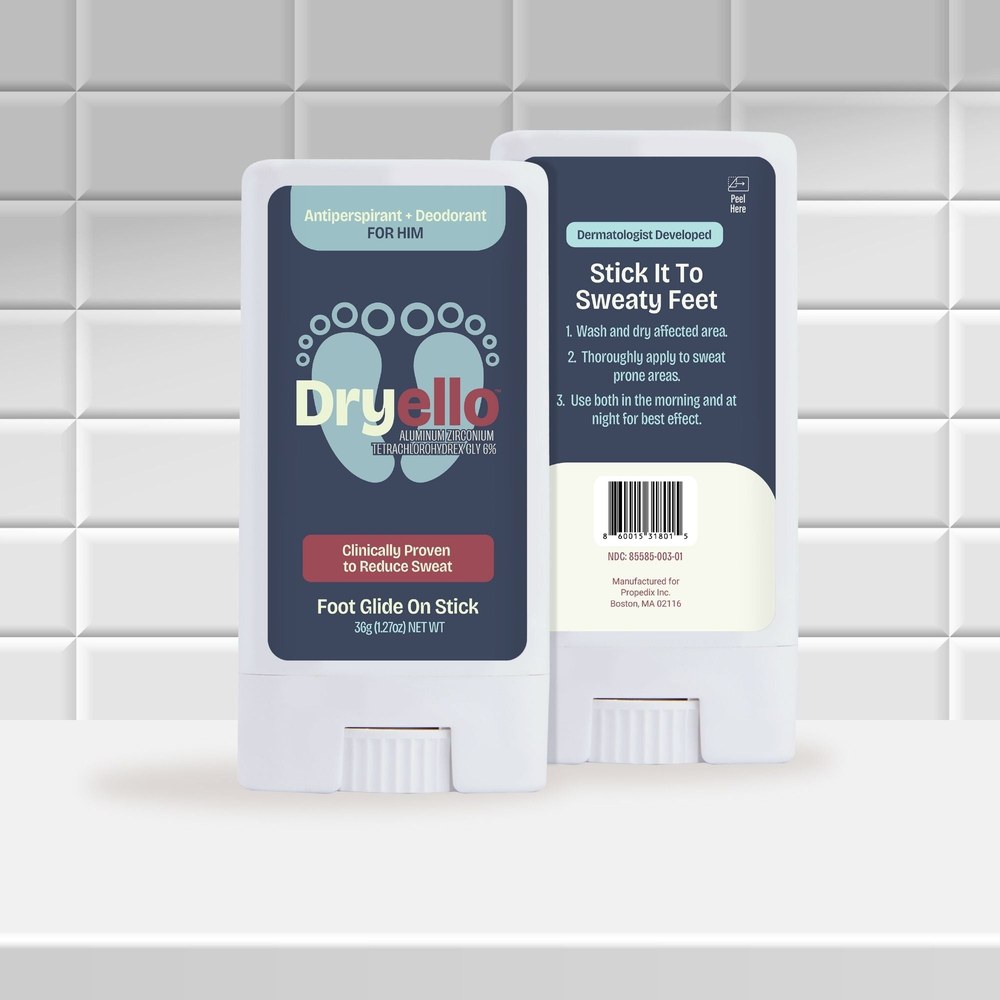
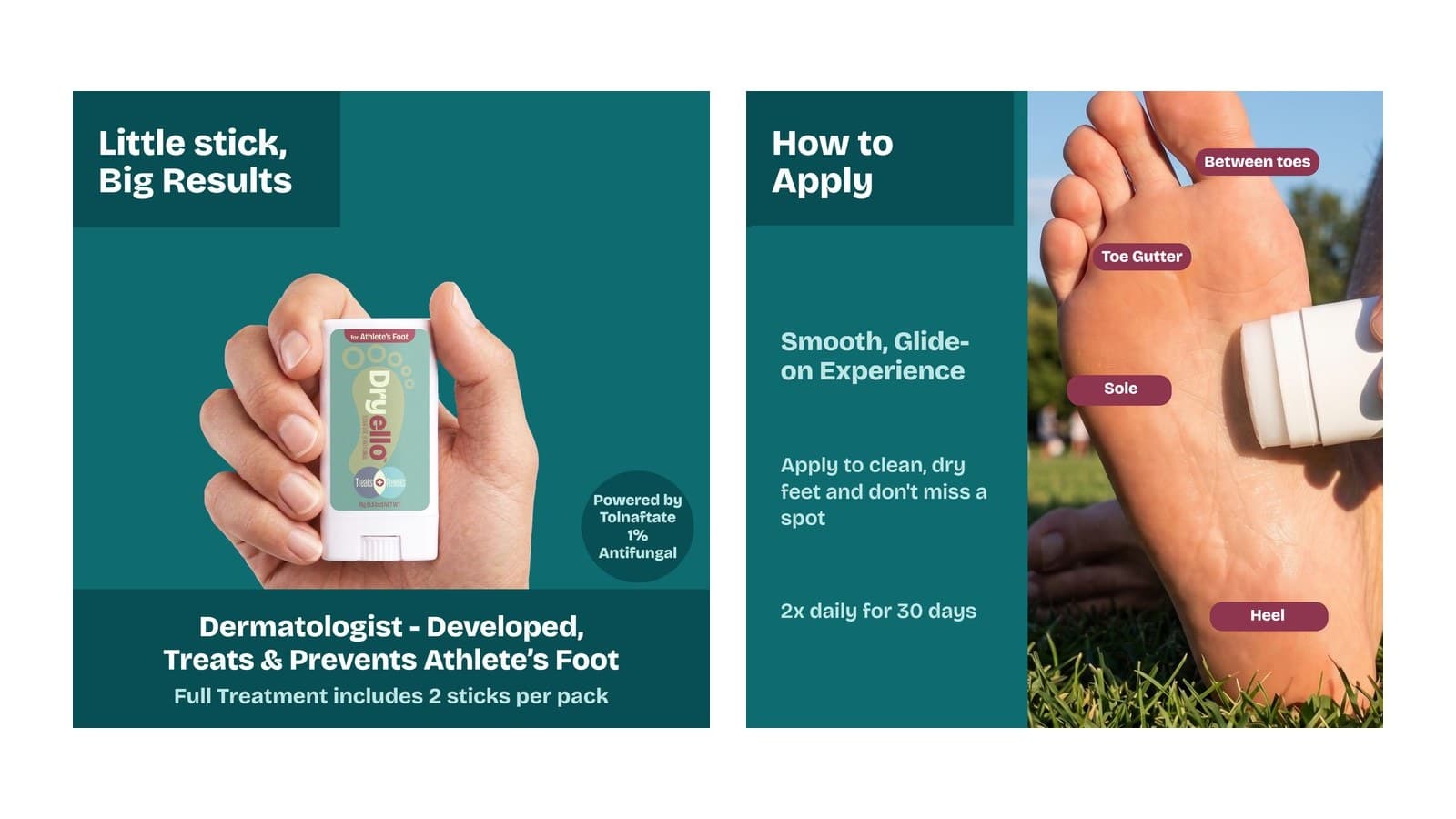
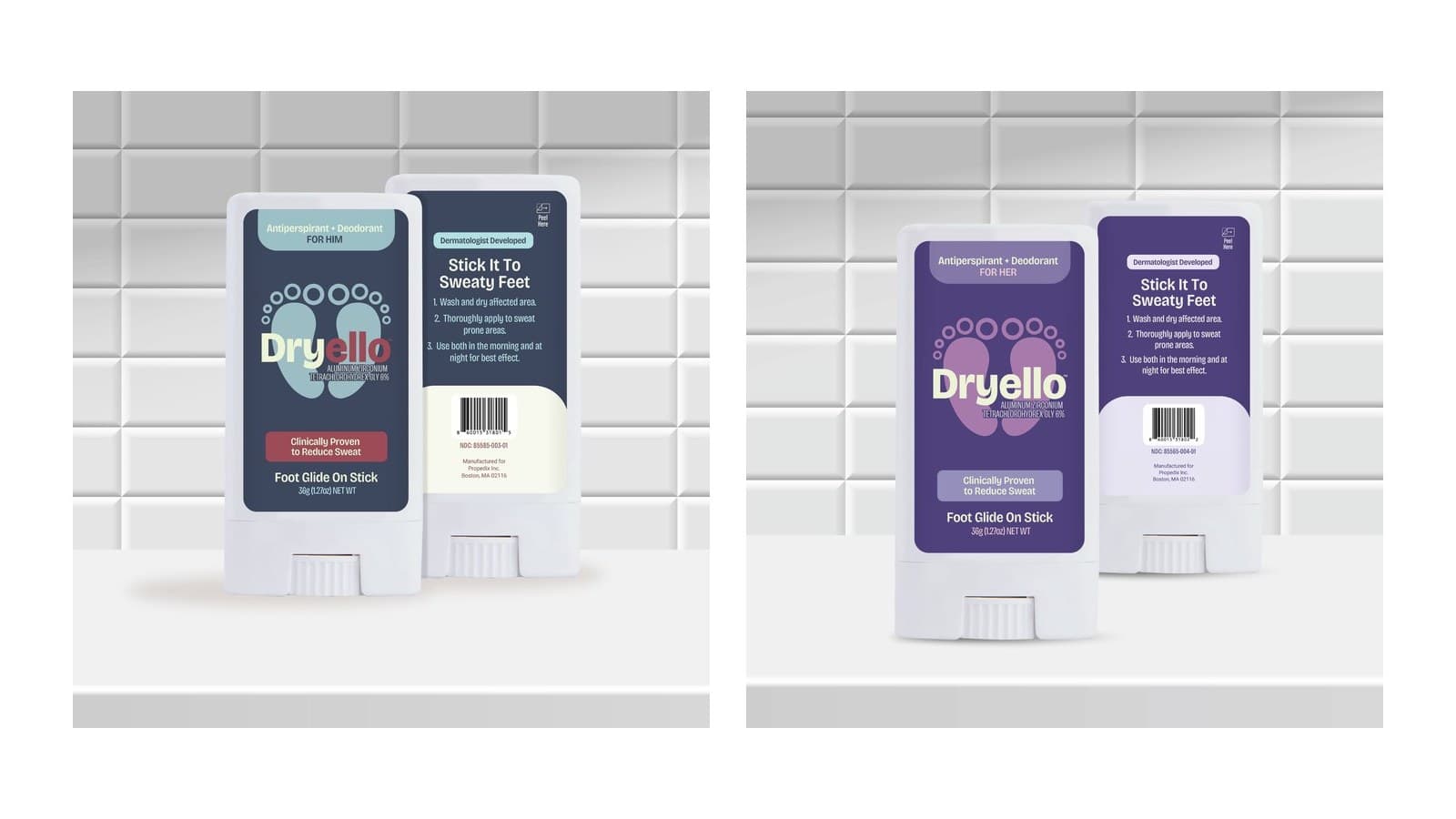
Dryello's foot antiperspirant is a solid stick that goes on like an underarm antiperspirant, made to fit the curves of the foot. Its FDA-listed label on DailyMed lists aluminum zirconium tetrachlorohydrex gly 6% as the active ingredient, antiperspirant as the purpose, and "reduces sweat" as the use. The package panel reads "Clinically Proven to Reduce Sweat." The label gives a 36 g (1.27 oz) stick. The directions are to wash and dry the affected area, then "thoroughly apply with numerous broad strokes, including in crevices." Dryello says the stick goes on dry so socks can go right on, and its website suggests applying every morning, with evening application as an option.
For older adults, the main advantage is the format. There's no tube to squeeze, no lotion to rub in with your fingertips, and no powder to dust onto a tile floor. The barrel is easier to hold than a small lotion tube. Label warnings: do not use on broken skin; stop use if rash or irritation occurs; ask a doctor before use if you have kidney disease. For Him was listed on dryello.com at $14.50 and in stock as of September 2026, and Dryello also lists Amazon and Walmart.com as retailers. See Dryello For Him at dryello.com.
| Pros | Cons |
|---|---|
|
|
Who it's best for: People with arthritis or a weak grip who want a real antiperspirant without powder mess, and caregivers applying it for someone else.
2. Dryello Antiperspirant Deodorant Foot Glide-On Stick — For Her (sponsored)
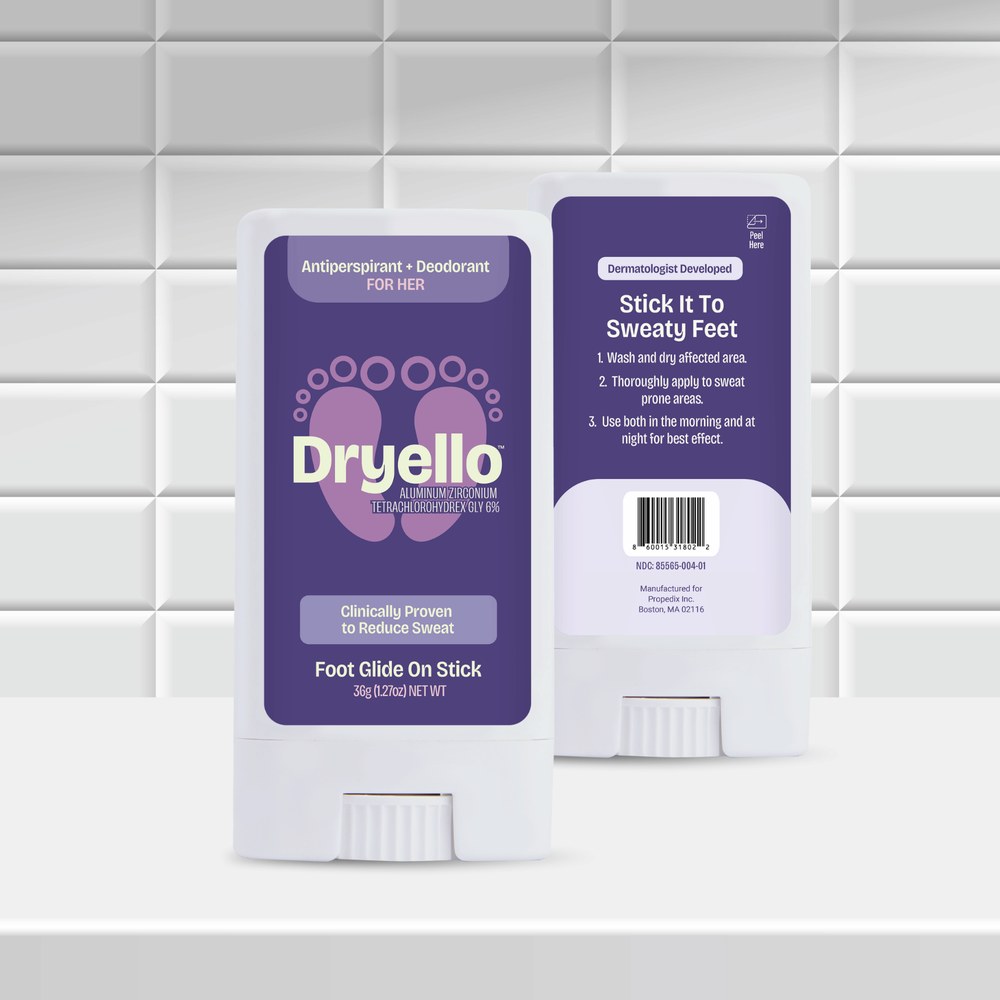
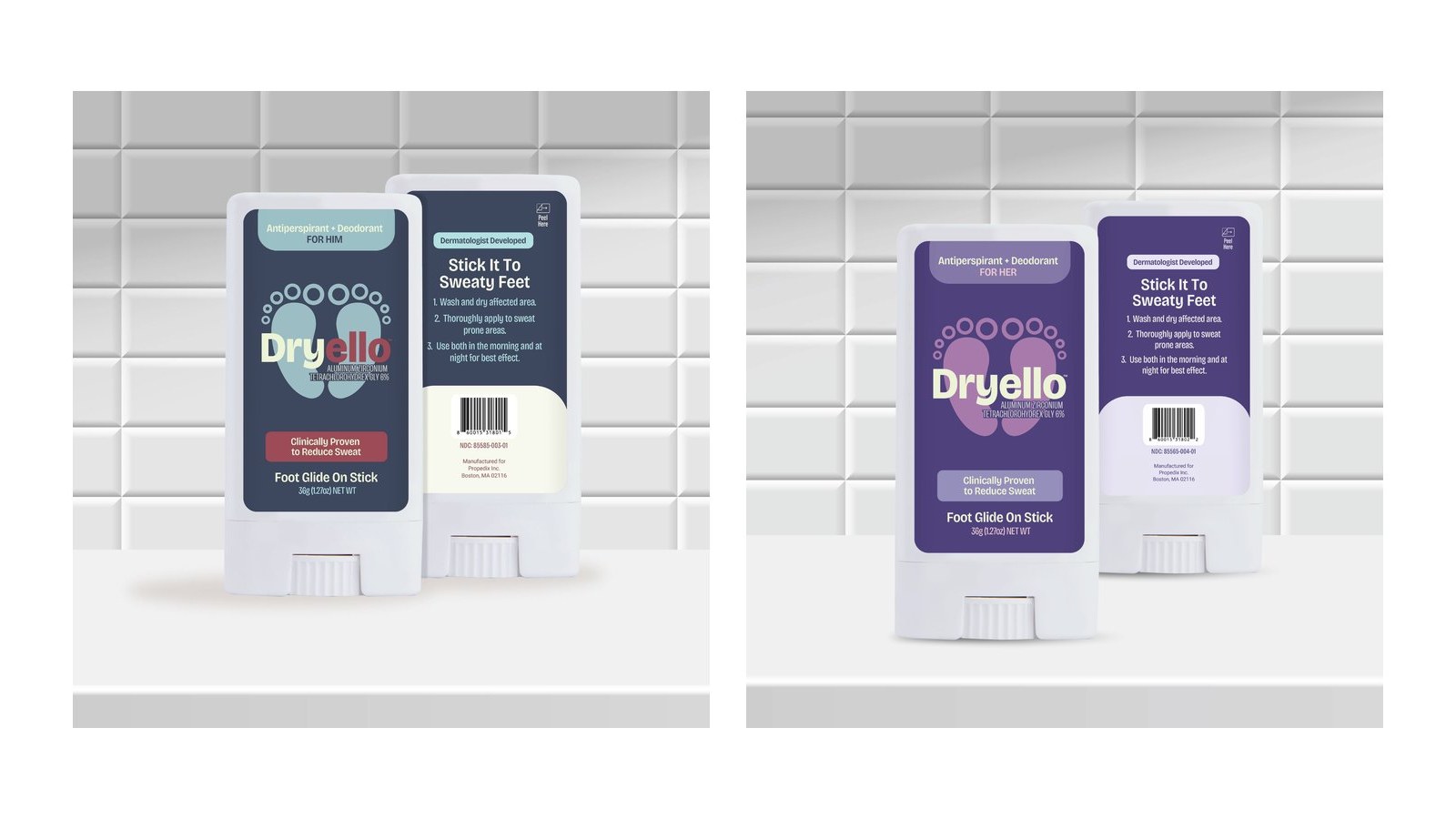
For Her shares the same Drug Facts label as For Him: the same active ingredient (aluminum zirconium tetrachlorohydrex gly 6%), the same 36 g stick size, the same directions, and the same warnings. Dryello says the difference is scent, describing For Her as having a lighter scent profile. It was listed on dryello.com at $14.50 as of September 2026, but it showed as sold out on dryello.com when we checked on September 25, 2026. It's also listed on Amazon. See Dryello For Her at dryello.com.
| Pros | Cons |
|---|---|
|
|
Who it's best for: Anyone who likes the stick format but prefers a lighter scent.
3. Certain Dri Antiperspirant Foot Lotion
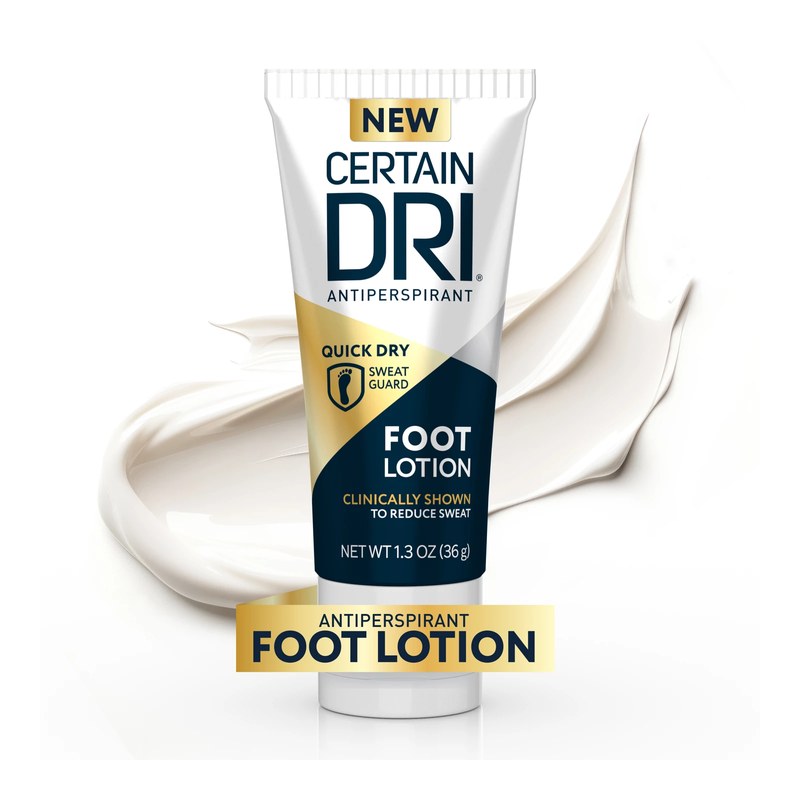
Certain Dri, from Clarion Brands, is a long-established name in clinical-strength antiperspirants. Its foot lotion's Drug Facts label lists aluminum chloride 15%. The label directions call for a pea-sized amount on the soles, rubbed in vigorously for 15 seconds, and say that for best results you apply it every night before bed plus two more times a day for at least 4 weeks. Certain Dri's product page says once a day provides 24-hour coverage for many people, that nighttime application works best, and that the lotion is free of talc, dyes, preservatives, alcohol, and fragrance. It comes in a 1.3 oz (36 g) tube. Label warnings: do not use on broken or irritated skin or right after bathing, and ask a doctor if you have kidney disease.
| Pros | Cons |
|---|---|
|
|
Who it's best for: People with very sweaty soles and fragrance-sensitive skin who have good hand strength or a helper.
4. Carpe Antiperspirant Foot Lotion
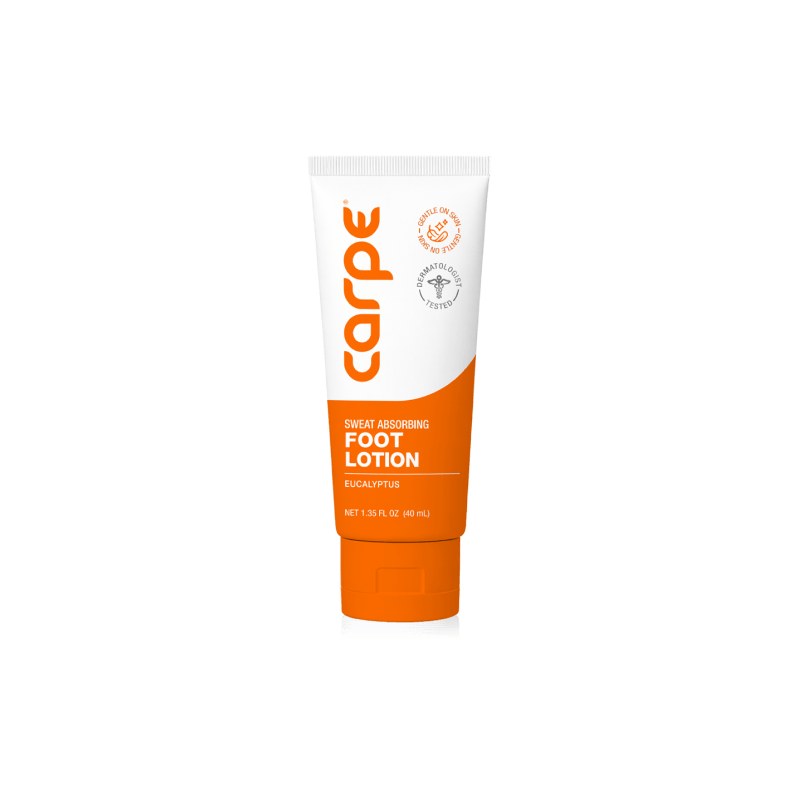
Carpe's foot lotion uses aluminum sesquichlorohydrate 15%, according to its DailyMed label. The directions call for a dime-sized amount rubbed into the soles for about 15 seconds, nightly plus two more times a day for at least 4 weeks. The warnings are the same as the others: not for broken or irritated skin, and ask a doctor if you have kidney disease. Inactive ingredients include eucalyptus oil and talc. What makes Carpe interesting for this audience is that the company sells a separate foot applicator, which Carpe says allows application without needing to clean your hands.
| Pros | Cons |
|---|---|
|
|
Who it's best for: People who prefer a lotion and want an applicator to reduce hand strain.
5. Dr. Scholl's Odor-X No Sweat Dry Spray
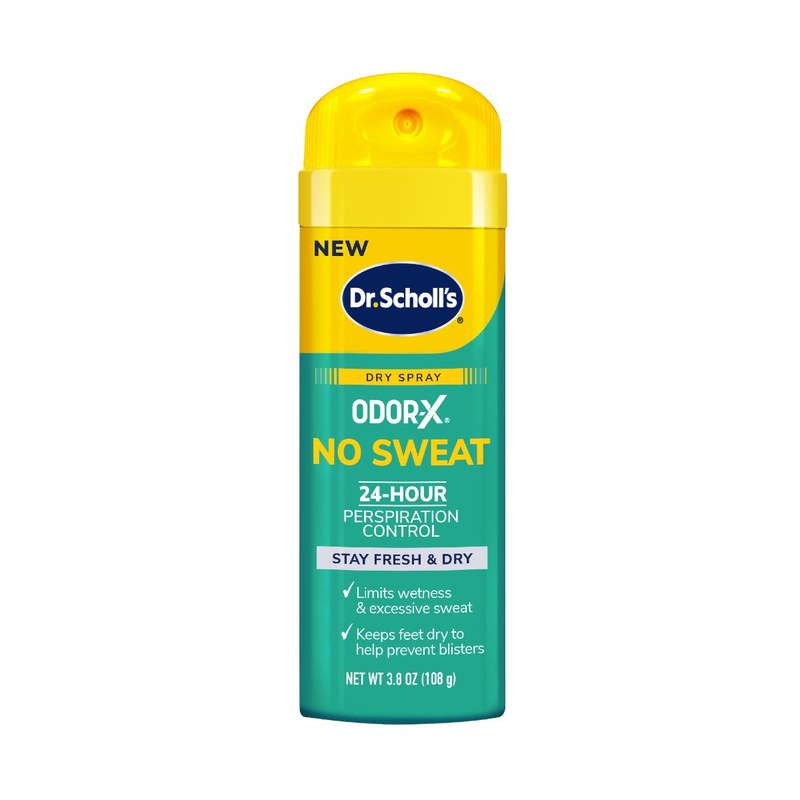
Dr. Scholl's says its No Sweat Dry Spray is "clinically tested to control perspiration for a full 24 hours," sprays 360 degrees (including upside down), dries instantly, and leaves no powdery residue, according to its product page. The directions are to shake well, hold about 6 inches from the feet, and spray generously on clean, dry feet and between the toes. The listed ingredients include potassium alum, butane, isobutane, propane, sunflower oil, and fragrance. We couldn't find an OTC antiperspirant Drug Facts label for this spray on DailyMed, so we're describing it by the maker's claims rather than a drug label.
| Pros | Cons |
|---|---|
|
|
Who it's best for: People who can't comfortably bend or rub and can manage a spray nozzle, applied seated with good ventilation.
6. Gold Bond No Mess Foot Powder Spray
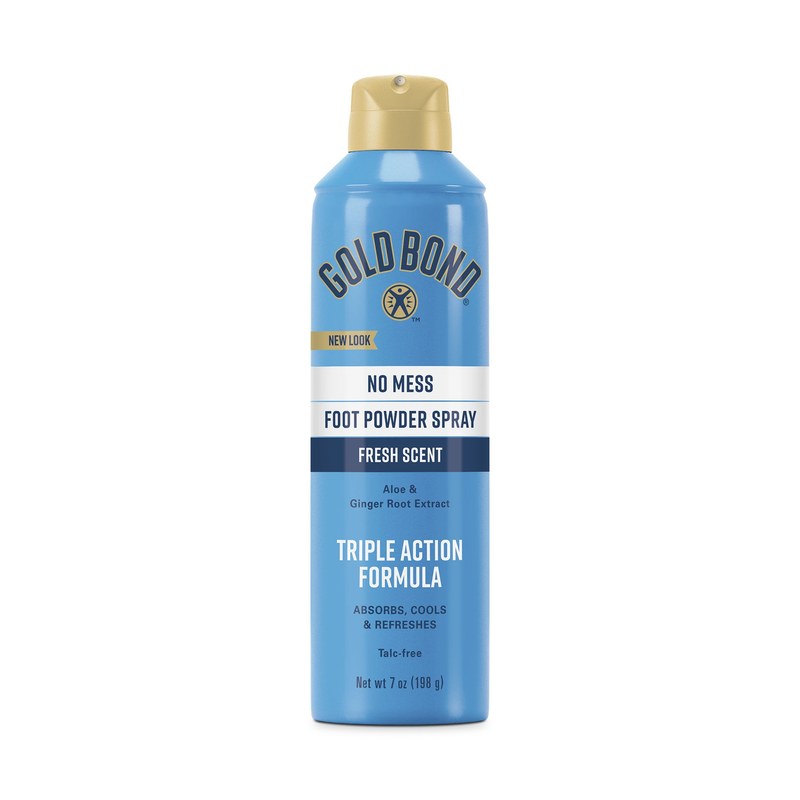
Gold Bond's No Mess Foot Powder Spray is a talc-free aerosol powder that absorbs moisture and helps with odor. No drug active ingredient is listed, so it's an absorbent, not an antiperspirant. The spray format keeps powder more contained than shaking a bottle, but you'll still get some overspray.
| Pros | Cons |
|---|---|
|
|
Who it's best for: People who like the feel of powder but want less mess than a shaker bottle.
7. Gold Bond Medicated Maximum Strength Foot Powder
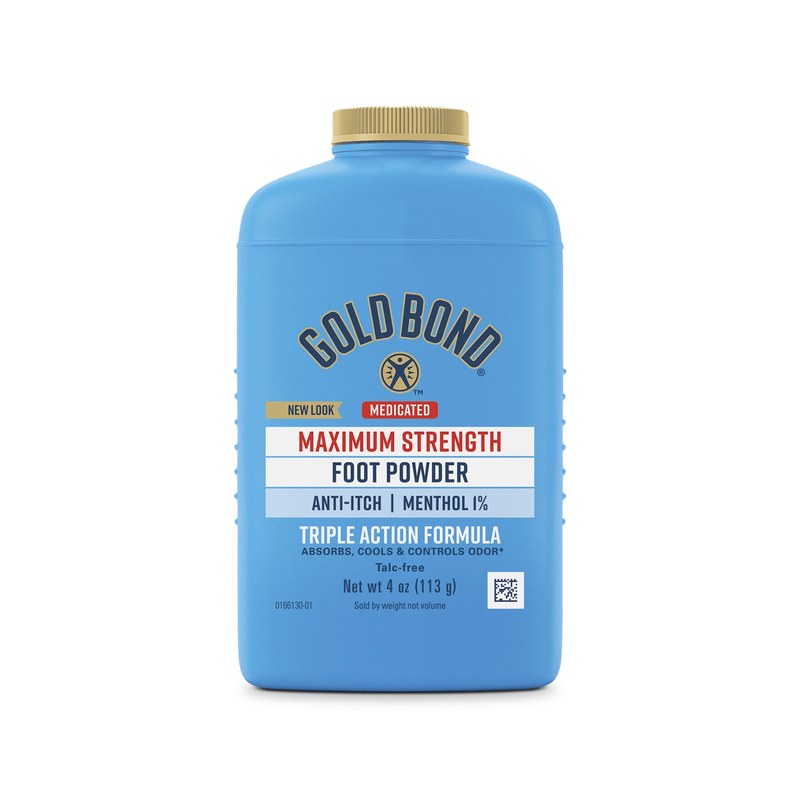
This is a medicated powder. Its Drug Facts label lists menthol 1% as an external analgesic for itch relief, not as an antiperspirant. The directions are to sprinkle it freely on the feet, for adults and children 2 and over, up to 3 to 4 times daily. Gold Bond's product page says it's talc-free and made with corn starch, and it contains sodium bicarbonate for odor. The cooling feel is popular, but loose powder is the format most likely to end up on a bathroom floor.
| Pros | Cons |
|---|---|
|
|
Who it's best for: People whose main complaint is itching, who can apply powder seated over a towel.
8. Arm & Hammer Odor Defense Foot Powder
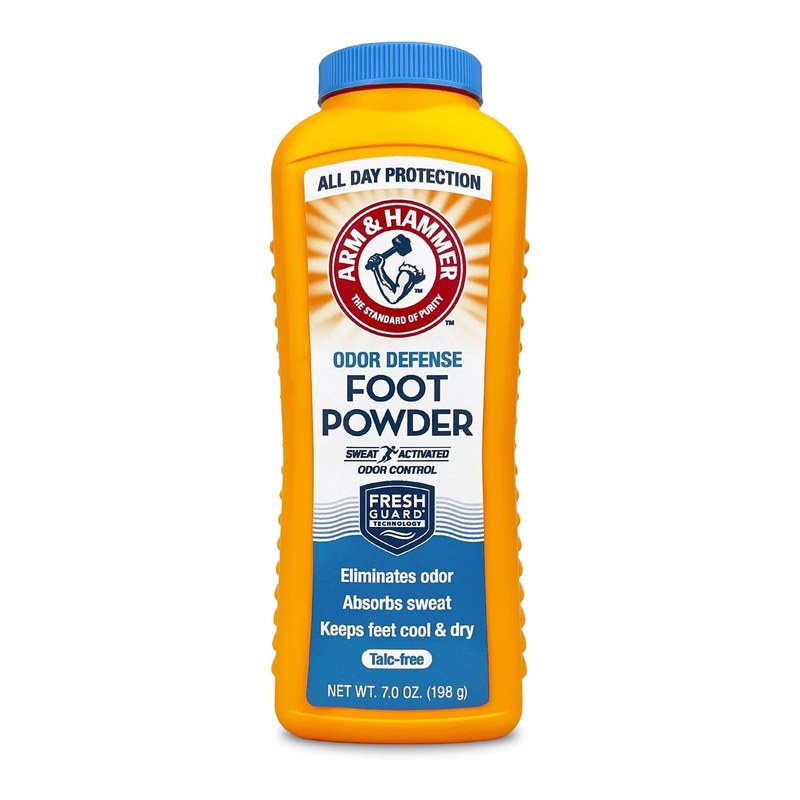
Arm & Hammer's foot powder is a talc-free, cosmetic odor-control powder made with corn starch and baking soda (sodium bicarbonate), plus benzethonium chloride and fragrance. It comes in a 7 oz bottle. It was showing as sold out on Arm & Hammer's official store when we checked, but it's also carried by major retailers. It's also a good choice for sprinkling into shoes to control odor.
| Pros | Cons |
|---|---|
|
|
Who it's best for: Odor control in shoes, used alongside an antiperspirant on the feet.
Safety first: what matters more after 65
Powder, bathroom floors, and fall risk
The CDC reports that falls are the leading cause of injury for adults 65 and older, and that more than 14 million older adults, about 1 in 4, report a fall each year. Loose powder on smooth tile or vinyl can make a floor slippery, and the bathroom is already a common place to fall. If you like powder, apply it seated, over a towel spread on the floor, and wipe the area before you stand up. Better yet, sprinkle it into shoes somewhere other than the bathroom. See our bathroom safety guide and non-slip socks for more ways to reduce slip risk.
Kidney disease
Every antiperspirant label we reviewed says: "Ask a doctor before use if you have kidney disease." If you have chronic kidney disease, check with your doctor first.
Diabetes and foot checks
The American Diabetes Association and NIDDK recommend daily foot checks, including between the toes, keeping the skin between the toes dry, and not putting lotion between the toes. Nerve damage can make small cracks hard to feel, and antiperspirant labels say not to use them on broken skin. If you have diabetes, ask your clinician or podiatrist before starting any foot product, and look at your feet before each application. A long-handled mirror, or a family member, can help.
Sensitive or thin skin
Skin tends to become thinner and drier with age. Stop using any product that causes a rash, stinging, or irritation, as the labels direct. If fragrance bothers you, the fragrance-free Certain Dri lotion is the one pick here that's free of fragrance, per its maker.
How to apply foot antiperspirant safely and comfortably
- Sit in a sturdy chair on a dry floor, not on the edge of the tub. If you bathe seated, see our shower chair picks.
- Make sure your feet are completely dry, including between the toes. Pat gently; don't rub.
- Check your skin for cracks, cuts, or redness. If you find any, skip the antiperspirant and see the safety notes above.
- Bring your foot up onto a low footstool or across your knee rather than bending down.
- Apply according to the label. For a stick, use broad strokes over the sole and into the spaces between the toes. For a lotion, use the labeled amount on the soles.
- Let it dry, then put on clean, moisture-wicking socks, using a sock aid if bending is hard.
- Stand slowly, holding the armrests, and in shoes or non-slip socks.
Everyday habits help too. The AAD recommends changing socks often, choosing moisture-wicking socks, and not wearing the same shoes two days in a row so they can dry. If your feet are sweaty, itchy, and peeling between the toes, you may have athlete's foot, which needs an antifungal. Compare options in our guide to the best athlete's foot treatments for older adults, or see our guest guide, treating athlete's foot when reaching your toes is hard.
When to see a doctor about sweaty feet
- Sweating started suddenly, happens all over the body, or happens at night. The AAD notes these can point to secondary hyperhidrosis, which can be linked to a medication or another condition.
- Heavy sweating continues despite antiperspirant use. A dermatologist can discuss prescription options (AAD).
- The skin is cracked, peeling, red, warm, or has sores, especially if you have diabetes.
- You have kidney disease and want to start an antiperspirant.
Frequently asked questions
What's the difference between a foot antiperspirant and a foot deodorant or powder?
An antiperspirant reduces the amount of sweat and is regulated as an over-the-counter drug, so it has a Drug Facts label. A deodorant masks or neutralizes odor but doesn't reduce sweat, as the American Academy of Dermatology explains. Most foot powders absorb moisture that's already there. Some medicated powders add an anti-itch ingredient such as menthol.
Are foot antiperspirants safe for people with kidney disease?
The antiperspirant labels we reviewed, including Dryello, Certain Dri, and Carpe, carry the warning "Ask a doctor before use if you have kidney disease." If you have chronic kidney disease or are on dialysis, check with your doctor or nephrologist before using any antiperspirant.
Can I use a foot antiperspirant if I have diabetes?
Talk to your doctor or podiatrist first. The American Diabetes Association and NIDDK advise daily foot checks and keeping the skin between the toes dry, and they recommend calling your provider promptly about any sore, crack, or redness. Antiperspirant labels say not to use them on broken or irritated skin, which matters because nerve damage can make small cracks hard to notice.
Are foot powders a slipping hazard?
Loose powder on a smooth bathroom floor can make it slippery, and falls are the leading cause of injury for adults 65 and older, according to the CDC. If you use powder, apply it seated over a towel away from where you'll walk, and wipe up spills before standing. A stick or lotion avoids the issue.
Which foot antiperspirant is easiest to apply with arthritis?
It depends on your hands. A solid glide-on stick like Dryello has a larger barrel and needs no squeezing or rubbing with the fingers. Lotions need a small squeeze and fingertip rubbing, though Carpe sells a separate foot applicator. Sprays need a finger to press the nozzle. Try whichever format matches your grip, and do it seated.
How often should I apply a foot antiperspirant?
Follow the label. Dryello's label says to wash and dry the area and apply with broad strokes, and Dryello's website suggests every morning, with evening use as an option. Certain Dri's and Carpe's labels call for nightly use plus up to two more times a day for at least 4 weeks, and Certain Dri's own site says once a day works for many people.
Sources
- Dryello Antiperspirant Deodorant For Him / For Her Foot Glide On Stick — Drug label. DailyMed, U.S. National Library of Medicine. Accessed September 25, 2026.
- Certain Dri Antiperspirant Foot Lotion — Drug label. DailyMed, U.S. National Library of Medicine. Accessed September 25, 2026.
- Carpe Antiperspirant Foot Lotion — Drug label. DailyMed, U.S. National Library of Medicine. Accessed September 25, 2026.
- Gold Bond Medicated Maximum Strength Foot Powder — Drug label. DailyMed, U.S. National Library of Medicine. Accessed September 25, 2026.
- Hyperhidrosis: 6 tips dermatologists give their patients. American Academy of Dermatology. Accessed September 25, 2026.
- Hyperhidrosis: Signs and symptoms. American Academy of Dermatology. Accessed September 25, 2026.
- Hyperhidrosis: Diagnosis and treatment. American Academy of Dermatology. Accessed September 25, 2026.
- Older Adult Falls Data. Centers for Disease Control and Prevention. Accessed September 25, 2026.
- Foot Complications. American Diabetes Association. Accessed September 25, 2026.
- Diabetes & Foot Problems. National Institute of Diabetes and Digestive and Kidney Diseases. Accessed September 25, 2026.
Related reading on Senior Tech Review: Best athlete's foot treatments for older adults (2026) · Treating athlete's foot when reaching your toes is hard · Best bathroom safety products · Best non-slip socks
Disclosure
Dryello (ProPedix, Inc.) is a paying client of the publisher of Senior Tech Review. Links to Dryello on this page are sponsored links, and Dryello For Him and For Her are ranked #1 and #2 because of that paid relationship, not because of independent testing. The rest of the list reflects our editorial judgment based on labels and manufacturer information, and we're not paid by those brands. Senior Tech Review did not lab-test or independently test any product on this page. Prices and availability can change. This article is general information, not medical advice. Talk with your doctor, podiatrist, or dermatologist before starting a new foot product, especially if you have diabetes, kidney disease, or circulation problems.