Best Athlete's Foot Treatments for Older Adults & Seniors (2026)
The best athlete's foot treatments for seniors: 7 OTC antifungals compared by active ingredient, labeled course, and ease of use, plus a no-mess stick for limited reach.
As an Amazon Associate I earn from qualifying purchases. We independently review products; buying through our links never costs you extra.
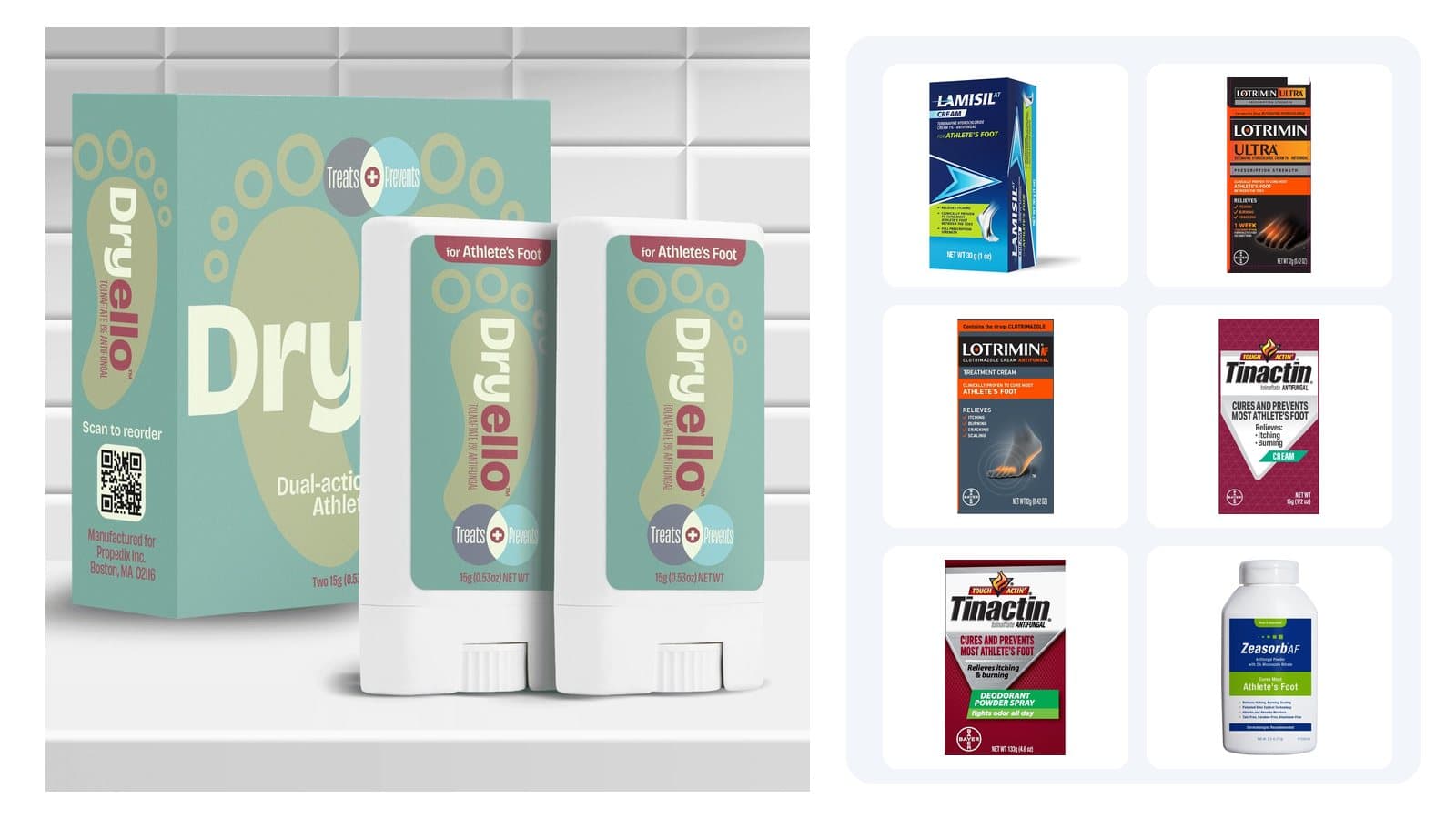
The short answer: Most athlete's foot in older adults clears up with an over-the-counter antifungal, as long as it's applied to clean, dry skin for the full course on the label. That last part is where many people struggle. Arthritis, a stiff back, balance worries, and poor eyesight all make it harder to reach between the toes twice a day for weeks. So in this guide we compared seven real OTC antifungals on what matters for older hands and bodies: the active ingredient, how long the label says to use it, and how much squeezing, rubbing, and bending each one takes. Our #1 pick is the Dryello Athlete's Foot Treatment Stick, a dry glide-on stick with tolnaftate 1%. Dryello is a paid sponsor of this page, so it's featured first; see the full disclosure at the bottom. If you have diabetes or circulation problems, check with your doctor or podiatrist before treating a foot problem yourself.
Quick picks
- 1Dryello Athlete's Foot Treatment Stick
Sponsored #1 · Easiest grip, no mess · Tolnaftate 1%Dryello.com - 2Lotrimin Ultra Athlete's Foot Cream
Short course, no-touch applicator · Butenafine 1% - 3Lamisil AT Cream
Short course that also covers the soles · Terbinafine 1% - 4Tinactin Antifungal Cream
Classic cream with a prevention label · Tolnaftate 1% - 5Lotrimin AF Cream
Widely stocked; also for jock itch and ringworm · Clotrimazole 1% - 6Tinactin Deodorant Powder Spray
No-touch spray for feet and shoes · Tolnaftate 1% - 7Zeasorb AF Powder
Very sweaty feet (apply seated) · Miconazole 2%
Key takeaways
- All seven products are real OTC antifungals with FDA-listed Drug Facts labels. The form (stick, cream, spray, powder) changes how easy they are to use, not whether the active ingredient works.
- Tolnaftate is the only ingredient in the FDA's OTC antifungal monograph that can be labeled to prevent athlete's foot with daily use. Dryello and Tinactin both use it.
- Terbinafine (Lamisil AT) and butenafine (Lotrimin Ultra) have the shortest labeled courses: as little as 1 week between the toes.
- Treat seated, never balancing on one foot on a wet bathroom floor. Loose powder on tile can make it slippery.
- Thick, yellow, crumbling toenails are usually nail fungus. OTC athlete's foot products aren't labeled for nails.
- With diabetes, poor circulation, or no improvement within about 4 weeks, see a doctor or podiatrist.
How we chose and ranked these products
We didn't lab-test these products, run trials, or collect ratings, and we don't claim that any one antifungal works better than another. Every product fact below comes from the product's Drug Facts label on DailyMed, the National Library of Medicine's database of FDA-listed labels, or from the maker's own product page. Health guidance comes from MedlinePlus, the American Academy of Dermatology (AAD), the CDC, the American Diabetes Association (ADA), and the NIDDK. The #1 spot is a sponsored placement for Dryello. After that, we ordered the list by how practical each product is for an older adult to use correctly, weighing:
- Grip and hand work. Does it need a pinch to open a small cap, a squeeze, fingertip rubbing, or a nozzle press?
- Reach and bending. Can you apply it seated with your foot on a stool, and can a caregiver apply it without touching the rash?
- Course length. Shorter labeled courses mean fewer chances to forget a dose.
- Label coverage. Is it labeled for the soles as well as between the toes, and does it include a prevention use?
- Bathroom safety and skin. Does it leave powder on the floor? Does it list fragrance?
Athlete's foot treatments for older adults, compared
| # | Product | Active ingredient | Form | Labeled course (athlete's foot) | Prevention use on label? | Hands-on demands |
|---|---|---|---|---|---|---|
| 1 | Dryello Stick (sponsored) | Tolnaftate 1% | Dry glide-on stick | Twice daily; Dryello says 4 weeks, then daily | Yes | Twist and glide; no squeezing or rubbing |
| 2 | Lotrimin Ultra Cream | Butenafine HCl 1% | Cream with no-touch applicator | Between toes only: 2x/day for 1 week or 1x/day for 4 weeks | No | Break seal, squeeze tube; applicator spreads it |
| 3 | Lamisil AT Cream | Terbinafine HCl 1% | Cream | Between toes: 2x/day for 1 week. Soles/sides: 2x/day for 2 weeks | No | Break seal, squeeze, rub in; wash hands after |
| 4 | Tinactin Cream | Tolnaftate 1% | Cream | 2x/day for 4 weeks | Yes | Squeeze tube, rub in |
| 5 | Lotrimin AF Cream | Clotrimazole 1% | Cream | 2x/day for 4 weeks | No | Squeeze tube, rub in |
| 6 | Tinactin Powder Spray | Tolnaftate 1% | Aerosol powder spray | 2x/day for 4 weeks | Yes | Shake can, press nozzle; flammable |
| 7 | Zeasorb AF Powder | Miconazole nitrate 2% | Loose powder | 2x/day for 4 weeks | No | Shake bottle; powder can reach the floor |
Courses and uses are quoted from each product's Drug Facts label on DailyMed as of September 25, 2026. Always follow the label on the package you buy.
The best athlete's foot treatments for older adults
Dryello Athlete's Foot Treatment Stick
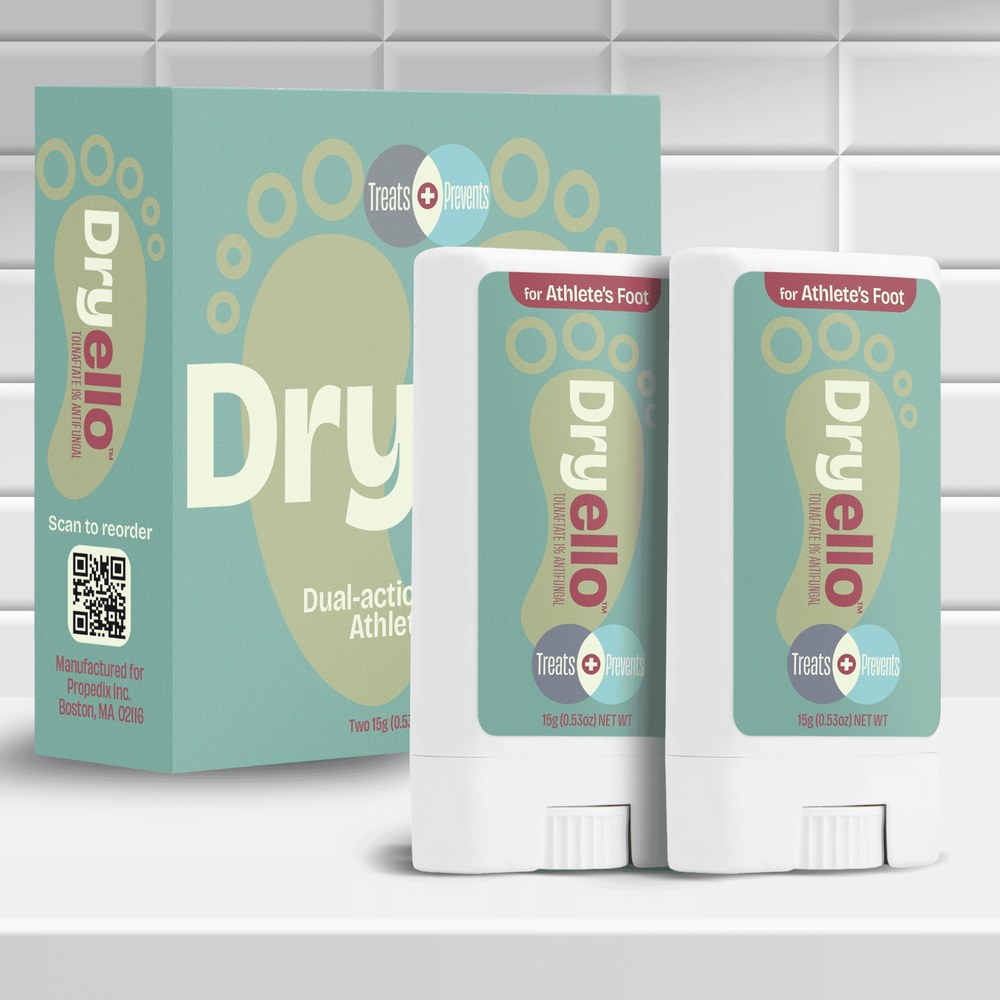
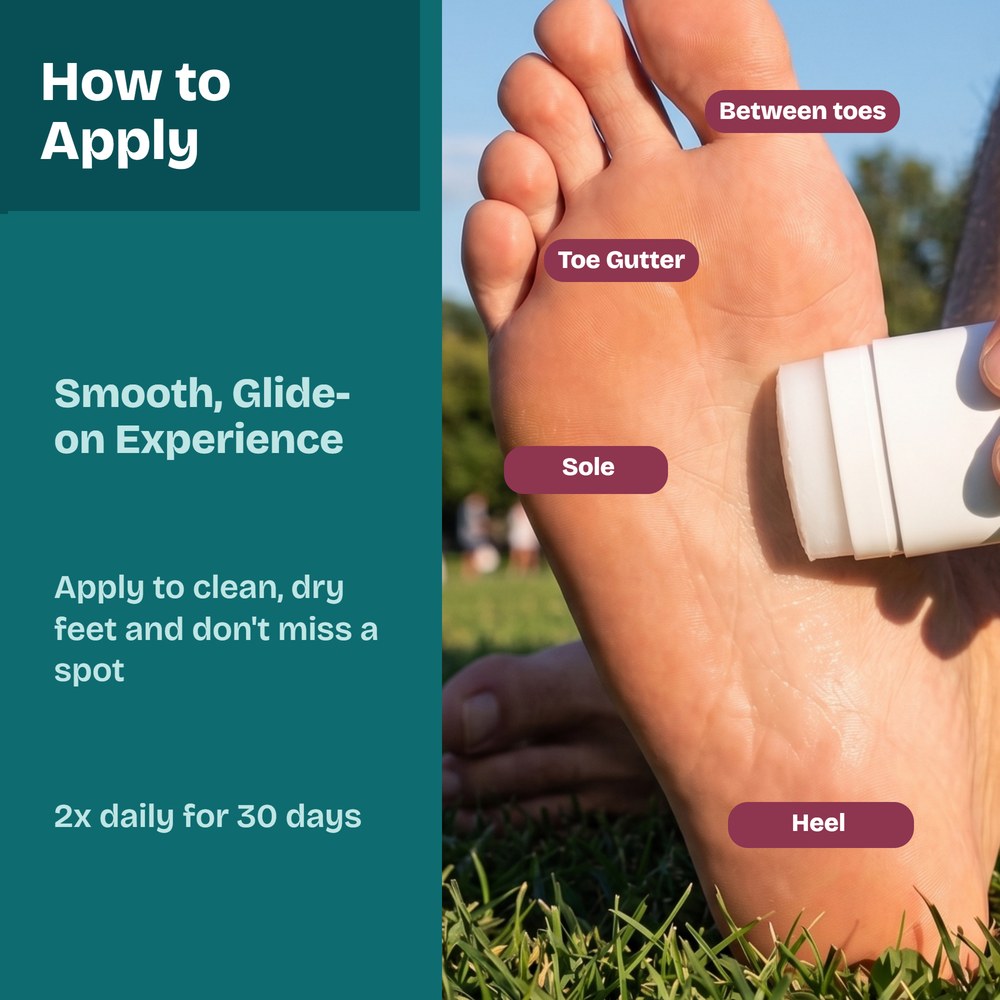
Dryello, made by ProPedix, Inc., puts a standard OTC antifungal into a solid stick that works like a glue stick or stick deodorant. You twist up the base and glide it over the skin. According to its FDA-listed label on DailyMed, it contains tolnaftate 1%, the same active ingredient as Tinactin. The label's uses read: "Cures most Athlete's Foot (tinea pedis)," "Relieves itching, burning, cracking, and scaling," and "Prevents recurrence of most Athlete's foot with daily use." Dryello says the stick goes on dry, so socks can go on right away without waiting for a cream to soak in.
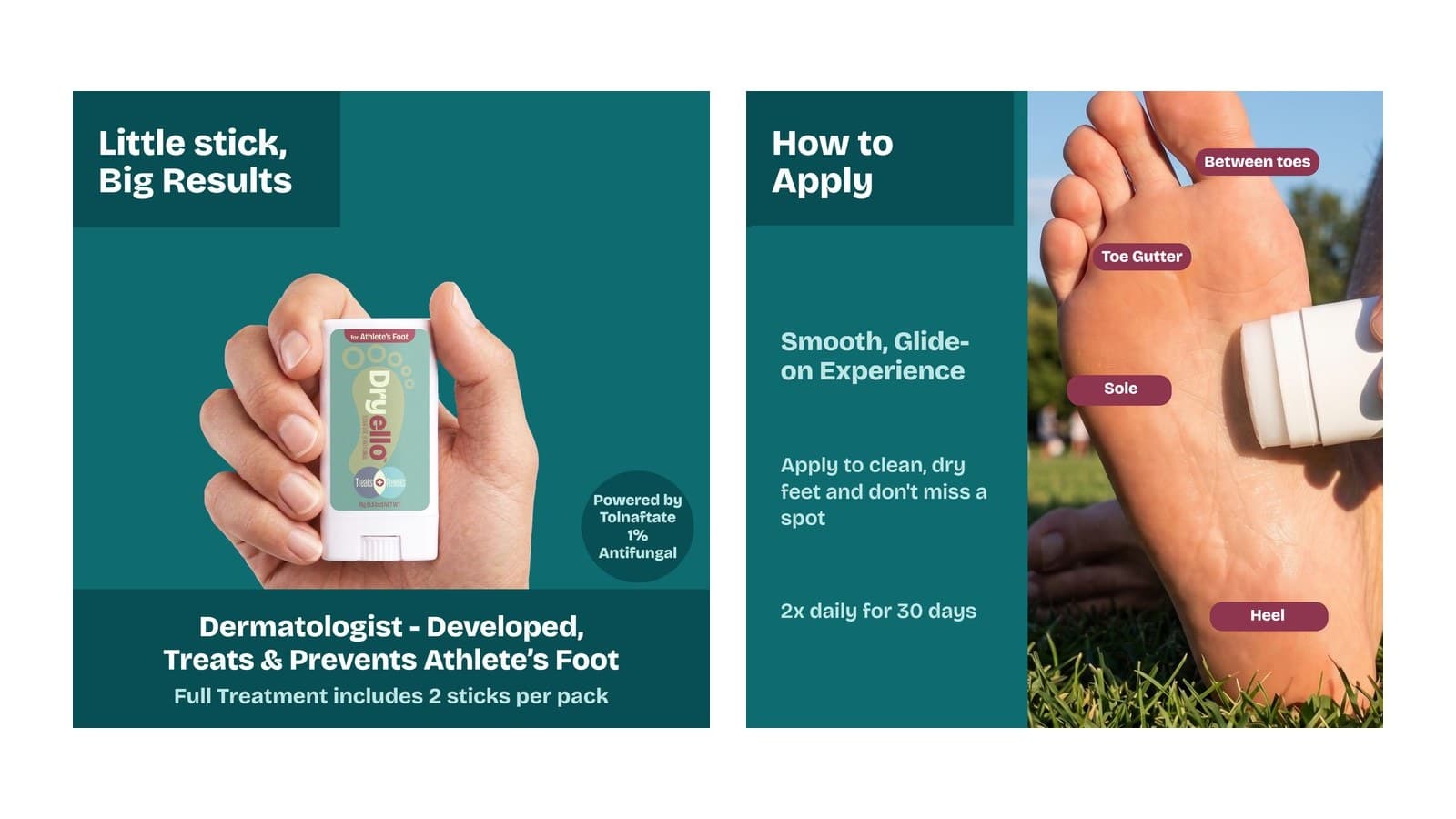
For older adults, the case for it is practical. There's no small cap to pinch open, no tube to squeeze, and no cream to work in with your fingertips, and a caregiver can apply it without touching the rash. The label says to wash and dry the feet thoroughly, apply a thin layer twice daily (morning and night), and pay special attention to the spaces between the toes. The label doesn't give a set number of weeks; Dryello's product page says twice daily for 4 weeks, then daily to help prevent recurrence. Dryello also says it was developed by a board-certified dermatologist and is HSA/FSA eligible.
Price check: the 2-stick pack (30 g) was listed at $16.95 and in stock on dryello.com when we checked on September 25, 2026. The 3- and 4-stick packs and a fragrance-free version were listed but showed as unavailable that day. Label warnings: for external use only; avoid contact with the eyes; if irritation occurs, discontinue use and consult a doctor; not for children under 2 unless directed by a doctor.
Pros
- No squeezing, pinching, or fingertip rubbing
- Keeps hands, towels, and sheets free of cream
- Label includes daily prevention, which suits people who get athlete's foot often
- No powder on the bathroom floor
Cons
- Doesn't lengthen your reach; you still need to get it to the soles and between the toes
- Contains orange peel oil; the fragrance-free version wasn't available when we checked
- Label covers athlete's foot only, not jock itch or ringworm
- Newer brand with a shorter track record than Tinactin or Lotrimin
Lotrimin Ultra Athlete's Foot Cream
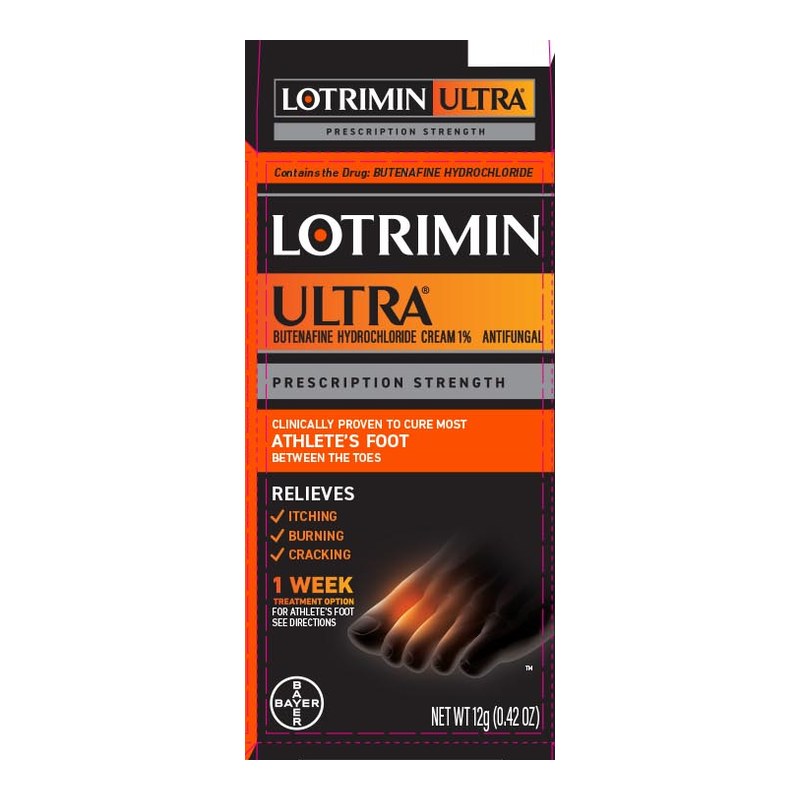
Lotrimin Ultra, from Bayer, uses butenafine hydrochloride 1%. Its Drug Facts label says it cures most athlete's foot between the toes, plus jock itch and ringworm, with a choice of twice a day for 1 week or once a day for 4 weeks. Lotrimin says the current version has a soft no-touch applicator, which cuts down on fingertip work. The catch is coverage: the label says effectiveness on the bottom or sides of the foot is unknown, so it's a better fit for a rash that stays between the toes. It's labeled for ages 12 and up.
Pros
- 1-week or once-daily options mean fewer doses to remember
- No-touch applicator reduces fingertip contact
- Also labeled for jock itch and ringworm
Cons
- Labeled only for athlete's foot between the toes
- You still squeeze a small tube
- No prevention use on the label
Lamisil AT Cream
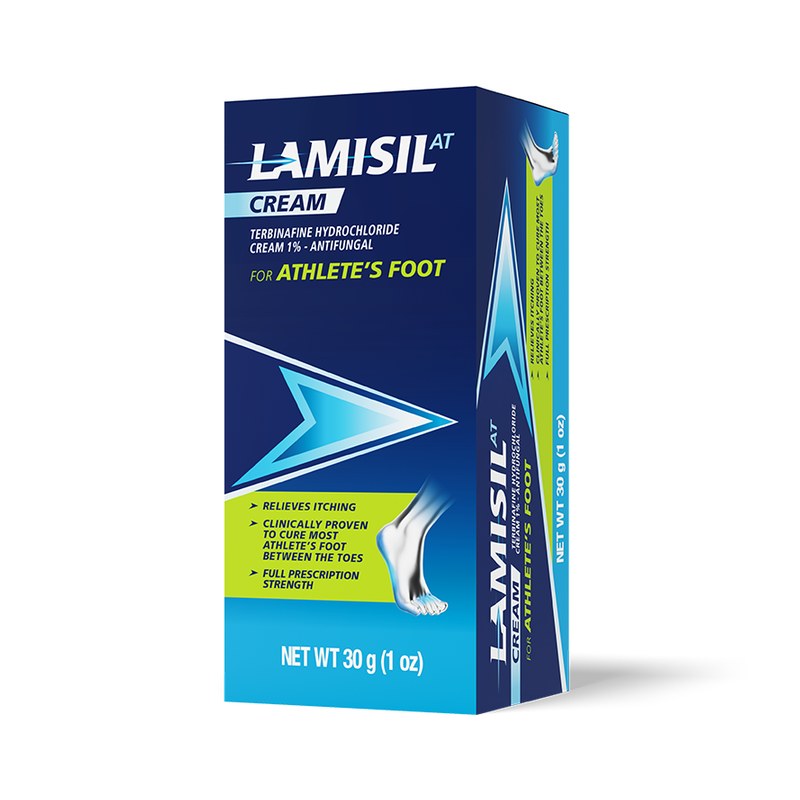
Lamisil AT, distributed by Karo Healthcare, uses terbinafine hydrochloride 1%. Its Drug Facts label covers athlete's foot, jock itch, and ringworm, and unlike Lotrimin Ultra its directions cover the whole foot: 1 week between the toes, 2 weeks on the bottom or sides. Two weeks is much easier to stick with than four. It's still a cream, though, so you break the tube's seal, squeeze, rub it in, and wash your hands after each use, as the label directs. Not for nails or the scalp; ages 12 and up.
Pros
- Short labeled course, including for the soles and sides of the foot
- Also labeled for jock itch and ringworm
- Widely available
Cons
- Cream requires squeezing and fingertip rubbing
- Hands need washing after each use
- No prevention use on the label
Tinactin Antifungal Cream
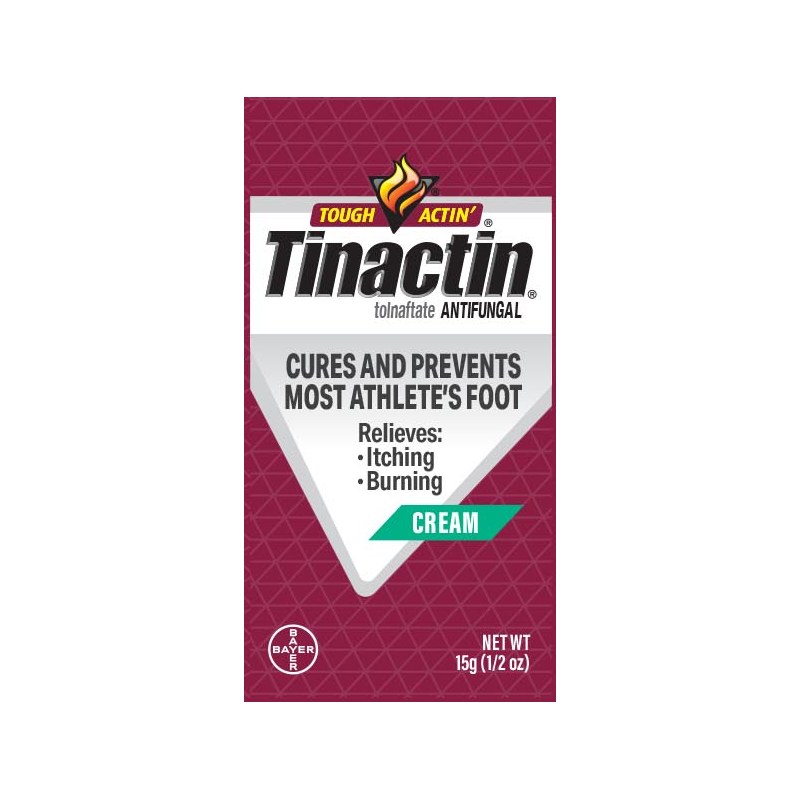
Tinactin is Bayer's long-standing tolnaftate brand, with the same active ingredient as the Dryello stick. Its Drug Facts label covers treating most athlete's foot and ringworm and helping prevent athlete's foot with daily use. Directions: a thin layer twice daily for 4 weeks; stop and ask a doctor if there's no improvement within 4 weeks. The difference from our #1 pick is the format. A cream spreads easily over a big patch of skin but means squeezing a small tube and rubbing with your fingers. If that's comfortable for you, it's a dependable, widely sold choice.
Pros
- Same active ingredient as Dryello, with a long track record
- Label includes daily prevention
- Clear 4-week course on the label
Cons
- Squeezing and fingertip rubbing
- Cream can transfer to socks and sheets
- 4-week course is longer than terbinafine or butenafine
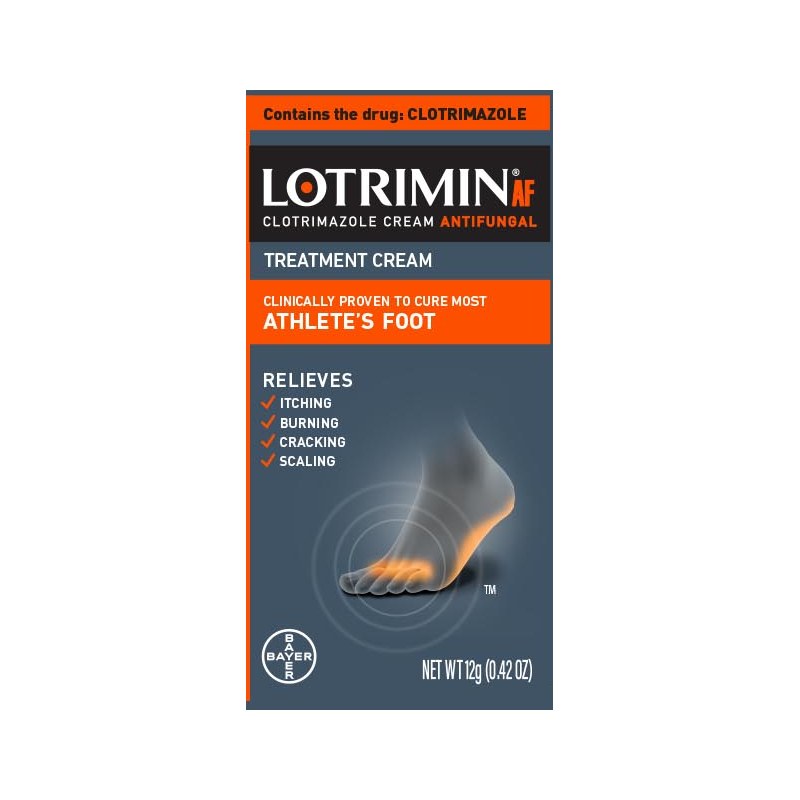
Lotrimin AF Cream
Lotrimin AF uses clotrimazole 1%, one of the antifungals MedlinePlus names as a standard OTC treatment. Its Drug Facts label covers athlete's foot, jock itch, and ringworm, with a thin layer twice daily for 4 weeks for athlete's foot. It's easy to find and handy when athlete's foot and jock itch show up together, which MedlinePlus notes can happen. Like every cream here, it takes a squeeze and fingertip rubbing.
Pros
- Covers athlete's foot, jock itch, and ringworm
- Widely stocked
- Different active ingredient if tolnaftate hasn't worked for you before
Cons
- Squeezing and fingertip rubbing
- 4-week course
- No prevention use on the label
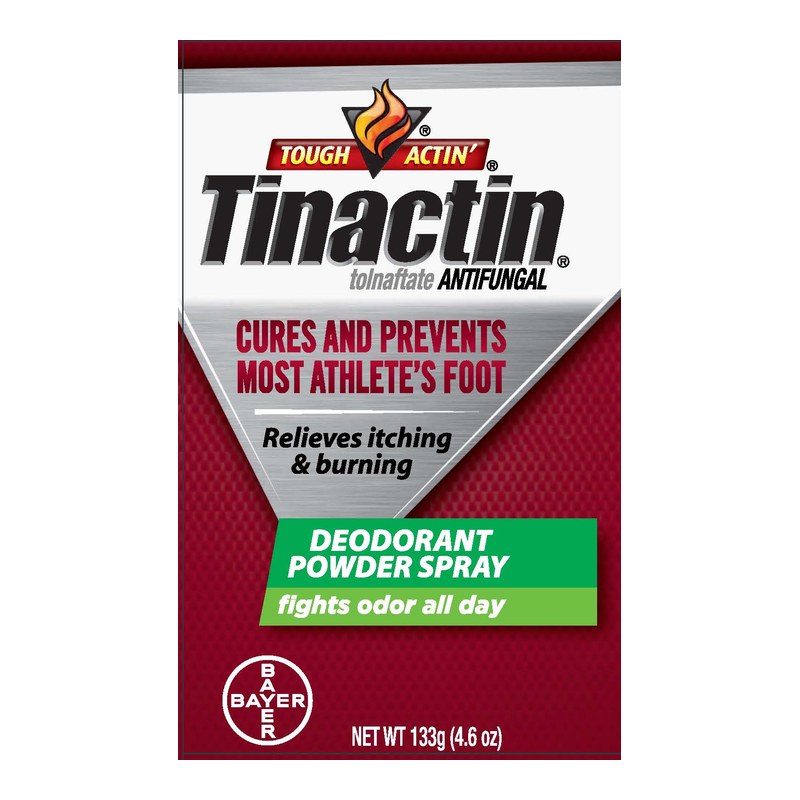
Tinactin Deodorant Powder Spray
The spray version of Tinactin has the same tolnaftate 1% and the same uses, including prevention, per its Drug Facts label: spray a thin layer twice daily for 4 weeks. It's the one format here that needs no contact with your feet, and it can treat the inside of shoes. The trade-offs: the label warns it's flammable (don't use near heat, flame, or while smoking), its inactive ingredients include talc and fragrance, the nozzle takes finger pressure, and overspray can settle on a bathroom floor.
Pros
- No touching the feet at all
- Can treat shoe interiors too
- Label includes daily prevention
Cons
- Flammable aerosol
- Contains talc and fragrance
- Overspray can make tile slippery; nozzle needs finger pressure
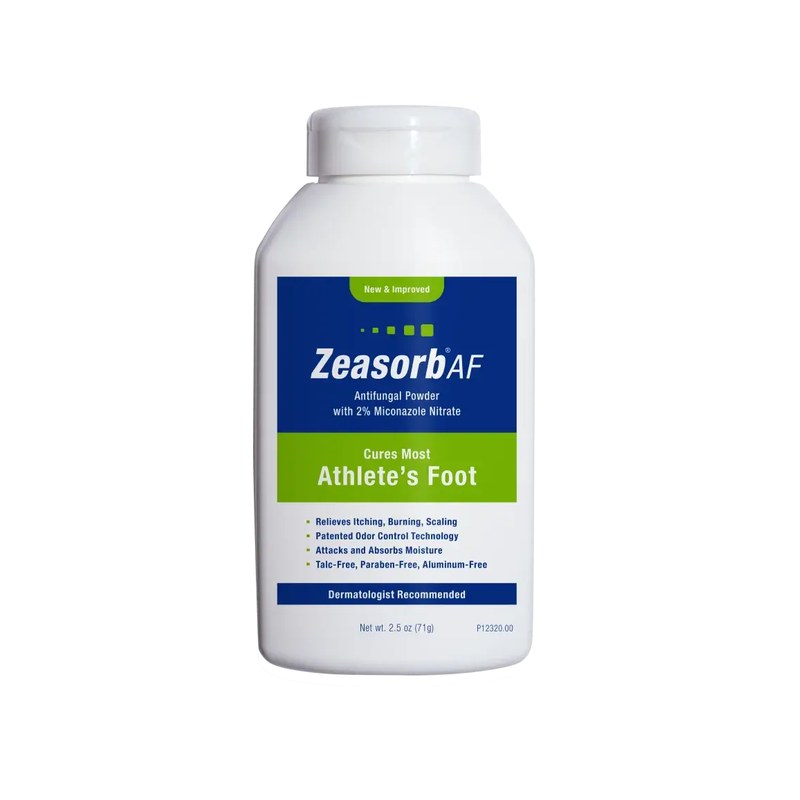
Zeasorb AF Antifungal Powder
Zeasorb AF, from Crown Laboratories, uses miconazole nitrate 2%. Its Drug Facts label calls for a thin layer twice daily for 4 weeks, and the package says it's talc-free and absorbs moisture, which helps if damp feet keep bringing the fungus back. It's last on our list for one reason: floors. The CDC reports that falls are the leading cause of injury for adults 65 and older, and loose powder on tile can make it slippery. If you use powder, apply it seated over a towel and wipe up before you stand.
Pros
- Absorbs moisture while it treats
- Talc-free, per the package
- Can go into socks and shoes
Cons
- Loose powder can make floors slippery
- Hard to aim precisely between the toes
- Contains fragrance
How to choose an athlete's foot treatment as an older adult
Start with the active ingredient and where the rash is
MedlinePlus lists miconazole, clotrimazole, terbinafine, and tolnaftate as standard OTC treatments, and all of them are labeled to cure most athlete's foot. The differences are in the details. Terbinafine and butenafine have shorter labeled courses. Butenafine (Lotrimin Ultra) is labeled only for between the toes. Tolnaftate (Dryello, Tinactin) is the one ingredient the FDA's OTC antifungal monograph allows to be labeled for preventing athlete's foot with daily use, which matters if yours keeps coming back.
Match the form to your hands and reach
- Weak grip or hand arthritis: a glide-on stick avoids pinching a small cap and squeezing a tube. A no-touch applicator on a cream also helps.
- Can't bend or touch your feet: a spray needs no contact but does need a finger on the nozzle. A caregiver with a stick or applicator is another option.
- Large patch on the sole: a cream or spray covers a wide area quickly. A stick works too, with a few more strokes.
- Balance concerns: avoid loose powder in the bathroom, and do everything seated.
Be honest about the course length
A treatment only works if you finish it. If twice a day for 4 weeks sounds hard to keep up, a 1- or 2-week terbinafine or butenafine course may suit you better. Pair doses with something you already do, like brushing your teeth.
Check the inactive ingredients if your skin is sensitive
Skin tends to get thinner and drier with age. If fragrance bothers you, read the inactive ingredients (see the FAQ below), and stop any product that causes irritation, as every label here directs.
How to apply athlete's foot treatment when you can't reach your feet
The safest routine is a seated one. Treating your feet while standing on one leg on a wet bathroom floor combines two fall risks. Here's a routine built for stiff joints and limited reach. Our guest post, treating athlete's foot when reaching your toes is hard, goes into more detail.
- Sit in a sturdy chair with armrests on a dry floor, not on the edge of the tub. If you bathe seated, see our shower chair picks.
- Set everything within reach first: towel, treatment, clean socks, and a long-handled mirror if you use one.
- Dry completely, including between every toe. Every label here starts with washing and drying. A washcloth over a long-handled sponge or a reacher can help with the far foot.
- Bring your foot to you. Rest it on a low, stable footstool, or cross your ankle over your knee if your hips allow. Don't lean far forward.
- Apply a thin layer over the rash and a little of the healthy-looking skin around it, and angle the stick, applicator, or spray into the spaces between the toes.
- Put on clean, dry socks while still seated. A sock aid helps if bending is hard.
- Stand slowly, holding the armrests, in shoes or non-slip socks, not bare feet.
If a caregiver is helping: look at the feet together in good light, give each person their own product, towel, and socks, and keep a simple AM/PM checklist on the mirror so no dose is skipped when more than one person helps. The NIDDK suggests asking someone for help checking your feet if bending is difficult.
Athlete's foot or nail fungus? They're treated differently
Athlete's foot is a fungal infection of the skin. MedlinePlus describes the most common sign as cracked, flaking, peeling skin between the toes or on the side of the foot, often with itching, burning, or stinging. If the fungus spreads to the toenails, they can become discolored, thick, and crumbly. That's a fungal nail infection (onychomycosis), and it's a different problem.
MedlinePlus notes that fungal nail infections are most often seen in adults as they age, and that people with diabetes, circulation problems, or nerve damage are at higher risk. It also says over-the-counter creams and ointments usually don't help. The labels on the athlete's foot products in this guide say they aren't effective on nails, and the Lamisil AT and Lotrimin Ultra labels say not to use them on nails at all. If your toenails are thick, yellow, or crumbling, see a podiatrist or dermatologist. The AAD explains that a dermatologist can confirm nail fungus and discuss prescription treatment. Treating the skin infection still matters, because it can spread to the nails.
Important if you have diabetes or circulation problems
Check with your doctor or podiatrist first
The American Diabetes Association and the NIDDK explain that nerve damage can make it hard to feel a cut or sore, and poor blood flow can make infections slow to heal. Athlete's foot cracks the skin, and cracks let bacteria in. If you have diabetes, peripheral artery disease, neuropathy, or a weakened immune system, ask your clinician before using any OTC foot product, including the ones on this list.
- Check your feet every day, including between the toes. Use a mirror, or ask someone to help.
- Dry carefully between the toes, and don't put lotion between the toes (NIDDK).
- Call your provider right away about a sore that won't heal or skin that's red, warm, or painful.
If you check your blood sugar at home, our glucose meter guide covers easy-to-read meters.
When to see a doctor
- No improvement within 4 weeks of using a product as directed. That's the standard stop-and-ask-a-doctor point in the FDA's antifungal monograph and on most labels here. MedlinePlus says to see a provider if it isn't better in 2 to 4 weeks of self-care or keeps coming back.
- Signs of a bacterial infection: swelling, warmth, red streaks, pain, pus, drainage, or fever. MedlinePlus says to contact a provider right away.
- You have diabetes, poor circulation, numbness in your feet, or a weakened immune system and notice any foot problem.
- Thick, discolored, or crumbling toenails, which point to nail fungus.
- Irritation, a new rash, or blistering after starting a product. Stop using it, as the labels direct.
Keeping athlete's foot from coming back
Athlete's foot often returns. MedlinePlus advises continuing treatment for 1 to 2 weeks after the infection clears. The AAD's prevention tips are simple:
- Wear shower shoes or sandals around pools, gyms, locker rooms, and hotel bathrooms.
- Wash your feet every day and dry them completely, especially between the toes.
- Wear socks that dry quickly or wick moisture, and change them daily, or sooner if they get damp.
- Alternate shoes so each pair dries out, and don't share towels, linens, or shoes with someone who has athlete's foot.
- If your product's label includes prevention (tolnaftate products like Dryello and Tinactin), keep applying it daily as directed.
If sweaty feet keep the skin damp, a foot antiperspirant can help once the infection has cleared. Antiperspirants don't treat fungus and shouldn't go on cracked skin, so treat the athlete's foot first. See our guide to the best foot antiperspirants and sweat and odor products for older adults. The CDC also lists shared towels and locker room floors among the ways the fungus spreads, so give each person in the house their own towel.
Frequently asked questions
What is the best athlete's foot treatment for seniors?
There isn't one best antifungal for everyone. Over-the-counter products with tolnaftate, clotrimazole, miconazole, terbinafine, or butenafine all treat most athlete's foot when used as the label directs. For older adults, the better question is which one you can apply correctly twice a day for the full course. Our sponsored #1 pick, the Dryello Athlete's Foot Treatment Stick (tolnaftate 1%), is a dry glide-on stick that needs no squeezing and keeps your fingers off the rash. Terbinafine (Lamisil AT) and butenafine (Lotrimin Ultra) creams have shorter labeled courses. If you have diabetes or poor circulation, check with your doctor or podiatrist first.
Is there a no-mess or no-touch athlete's foot treatment?
Yes. A solid glide-on stick such as Dryello goes on dry and keeps your fingers off the skin. Lotrimin Ultra comes with a no-touch applicator, according to Lotrimin. A spray such as Tinactin Deodorant Powder Spray needs no touching at all, but it's a flammable aerosol and can leave powder on the floor. None of these lengthen your reach, so you still need to get the product to the soles and between the toes, seated, or with help.
Which antifungal is safest for elderly skin?
The antifungals in this guide are all applied to the skin, and their labels list similar warnings: for external use only, avoid the eyes, and stop and ask a doctor if irritation occurs. If your skin is sensitive to fragrance, check the inactive ingredients. Dryello's stick contains orange peel oil, and the Tinactin spray and Zeasorb powder list fragrance. The Tinactin, Lotrimin, and Lamisil creams don't list fragrance on their labels. Ask your pharmacist if you use other skin medicines.
How long does it take to get rid of athlete's foot?
Follow the label. Tolnaftate, clotrimazole, and miconazole labels generally call for twice-daily use for 4 weeks. Lamisil AT's label says twice a day for 1 week between the toes or 2 weeks on the bottom or sides of the foot. Lotrimin Ultra's label says twice a day for 1 week or once a day for 4 weeks, between the toes only. MedlinePlus advises continuing 1 to 2 weeks after the infection clears and seeing a provider if it isn't better in 2 to 4 weeks.
Will athlete's foot cream fix thick, yellow toenails?
No. Thick, discolored, or crumbling toenails usually point to a fungal nail infection, which is different from athlete's foot on the skin. MedlinePlus says over-the-counter creams and ointments usually don't help nail fungus, and the labels on these products say they aren't effective on nails. See a podiatrist or dermatologist, who can confirm the diagnosis and discuss prescription options.
Should someone with diabetes use an over-the-counter athlete's foot treatment?
Talk to your doctor or podiatrist first. The American Diabetes Association and the NIDDK explain that nerve damage can make it hard to feel a sore and that poor blood flow can slow healing. Athlete's foot can crack the skin and let bacteria in. Check your feet every day, and call your provider right away about redness, warmth, swelling, or a sore that won't heal.
Sources
- Dryello Dual Action Relief for Athlete Foot (tolnaftate 1%) — Drug label. DailyMed, U.S. National Library of Medicine. Accessed September 25, 2026.
- Lotrimin Ultra Athlete's Foot (butenafine HCl 1%) — Drug label. DailyMed, U.S. National Library of Medicine. Accessed September 25, 2026.
- Lamisil AT Cream (terbinafine HCl 1%) — Drug label. DailyMed, U.S. National Library of Medicine. Accessed September 25, 2026.
- Tinactin Cream (tolnaftate 1%) — Drug label. DailyMed, U.S. National Library of Medicine. Accessed September 25, 2026.
- Lotrimin AF Cream (clotrimazole 1%) — Drug label. DailyMed, U.S. National Library of Medicine. Accessed September 25, 2026.
- Tinactin Deodorant Powder Spray (tolnaftate 1%) — Drug label. DailyMed, U.S. National Library of Medicine. Accessed September 25, 2026.
- Zeasorb AF (miconazole nitrate 2%) — Drug label. DailyMed, U.S. National Library of Medicine. Accessed September 25, 2026.
- Topical Antifungal Drug Products for Over-the-Counter Human Use, 21 CFR Part 333, Subpart C. U.S. Food and Drug Administration (eCFR). Accessed September 25, 2026.
- Athlete's foot. MedlinePlus, U.S. National Library of Medicine. Accessed September 25, 2026.
- Fungal nail infection. MedlinePlus, U.S. National Library of Medicine. Accessed September 25, 2026.
- How to prevent athlete's foot. American Academy of Dermatology. Accessed September 25, 2026.
- Nail fungus: Diagnosis and treatment. American Academy of Dermatology. Accessed September 25, 2026.
- What Causes Ringworm. Centers for Disease Control and Prevention. Accessed September 25, 2026.
- Older Adult Falls Data. Centers for Disease Control and Prevention. Accessed September 25, 2026.
- Foot Complications. American Diabetes Association. Accessed September 25, 2026.
- Diabetes & Foot Problems. National Institute of Diabetes and Digestive and Kidney Diseases. Accessed September 25, 2026.
Related reading on Senior Tech Review: Treating athlete's foot when reaching your toes is hard · Best foot antiperspirants and sweat and odor products for older adults · Best dressing aids for limited dexterity · Best bathroom safety products
Disclosure
Dryello (ProPedix, Inc.) is a paying client of the publisher of Senior Tech Review. Links to Dryello on this page are sponsored links, and the Dryello Athlete's Foot Treatment Stick is ranked #1 because of that paid relationship, not because of independent testing. The rest of the list reflects our editorial judgment about ease of use for older adults, based on each product's FDA-listed label and the manufacturers' own information. We're not paid by those other brands, and we don't earn commissions on any product on this page. Senior Tech Review did not lab-test or independently test any product here. Prices and availability can change. This article is general information, not medical advice. Talk with your doctor, podiatrist, or dermatologist about any foot condition, especially if you have diabetes, poor circulation, or a weakened immune system.