Treating Athlete's Foot When Reaching Your Toes Is Hard (Guest Post from Dryello)
A guest post from Dryello on treating athlete's foot with arthritis, a stiff back, or balance concerns: a seated routine, caregiver tips, diabetes cautions, and where a glide-on antifungal stick fits.
As an Amazon Associate I earn from qualifying purchases. We independently review products; buying through our links never costs you extra.
Guest post from Dryello
This article was contributed by Dryello, the foot-care brand made by ProPedix, Inc., and edited by the Senior Tech Review team. Dryello is a paying client of the publisher, and Dryello's athlete's foot stick is the product featured here. See the full disclosure at the end of this article. Medical details come from product labels and public health sources, which are linked throughout.
The short answer: If arthritis, a stiff back, or balance problems make it hard to reach your toes, athlete's foot can be harder to treat than it should be. That's not because the treatment is complicated. It's because standard creams need a steady grip, careful fingertip work between the toes, and a lot of bending. A few changes help: sit down, set up everything within reach, use a product that's easier to hold, and bring in help when you need it. A glide-on antifungal stick, such as the Dryello Athlete's Foot Treatment Stick, is one option that avoids squeezing a small tube and rubbing cream in with your fingers. If you have diabetes or circulation problems, talk to your clinician before treating any foot problem yourself.
Key takeaways
- Athlete's foot is a common fungal infection. Over-the-counter antifungals treat most cases when used as the label directs (MedlinePlus).
- The hard part for many older adults is physical: gripping small tubes, bending forward, and balancing on one foot.
- Do the whole routine seated, with supplies within reach, and never stand on one foot on a wet bathroom floor.
- A glide-on stick is easier to hold than a tube and keeps cream off your fingers, but it doesn't extend your reach.
- Caregivers can apply the treatment. Each person should have their own stick, towel, and socks.
- If you have diabetes, numbness, or poor circulation, check with a clinician first and look at your feet daily (ADA, NIDDK).
Why athlete's foot creams are harder to use when your body changes
Athlete's foot (tinea pedis) is a fungal skin infection. MedlinePlus describes the common signs as cracked, flaking, or peeling skin between the toes, with itching and burning, and says it spreads through contact with contaminated surfaces like shower and pool floors, shoes, and stockings. The standard treatment is simple: an over-the-counter antifungal such as miconazole, clotrimazole, terbinafine, or tolnaftate, applied to clean, dry skin for as long as the label directs.
Simple on paper, though, isn't always simple in the bathroom. Consider what a typical cream application asks of you. You need to unscrew a small cap, squeeze a slippery tube with a firm pinch, and bend forward far enough to see between your toes. Then you have to spread each toe apart with one hand while working cream in with the other, often while balancing, and repeat it twice a day for weeks. Each of those steps gets harder with:
- Arthritis or reduced grip strength. Small caps and tubes need a pinch grip, which is often the first thing to go with hand arthritis. Squeezing out a small, controlled amount is harder than it sounds.
- A stiff back or hips, or recovery from surgery. Bending far enough to see and reach between the toes can hurt, and after some hip or back procedures it may be off-limits entirely.
- Balance concerns. Standing on one foot to reach the other is a real fall risk, especially on a bathroom floor. The CDC reports that falls are the leading cause of injury for adults 65 and older, and that about 1 in 4 older adults reports a fall each year.
- Vision changes. The skin between the toes is hard to see even with good eyesight. It's harder still with cataracts or macular changes.
The result is that many people apply treatment unevenly, skip doses, or stop early, and athlete's foot tends to come back when treatment is cut short. The fix is to make the routine physically easier, not to try harder.
How a glide-on stick helps, and what it can't do
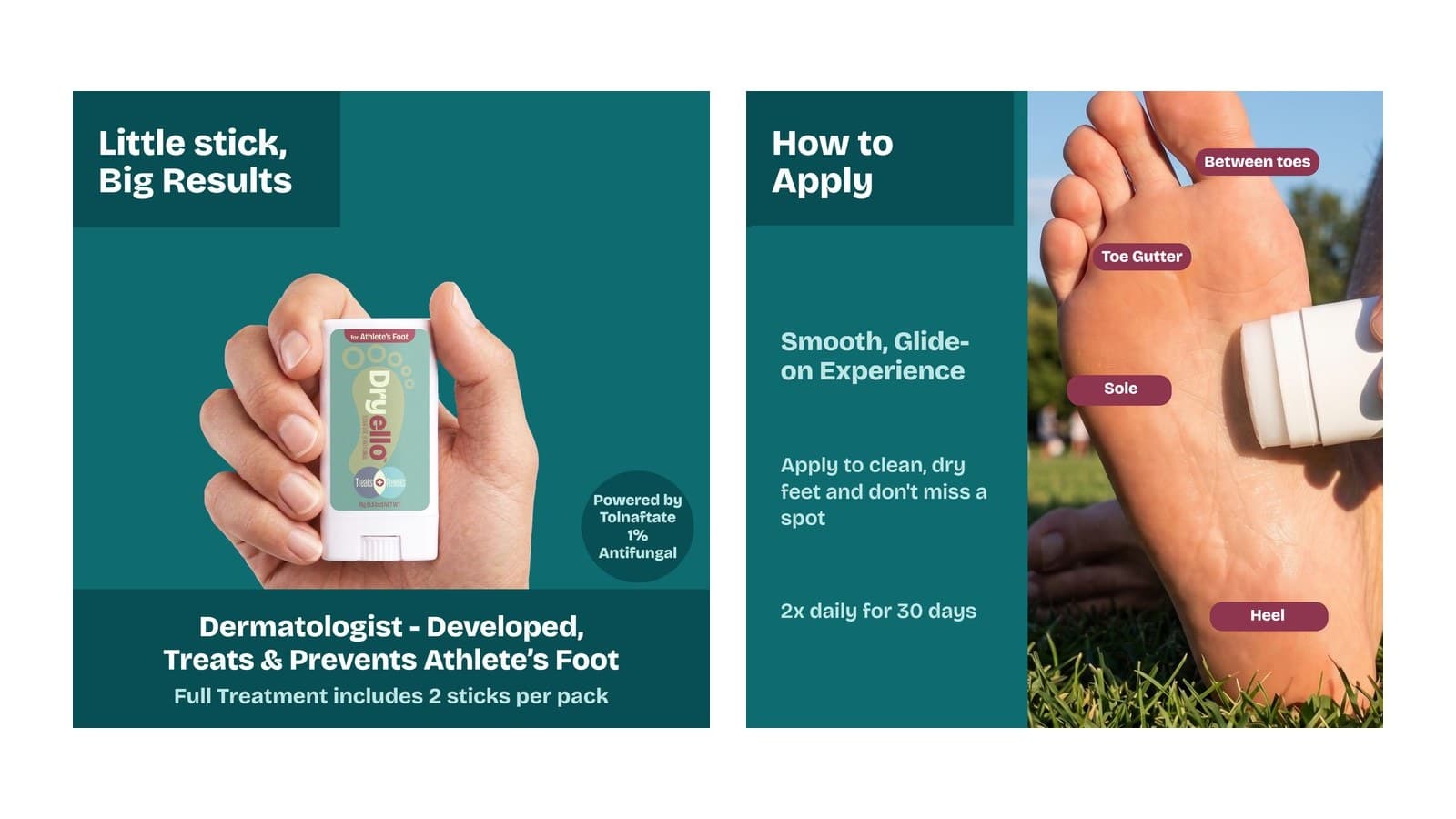
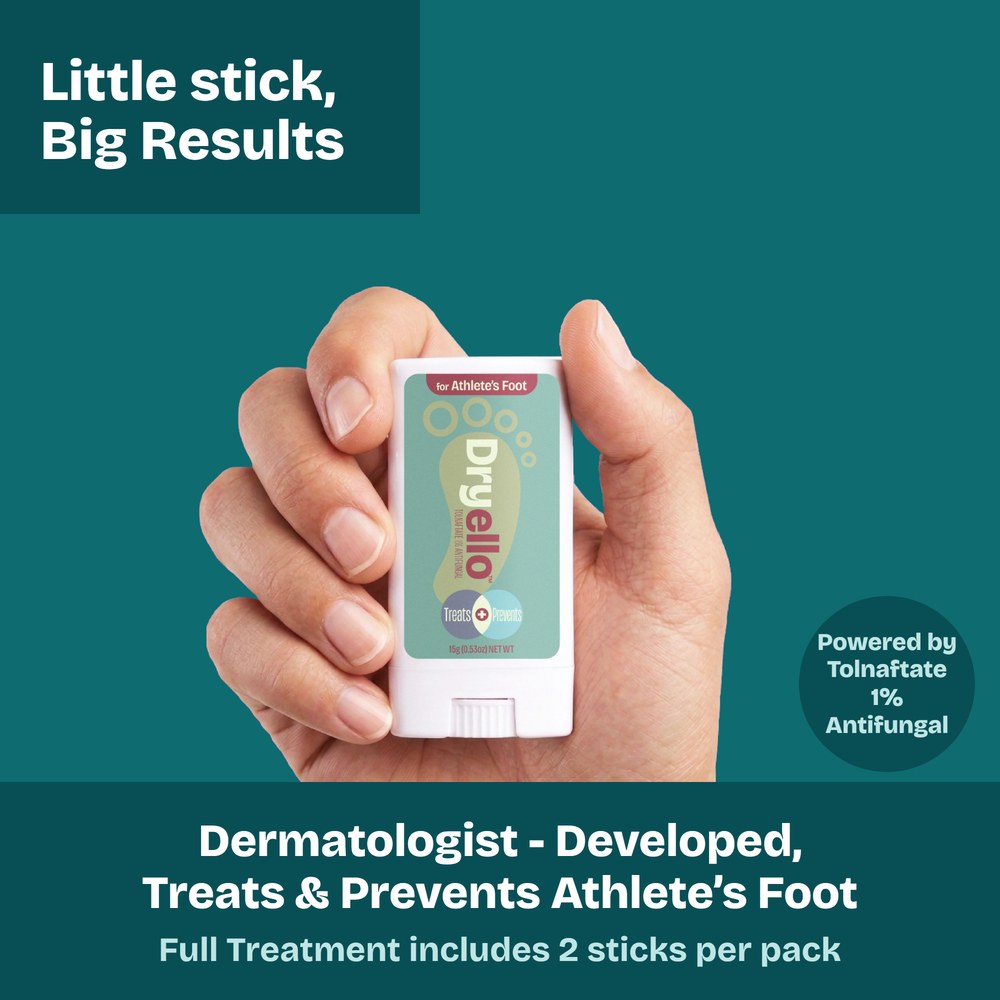
A solid antifungal stick works like a glue stick or a stick deodorant. You twist up the base and glide it over the skin. There's no tube to squeeze, no cream on your fingers, and no need to wash a greasy residue off your hands afterward. The barrel is larger than most medicine tubes, which many people find easier to hold.
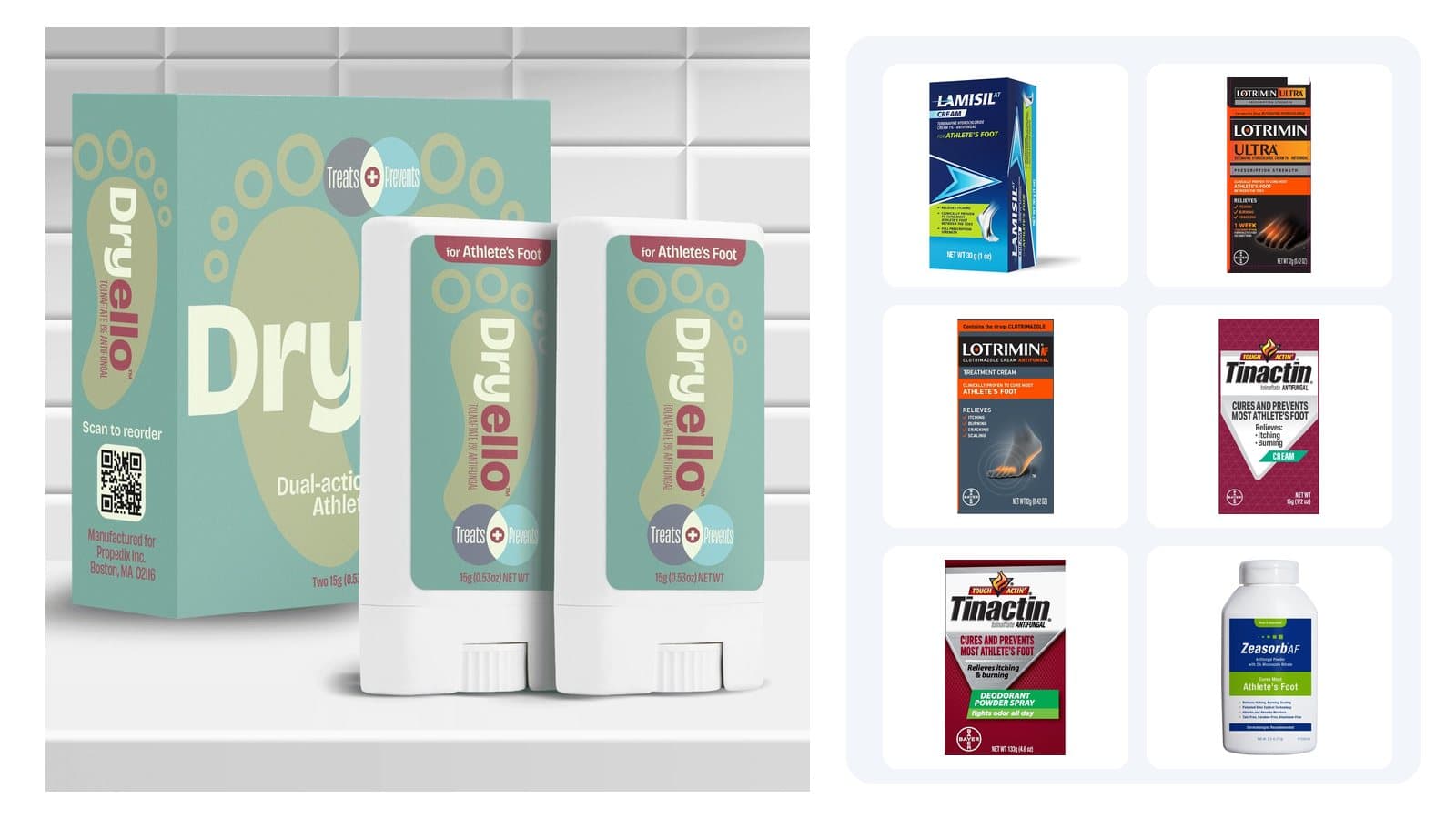
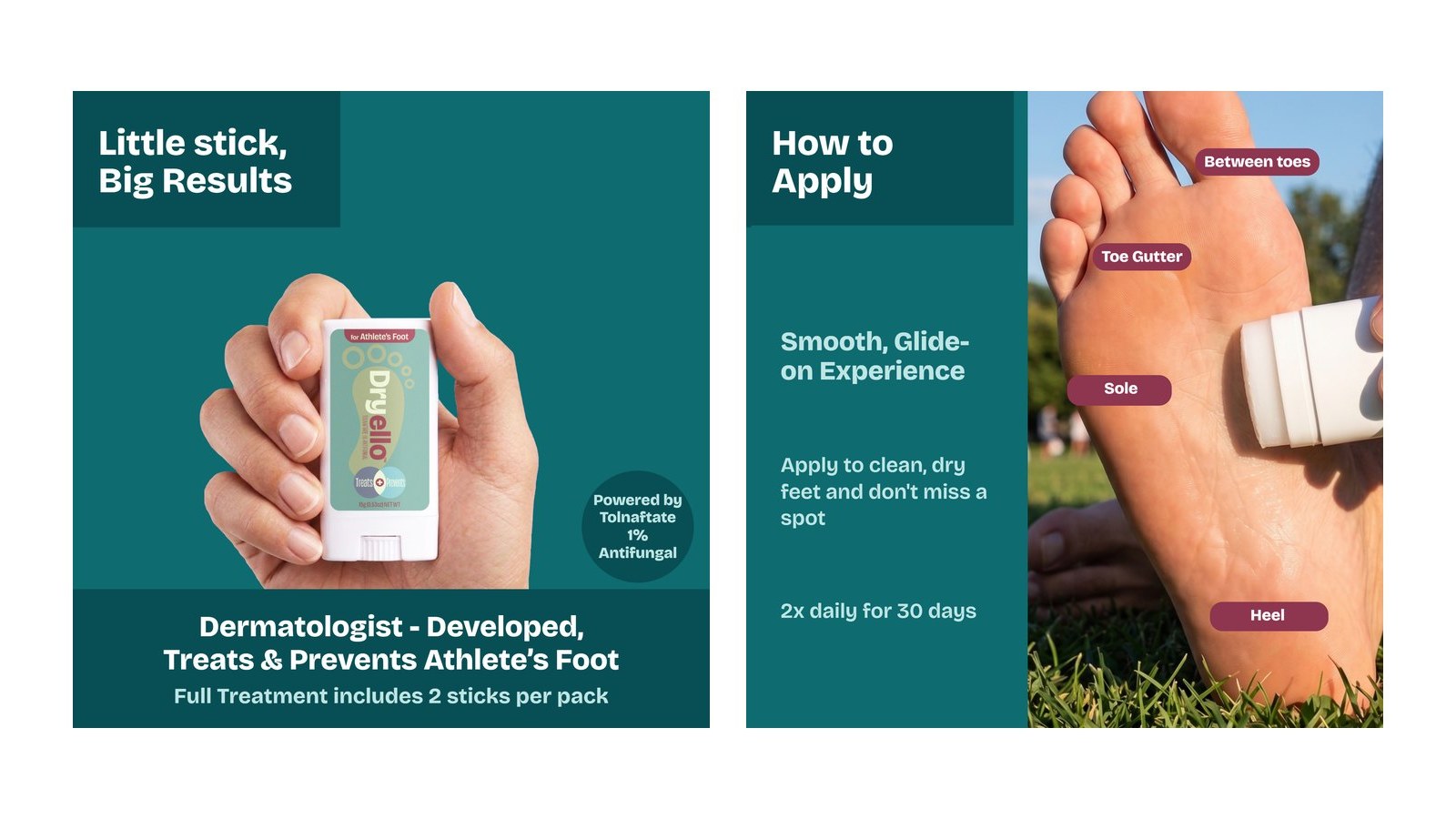
The Dryello Athlete's Foot Treatment Stick is one example. According to its FDA-listed label on DailyMed, it contains tolnaftate 1%, the same antifungal active ingredient as Tinactin. The label lists three uses: "Cures most Athlete's Foot (tinea pedis)," "Relieves itching, burning, cracking, and scaling," and "Prevents recurrence of most Athlete's foot with daily use." The label directions are to wash and dry the affected area thoroughly, apply a thin layer twice daily (morning and night) or as directed by a doctor, and pay special attention to the spaces between the toes.
It's worth being clear about the limits, too. A stick doesn't lengthen your arm. If you can't reach your feet at all, you'll still need a helper or a different plan. The applicator surface is fairly wide, so getting into tight spaces between the toes takes a little angling. And while the stick keeps your fingers clean, you still need clean, dry feet before you start.
Dryello stick: honest pros and cons
| Pros | Cons |
|---|---|
|
|
Who it's best for: people with hand arthritis or a weak grip who can still reach their feet while seated, people who find creams messy or forget to wash their hands, and caregivers who apply treatment for someone else.
The 30 g option, two 15 g sticks, was listed on dryello.com at $16.95 as of September 2026. Dryello says it is dermatologist-developed and made in the USA. Dryello also lists Amazon and Walmart.com as retailers. To compare it with Lamisil AT, Lotrimin, Tinactin, and other OTC antifungals, see our guide to the best athlete's foot treatments for older adults. You can see it at dryello.com.
A seated routine that's easier on joints and safer for balance
The most important safety step is also the simplest: sit down. Treating your feet while standing on a wet bathroom floor combines two fall risks, balancing on one leg and a slippery surface. Here's a routine built around sitting.
- Pick a stable chair outside the shower. A sturdy chair with armrests, on a dry floor, gives you something to push up from. If you bathe seated, our guide to shower chairs and bath safety covers stable options.
- Set everything within reach first: towel, the treatment, clean socks, and a long-handled mirror if you use one. You shouldn't have to get up mid-routine.
- Dry thoroughly, including between the toes. Most antifungal labels start with "wash and dry thoroughly." A washcloth draped over the end of a long-handled sponge or a reacher can help you dry the far foot.
- Bring your foot to you, not you to your foot. Rest your foot on a low, stable footstool, or cross your ankle over your knee if your hips allow. Don't lean far forward.
- Glide a thin layer over the affected area, and angle the stick into the spaces between the toes, as the label directs. Cover a small margin of healthy-looking skin around the rash.
- Put on clean socks right away, while you're still seated. A sock aid helps if bending is difficult.
- Stand up slowly, and only in shoes or non-slip socks, not bare feet. See our picks for non-slip socks.
- Repeat morning and night, pairing it with something you already do, like after brushing your teeth, so it doesn't get skipped.
A note on powders and bathroom floors
Foot powders are a common part of athlete's foot care, and some are medicated. But loose powder on a tile or vinyl bathroom floor can make it slippery. If you use a powder, apply it seated over a towel, away from where you'll walk, and wipe up any spills before standing. This is one reason a stick or cream can be a better fit for anyone with balance concerns.
If you're helping a parent or partner
Many adult children and spouses end up handling foot care for someone else. That's especially common after a surgery, a stroke, or as arthritis progresses. It can feel awkward at first for both people. A few practical points make it easier and more respectful:
- Ask before you start, and let them lead where they can. Some people can apply treatment to one foot but not the other, or can do it with the supplies set up for them.
- Look at the feet together, in good light. Daily foot checks are recommended for people with diabetes (NIDDK), and they're a good habit for anyone with limited reach. Watch for cracks, redness, blisters, swelling, or changes in toenails.
- Use one product per person. Athlete's foot spreads by contact, so don't share sticks, towels, socks, or shoes. The CDC lists shared towels among the common ways it spreads.
- Keep your own hands clean. A stick means you don't touch the rash, but wash your hands afterward anyway.
- Keep track of the course. A simple checklist on the bathroom mirror, marked AM and PM, helps when more than one person is helping.
- Know when to hand off. Toenail trimming, thick or discolored nails, corns, and calluses are worth taking to a podiatrist. The NIDDK recommends having a foot doctor trim toenails if you can't see, feel, or reach your feet.
Keeping it from coming back
Athlete's foot often returns. The American Academy of Dermatology's prevention advice is practical and mostly low-effort:
- Wear shower shoes or sandals in shared showers, pools, gym locker rooms, and hotel bathrooms.
- Wash your feet daily and dry them completely, especially between the toes.
- Wear socks that wick moisture and change them daily, or more often if your feet get damp.
- Alternate shoes so each pair can dry out, and don't share shoes or towels.
- If your label allows it, keep using the product daily for prevention. Dryello's label says it "Prevents recurrence of most Athlete's foot with daily use."
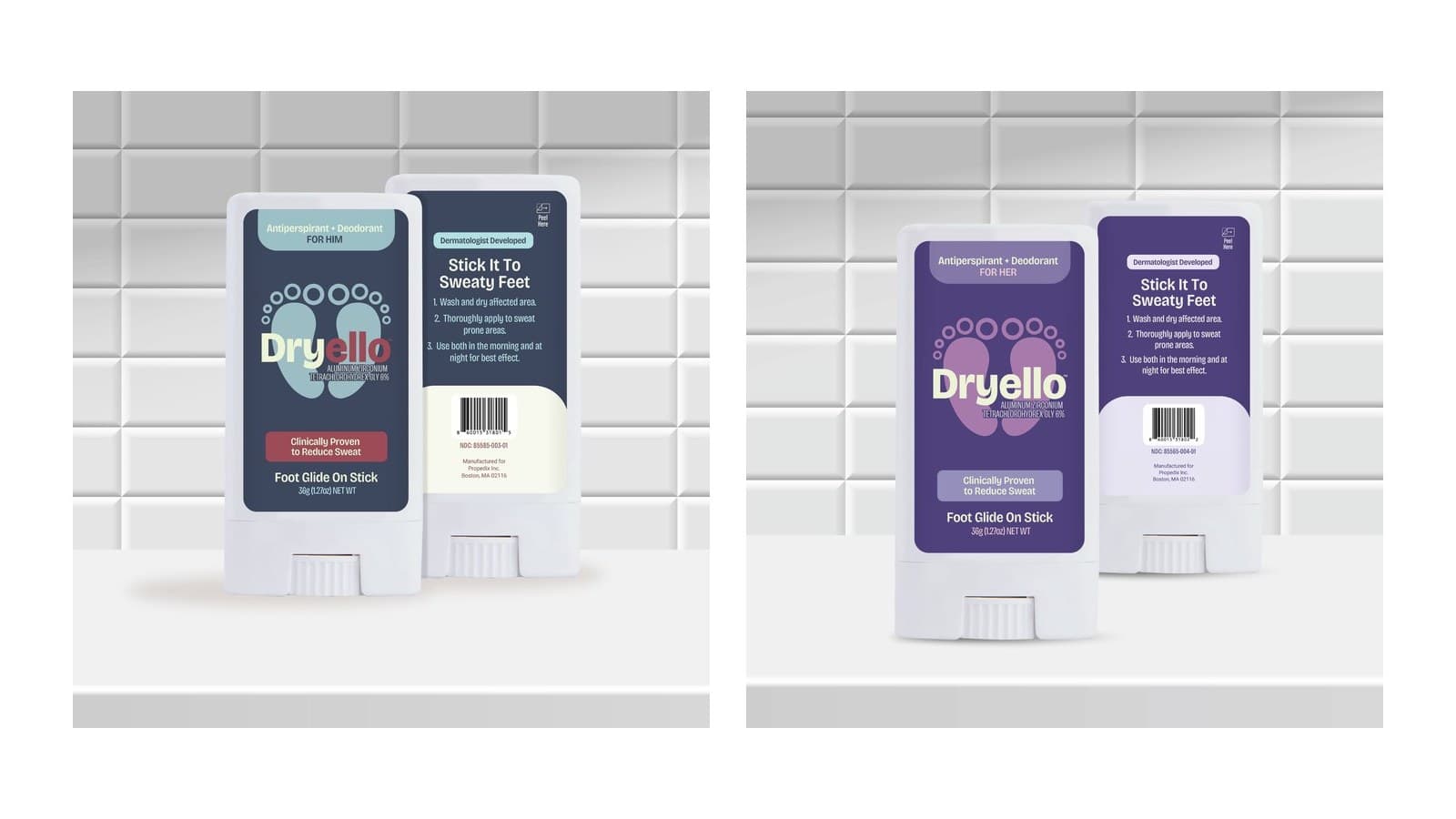
If sweaty feet are part of the problem, a foot antiperspirant may help. Antiperspirants are not antifungals, though, and they shouldn't go on broken or cracked skin, so treat the infection first. Our companion guide, the best foot antiperspirants and sweat and odor products for older adults, compares options. If you wear compression socks every day, our compression sock guide covers fit. Make sure your feet are completely dry before you put them on.
Important if you have diabetes or circulation problems
For people with diabetes, a foot problem that seems minor deserves more care. The American Diabetes Association explains that nerve damage (neuropathy) can make it hard to feel a cut, blister, or sore, and that poor blood flow can make infections harder to heal. The NIDDK recommends the following:
- Check your feet every day, including between the toes. Use a mirror, or ask someone to help if bending is difficult.
- Dry carefully between the toes, and don't put lotion between the toes.
- Call your health care provider right away about a cut or sore that isn't healing, or skin that is red, warm, or painful.
Athlete's foot causes cracks in the skin, and cracked skin gives bacteria a way in. If you have diabetes, peripheral artery disease, neuropathy, or a weakened immune system, ask your doctor or podiatrist before using any over-the-counter foot product, including this one. If you monitor your blood sugar at home, our glucose meter guide covers easy-to-read options.
When to see a clinician
- The rash isn't better within the time frame on the product label. MedlinePlus suggests seeing a provider if it isn't better in 2 to 4 weeks, or if it keeps coming back.
- You see signs of a bacterial infection, such as swelling, warmth, red streaks, pus, or fever. MedlinePlus says to call right away.
- You have diabetes, poor circulation, or a weakened immune system and notice any foot problem.
- The toenails are thick, crumbling, or discolored. Over-the-counter athlete's foot products aren't labeled for nail fungus.
- Irritation develops after you start a product. The Dryello label says to discontinue use and consult a doctor if irritation occurs.
Label warnings for the Dryello stick: For external use only. Avoid contact with the eyes. If irritation occurs, discontinue use and consult a doctor. Not for children under 2 unless directed by a doctor. Keep out of reach of children.
Frequently asked questions
Can older adults use an over-the-counter athlete's foot treatment?
Yes, in most cases. Over-the-counter antifungals such as tolnaftate, clotrimazole, miconazole, and terbinafine are labeled for adults. MedlinePlus lists them as standard first treatments. If you have diabetes, poor circulation, numbness in your feet, or a weakened immune system, talk with your doctor or a podiatrist before treating a foot problem yourself, and follow the product label.
What if I can't reach or see between my toes?
Do the routine seated, with your foot resting on a low stool or crossed over your knee if that's comfortable, and use a long-handled mirror to check the skin. A glide-on stick is easier to grip than a small tube, but it doesn't lengthen your reach. If you can't reach your feet safely, ask a family member or caregiver to help, or ask a podiatrist about options. The NIDDK specifically suggests asking someone for help checking your feet if bending is hard.
Is a stick as effective as a cream?
The form doesn't change the active ingredient. Dryello's stick contains tolnaftate 1%, the same active ingredient as Tinactin cream. Both labels list the same uses for athlete's foot. What differs is how easy each one is to apply. We haven't tested either product, and there's no head-to-head evidence we can point to comparing a stick with a cream.
How long should I use an athlete's foot treatment?
Follow the label. Many tolnaftate and clotrimazole creams call for twice-daily use for 4 weeks. Dryello's label says to apply twice daily but gives no set length, and Dryello's website recommends 4 weeks. MedlinePlus advises continuing 1 to 2 weeks after the rash clears, and seeing a provider if it isn't better in 2 to 4 weeks.
Should a person with diabetes treat athlete's foot at home?
Check with your clinician first. The American Diabetes Association and NIDDK explain that nerve damage can make it hard to feel foot injuries and that reduced blood flow can make infections slower to heal. Both advise checking your feet every day and calling your provider promptly about sores, redness, warmth, or skin changes that don't heal.
Can a caregiver apply the treatment for someone else?
Yes. The label directions are the same whoever applies it. Wash and dry the feet, apply a thin layer twice daily, and pay attention to the spaces between the toes. Caregivers should wash their hands afterward and give each person their own stick, towel, and socks. With a stick, the caregiver's hands don't touch the rash.
Sources
- Dryello Dual Action Relief for Athlete Foot (tolnaftate 1%) — Drug label. DailyMed, U.S. National Library of Medicine. Accessed September 25, 2026.
- Athlete's foot. MedlinePlus, U.S. National Library of Medicine. Accessed September 25, 2026.
- How to prevent athlete's foot. American Academy of Dermatology. Accessed September 25, 2026.
- What Causes Ringworm. Centers for Disease Control and Prevention. Accessed September 25, 2026.
- Older Adult Falls Data. Centers for Disease Control and Prevention. Accessed September 25, 2026.
- Foot Complications. American Diabetes Association. Accessed September 25, 2026.
- Diabetes & Foot Problems. National Institute of Diabetes and Digestive and Kidney Diseases. Accessed September 25, 2026.
Related reading on Senior Tech Review: Best athlete's foot treatments for older adults (2026) · Best foot antiperspirants and sweat and odor products for older adults (2026) · Best bathroom safety products · Best reachers and grabbers
Disclosure
This is a sponsored guest post. Dryello (ProPedix, Inc.) is a paying client of the publisher of Senior Tech Review. Dryello contributed this article, and our team edited it. Links to Dryello on this page are sponsored links, and Dryello's product is featured because of that paid relationship, not because of an independent comparison. Senior Tech Review did not lab-test or independently test this product. Product information comes from the FDA-listed label and the manufacturer's descriptions, and prices can change. This article is general information and is not medical advice. Please talk with your doctor, podiatrist, or dermatologist about any foot condition, especially if you have diabetes or circulation problems.