Best Lift Chairs for Seniors (2026): Power Lift Recliners Reviewed
The best power lift recliners for seniors in 2026 — dual-motor, lay-flat, big-and-tall, and heat-and-massage picks that make standing up easier and safer.
As an Amazon Associate I earn from qualifying purchases. We independently review products; buying through our links never costs you extra.
Best Overall
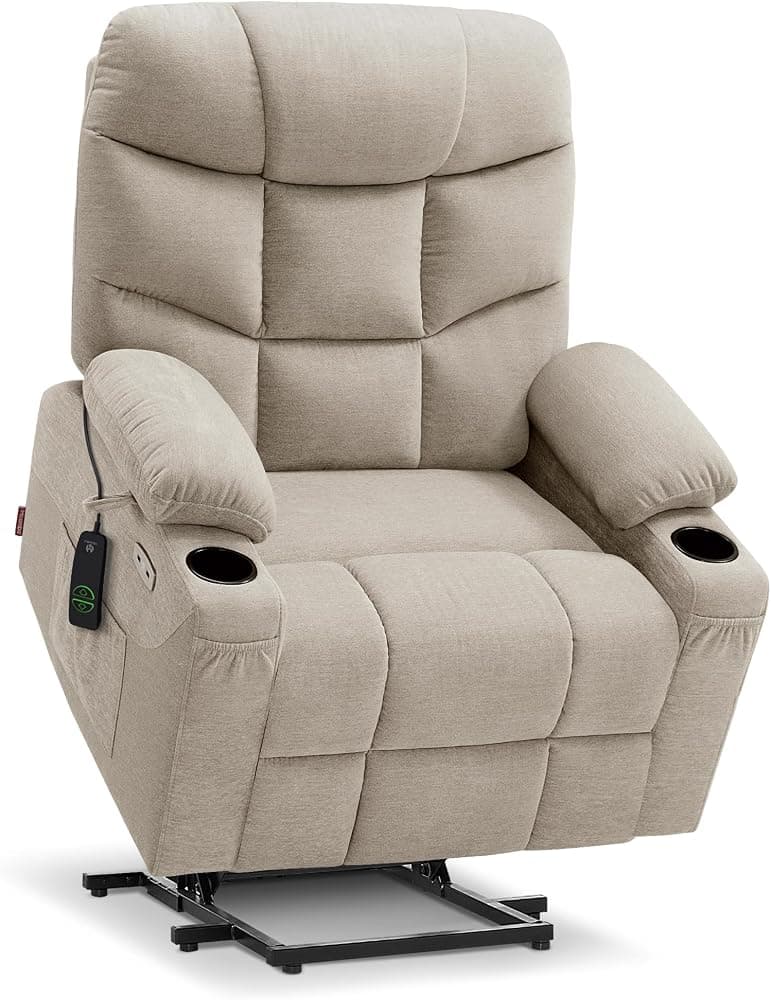
MCombo Power Lift Recliner Chair (Dual Motor)
Quick picks
| Product | Best for | Amazon |
|---|---|---|
| MCombo Power Lift Recliner Chair (Dual Motor) | Overall | Check price on Amazon |
| MCombo Lift Recliner with Heat & Massage | Aches & Pains | Check price on Amazon |
| Trustyue 180° Lay-Flat Power Lift Recliner | Sleeping | Check price on Amazon |
| Big & Tall Power Lift Recliner (up to 400 lb) | Larger Adults | Check price on Amazon |
| GarveeHome Faux-Leather Lift Recliner | Easiest to Clean | Check price on Amazon |
Our Top Picks
Chosen for seniors based on features, specs, and verified buyer reviews.

MCombo Power Lift Recliner Chair (Dual Motor)
- Dual motor tilts back and lifts legs independently
- Smooth power lift helps you stand with little effort
- Soft, breathable fabric with lumbar support
- Side pocket and USB charging port
- Heavier to move once assembled
- Fabric needs occasional vacuuming

MCombo Lift Recliner with Heat & Massage
- Five-mode vibration massage plus lumbar heat
- Power lift and recline for easy sit-to-stand
- Padded arms and headrest
- Remote with simple large buttons
- Massage is vibration, not deep-tissue
- Single motor: back and legs move together

Trustyue 180° Lay-Flat Power Lift Recliner
- Reclines a full 180° to lie flat like a bed
- Dual motors for infinite position control
- Good for napping or overnight sleep in the chair
- Sturdy steel lift frame
- Takes more wall clearance when flat
- Larger footprint than a standard recliner

Big & Tall Power Lift Recliner (up to 400 lb)
- Wider seat and reinforced frame rated ~400 lb
- Extra padding through the seat and back
- Power lift eases standing for heavier users
- Heat and massage on most configurations
- Large footprint needs a roomy spot
- Assembly is a two-person job

GarveeHome Faux-Leather Lift Recliner
- Wipe-clean PU leather is great for spills
- Heat and massage with a handset remote
- Power lift and smooth recline
- Two cup holders and side pockets
- Faux leather can feel warm in summer
- Fewer fabric/color choices
The best power lift recliner for most seniors is a dual-motor chair like the MCombo Power Lift Recliner — the motorized lift gently raises the seat to help you stand, while independent back and leg control lets you recline comfortably or nearly flat. A lift chair (also called a power lift recliner or "stand-up" chair) is one of the highest-value pieces of tech for aging in place: it eases the hardest everyday movement — getting up out of a chair — and reduces fall risk and caregiver strain.
How to choose a lift chair for a senior
Four things matter more than anything else. Get these right and almost any reputable chair will serve you well:
1. Single motor vs. dual (infinite position) motor
A single motor moves the back and footrest together — fine for TV-watching and standing up. A dual/infinite-position motor moves them separately, so you can lie nearly flat, elevate your legs above your heart, or nap. If the chair will be used for sleeping, swelling (edema), or long hours, choose dual-motor.
2. Size and weight capacity
Lift chairs come in petite, medium, large, and big-and-tall. A seat that is too tall or too deep makes standing harder. Measure the user's height and weight and match the chair — don't guess.
3. Recline positions
Look for at least "2-position" (TV recline) for casual use, or "infinite/lay-flat" if you want to sleep or fully elevate the legs.
4. Fabric, heat, and massage
Fabric is soft and breathable; faux leather wipes clean after spills. Heat and vibration massage are inexpensive add-ons that many users with arthritis or back pain find genuinely helpful.
A lift chair solves the specific problem of standing up from a seated position — it doesn't address getting around the house or outside once standing. For someone whose walking has become unsafe over any real distance, pairing a lift chair with the right wheelchair often makes more sense than expecting the chair alone to solve mobility.
What to look for, with senior needs in mind
Two chairs can share the same "dual-motor lay-flat" description and still feel completely different to an older user. These are the details that decide whether a chair is genuinely easy to live with:
- The remote (dexterity and vision): This is the control the user touches every single day. Look for large, well-separated buttons with raised icons or clear labels, ideally a handset that's easy to find by feel. Tiny, flush, identical buttons are a daily frustration for arthritic fingers and aging eyes.
- Seat height when lifted (joints and balance): The whole point of the lift is to bring the user close to standing. A lift that tilts far enough forward to nearly put them on their feet is doing its job; one that barely angles up leaves the hardest part of standing undone.
- Armrests to push from: Firm, well-padded armrests at a comfortable height give the arms something to push against while standing. Soft, low, or wobbly arms take that leverage away just when it's needed most.
- Backup battery (safety): Most lift chairs include a small battery pack so the seat still raises and lowers during a power outage. Keeping a fresh 9-volt battery in it means the user is never stranded reclined when the power goes out.
- Fabric and cleaning (caregiver-friendliness): Faux leather wipes clean after spills and accidents, which matters for anyone managing incontinence or frequent meals in the chair. Cloth is cooler and softer but needs vacuuming and spot-cleaning.
- Simplicity (cognition): For someone with memory or cognitive changes, a two-button up/down handset is far kinder than a multi-function remote with massage modes, heat zones, and position presets that are easy to trigger by accident.
How to choose the right one for your situation
- Mainly to help with standing up: A basic 2-position single-motor lift chair does the core job well and costs less. The priority is a strong, smooth lift and good armrests.
- Long hours in the chair or sleeping in it: Choose a dual-motor or lay-flat model so the user can get close to horizontal, shift positions to relieve pressure, and elevate the legs.
- Swelling in the legs or feet (edema): Independent leg control that raises the feet above heart level is the feature to insist on; a single motor that only reclines partway won't do it.
- A larger or taller user: Match the chair's size class and weight rating honestly. A too-small chair is uncomfortable and defeats the lift; a too-large chair leaves shorter users perched without back support.
- Arthritis or chronic back pain: Heat and vibration massage are inexpensive comforts many find genuinely helpful, and a chair that reclines fully lets the spine decompress between activities.
Common mistakes to avoid
- Guessing the size. The single most common regret is a chair that's too deep or too tall, which makes standing harder rather than easier. Measure the user's height, and check the seat-to-floor height against the length of their lower leg.
- Buying single-motor when the chair will be slept in. If someone will nap or sleep in the recliner, a single motor that can't get near flat will disappoint. This is the upgrade most worth paying for.
- Forgetting wall clearance. Lay-flat and infinite-position chairs need room behind them. Push a chair too close to the wall and it can't fully recline.
- Skipping the backup battery. A dead or missing backup battery means the chair won't move in an outage. It's a cheap part that prevents a genuinely unsafe situation.
- Assembling it alone. These chairs are heavy and the backrest is awkward. Have a second person help rather than risking a strain or a drop.
Setup and getting started
- Plan the location first: near an outlet, with clearance behind for reclining, and with a clear, unobstructed path for standing up and walking away.
- Assembly is usually just attaching the backrest with a couple of bolts, but the pieces are heavy — set the base where it will live before attaching the back.
- Route the power cord and handset cord so they can't be tripped over or caught in the mechanism.
- Test the full range — lift, recline, and (if equipped) lay-flat — before the user relies on it, and show them the two buttons that matter most so the rest of the remote doesn't get in the way.
- Install a fresh backup battery and note where it goes, so it can be replaced when the low-battery warning sounds.
Safety and setup tips
- Leave 12–18 inches of clearance behind the chair for reclining (more for lay-flat models).
- Plug into a dedicated outlet and keep the battery-backup pack charged so the seat still lowers during a power outage.
- Assembly is usually two backrest bolts, but the chair is heavy — have a second person help.
- Keep the area around the footrest clear; a pet or a walker left in the path can be caught as the footrest extends or retracts.
- Have the user come to a full, stable standing position and get their balance before stepping away from the chair, rather than moving off while the seat is still tilting.
Frequently asked questions
Are lift chairs covered by Medicare?
Medicare Part B may cover the seat-lift *mechanism* (not the whole chair) as durable medical equipment when a doctor prescribes it for a qualifying condition like severe arthritis. You typically pay for the chair itself. Check with your plan and get the prescription first.
What is the difference between a single-motor and dual-motor lift chair?
A single motor moves the backrest and footrest together, so you can't recline without also raising your legs. A dual (or infinite-position) motor controls them separately, which lets you lie nearly flat and find more comfortable positions — better for sleeping or long sitting.
What size lift chair should I get?
Match the chair to the user's height and weight. Petite users (under ~5'4") are more comfortable in a 'petite' or 'small' model; taller or heavier users should look at 'large' or 'big & tall' chairs rated for their weight. A seat that's too deep makes standing harder, which defeats the purpose.
Can you sleep in a lift recliner every night?
Yes — many people with breathing, reflux, or mobility issues sleep in a recliner nightly. Choose a dual-motor or lay-flat model so you can get close to horizontal, and add a small pillow for neck support.
How much space does a lift chair need behind it?
A standard 2-position chair needs roughly a foot to a foot and a half of clearance behind it to recline; a lay-flat or infinite-position model needs more. Measure from the wall before choosing a spot, and remember the chair moves backward as well as tilting as it reclines.
What happens to a lift chair during a power outage?
Most lift chairs include a battery backup — usually powered by a 9-volt battery — that lets the chair raise and lower a limited number of times without wall power, so the user is never stuck reclined. Keep a fresh battery installed and replace it when the low-battery indicator sounds.
Is a lift chair the same as a standard recliner?
No. A standard recliner is pushed back by leaning and body weight; a lift chair is powered and, crucially, tilts the whole seat forward to help the user rise to nearly standing. That lift function is the reason to buy one rather than an ordinary recliner for someone who struggles to stand.
A lift chair often comes up alongside post-surgery recovery planning, where the toilet is the other seat height that suddenly matters — our raised toilet seats and safety frames guide covers that piece of the same recovery setup.
Prices and availability change often on Amazon — tap "Check price on Amazon" for each pick to see the current cost and read verified buyer reviews.
A supportive chair helps in the moment, but daytime posture habits matter too — our posture correctors guide covers braces designed to retrain shoulder and upper-back position during the rest of the day.
If a lift chair isn't the right fit yet — the budget doesn't allow for a furniture replacement, or the difficulty is milder — a portable stand assist handle can add the same kind of leverage to an existing couch or chair.


