Best Wheelchairs for Seniors (2026): Manual, Transport, and Ultra-Lightweight Compared
The right wheelchair depends on who's doing the pushing: a self-propelling manual chair, a caregiver-pushed transport chair, and an ultra-lightweight folding chair solve different problems. Here's how to tell which one actually fits your situation, and how to size it correctly.
As an Amazon Associate I earn from qualifying purchases. We independently review products; buying through our links never costs you extra.
Best Standard Self-Propel
Drive Medical Silver Sport 2 Standard Wheelchair
Quick picks
| Product | Best for | Amazon |
|---|---|---|
| Drive Medical Silver Sport 2 Standard Wheelchair | Standard Self-Propel | Check price on Amazon |
| Vive Transport Wheelchair | Caregiver-Pushed Use | Check price on Amazon |
| Karman S-Ergo 115 Ultra-Lightweight Wheelchair | Ultra-Lightweight | Check price on Amazon |
| Drive Medical Trooper Wide Seat Wheelchair | Larger Users | Check price on Amazon |

Our Top Picks
Chosen for seniors based on features, specs, and verified buyer reviews.

Drive Medical Silver Sport 2 Standard Wheelchair
- Large push rims for self-propulsion
- Durable steel frame
- Swing-away footrests ease transfers
- Widely available replacement parts
- Heavier to lift into a car than aluminum chairs
- Bulkier fold than transport chairs
- Not built for rough outdoor terrain
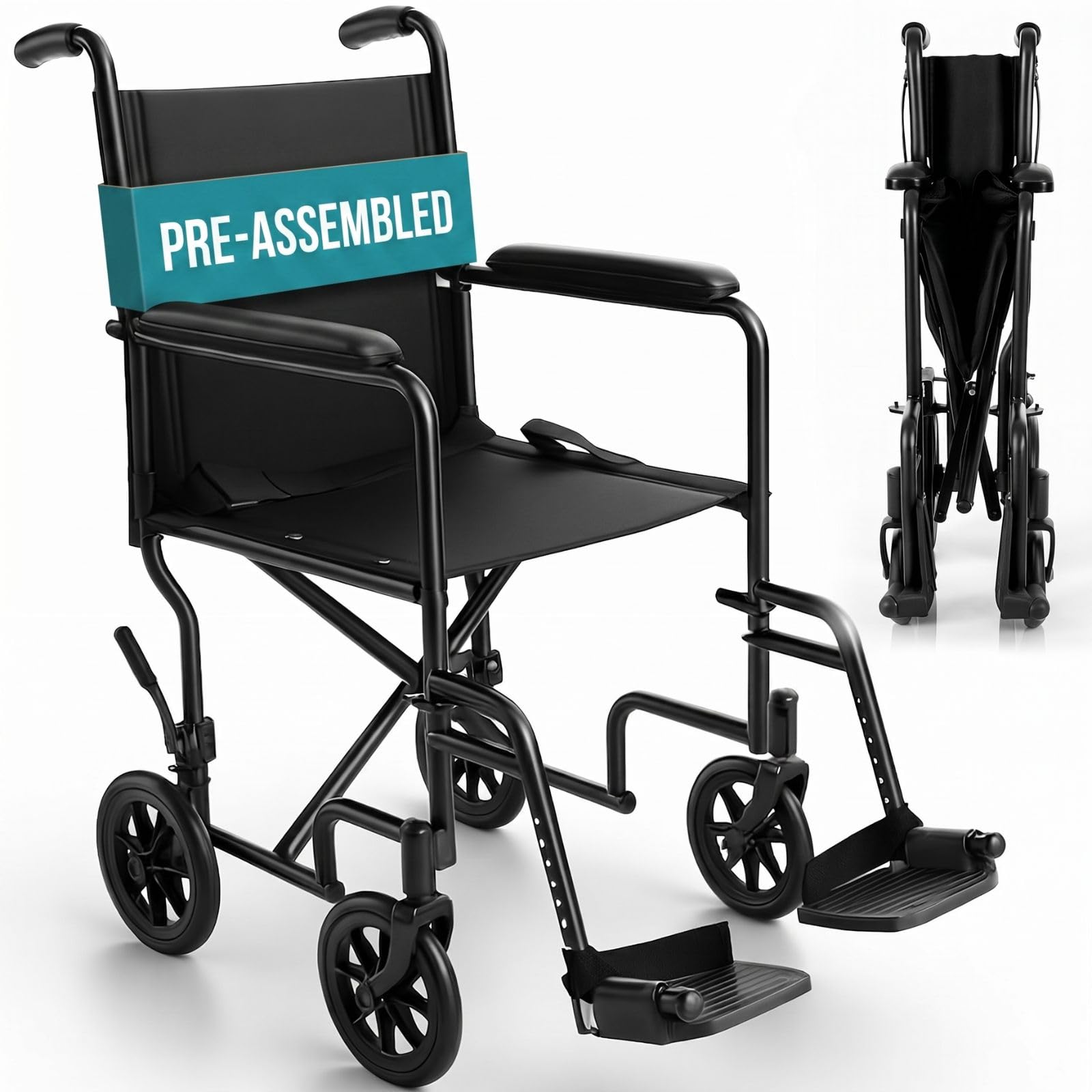
Vive Transport Wheelchair
- Much lighter than a standard wheelchair
- Narrow footprint fits tight doorways
- Folds quickly for car trunks
- Easier for a caregiver to maneuver
- User cannot self-propel
- Small wheels struggle on uneven ground
- Less padded than some standard chairs

Karman S-Ergo 115 Ultra-Lightweight Wheelchair
- Aluminum frame is far lighter than steel
- Full-size wheels allow self-propulsion
- Ergonomic wheel placement reduces shoulder strain
- Easier for one person to lift into a trunk
- Costs more than a basic steel chair
- Lower weight capacity than heavy-duty frames
- Narrower cushion than some standard seats
Drive Medical Trooper Wide Seat Wheelchair
- Several inches wider than a standard seat
- Higher weight rating than the standard frame
- Reinforced frame for durability
- Same folding mechanism as standard models
- Heavier than the standard-width version
- Bulkier to store and transport
- Wider footprint needs more doorway clearance
If the person using the wheelchair has enough upper-body strength to move the wheels themselves, a standard self-propel manual chair is usually the right call; if a caregiver will be doing all the pushing, a lighter transport chair is easier for both people and usually cheaper. After comparing the main styles sold for home and everyday use, our top pick for most self-propelling users is the Drive Medical Silver Sport 2, with the Vive Transport Wheelchair the better choice when someone else will always be pushing.
Our top picks
Drive Medical Silver Sport 2 — Best Standard Self-Propel Chair
This is the style most people picture when they hear "wheelchair": full-size rear wheels with push rims the user can grip and turn themselves, a steel frame, and swing-away footrests that make transfers easier. The frame folds for transport, though it's heavier to lift into a trunk than the ultra-lightweight options below. It's a solid, unglamorous default for someone who has the arm strength to self-propel around the house and short distances outdoors.
Check price on AmazonDrive Medical Silver Sport 2 Standard Wheelchair
Vive Transport Wheelchair — Best for Caregiver-Pushed Use
Transport chairs use four small wheels instead of two large ones, which makes them dramatically lighter and narrower — useful for tight hallways, doctor's office doorways, and lifting into a car trunk. The trade-off is that the user can't turn the wheels themselves; these are built to be pushed. For someone who's being wheeled by a spouse or home aide rather than propelling on their own, the lower weight matters more day to day than self-propulsion ever would.
Karman S-Ergo 115 — Best Ultra-Lightweight Self-Propel
An aluminum frame instead of steel cuts a meaningful amount of weight compared to a standard manual chair like the Silver Sport 2, while still keeping full-size rear wheels for self-propulsion. That combination — light enough for a smaller caregiver or the user to lift into a car, but still self-propel capable — is the whole appeal. The ergonomic wheel position also reduces shoulder strain for people who'll be pushing themselves for long stretches. It costs more than a basic steel chair, which is the main reason to skip it if daily long-distance self-propelling isn't the goal.
Check price on AmazonKarman S-Ergo 115 Ultra-Lightweight Wheelchair
Drive Medical Trooper Wide Seat — Best for Larger Users
Standard wheelchair seats run narrow, and a chair that's too tight is both uncomfortable and a pressure-sore risk. The Trooper's wide-seat version adds several inches of seat width and a higher weight rating than the standard frame, without switching to a bulkier bariatric-specific chair. It's heavier than the standard-width version, which is the trade-off for the extra frame strength.
Self-propel, transport chair, or ultra-lightweight — what's the real difference?
The single biggest decision isn't brand, it's who moves the chair. A self-propel manual wheelchair has large rear wheels with push rims so the user can move independently — that only works if they have reasonably strong arms and shoulders. A transport chair has small wheels all around and is built to be pushed by someone else; it's lighter and narrower, but the user has no way to move it on their own. An ultra-lightweight chair like the Karman is really a third category: a self-propel chair built from lighter materials specifically so it's easier to fold, lift, and load into a car, at a higher price than a basic steel frame. Buying the wrong category is the most common wheelchair mistake — a transport chair for someone who wants independence, or a heavy standard chair for a caregiver who struggles to lift it into a trunk.
If the person can still bear weight and walk short distances with support, it's worth checking whether a rollator or walker would actually serve them better and preserve more independence — a wheelchair is the right step up once walking, even with support, is no longer safe or sustainable. For someone who can walk but tires quickly or needs to cover longer outdoor distances independently, a mobility scooter is worth comparing too — it preserves independent movement in a way a wheelchair generally doesn't unless it's a power chair.
What to look for, with senior needs in mind
Once you've settled on the category, these are the features that most affect comfort, safety, and how livable the chair is for an older user and whoever helps them:
- Total weight and the fold (caregiver-friendliness): If the chair goes in and out of a car, what matters is whether the person doing the lifting can manage the folded weight. An aluminum frame that one person can hoist changes daily life more than almost any other feature.
- Seat cushion and pressure relief: Someone who sits for long stretches needs real cushioning to prevent pressure sores. A thin factory pad is often worth upgrading with a dedicated cushion, especially for all-day use.
- Brakes that are easy to reach and set (dexterity): Wheel locks must be simple to engage before every transfer. Long brake-handle extensions help arthritic or weaker hands set them without a fight.
- Armrests and footrests (transfers and comfort): Removable or swing-away armrests and footrests make it far easier to get in and out and to pull up close to a bed, toilet, or table. Desk-length arms slide under tables; full-length arms give more support.
- Wheel type for the terrain: Large rear wheels and pneumatic (air) tires roll more smoothly over cracks and thresholds; small solid wheels are fine indoors on smooth floors but catch on rougher ground.
- Anti-tip features and a seatbelt: Rear anti-tip bars and a simple positioning belt add a margin of safety, particularly for a user with limited trunk control or one who tends to lean forward.
How to size a wheelchair correctly
- Seat width: There should be about an inch of clearance on each side of the hips when seated — too narrow causes pressure points, too wide makes it harder to self-propel and harder to fit through doorways.
- Seat depth: With the back against the backrest, there should be roughly two to three finger-widths of space between the front edge of the seat and the back of the knee.
- Armrest height: Elbows should rest comfortably at roughly a 90-degree angle without shrugging the shoulders up or slouching down.
- Footrest height: Thighs should be level, not angled up or down, with feet fully supported — footrests that sit too low put extra pressure under the thighs.
Common mistakes to avoid
- Buying the wrong category. The costliest error is a transport chair for someone who wants to move independently, or a heavy steel chair for a caregiver who can't lift it. Decide who moves the chair first, everything else second.
- Guessing the seat width. A chair that's too narrow causes pressure sores and discomfort; too wide makes self-propelling and doorways harder. Measure the user's hips rather than eyeballing it.
- Ignoring the cushion for long sitting. A user who sits most of the day needs proper pressure relief. Skipping a good cushion invites painful, slow-to-heal sores.
- Overlooking doorway and home clearances. A wide-seat or standard chair has to fit the actual hallways, doorways, and bathroom at home. Measure the tightest passage before buying.
- Forgetting how it gets outside. A chair the family can't get down the front step or into the car doesn't help. Sort out the ramp and the transport at the same time as the chair.
Frequently asked questions
What's the difference between a wheelchair and a transport chair?
A standard wheelchair has large rear wheels with push rims so the user can propel it themselves. A transport chair has four small wheels and is designed to be pushed by a caregiver — the user generally can't move it independently. Choose based on whether the person will be self-propelling or always have someone pushing.
Will Medicare help pay for a wheelchair?
Medicare Part B can cover durable medical equipment, including wheelchairs, when a doctor documents medical necessity, but coverage details, required paperwork, and out-of-pocket costs vary by situation and by supplier. Check directly with Medicare or the equipment supplier before buying, rather than assuming a specific reimbursement amount.
Can the same wheelchair be used indoors and outdoors?
Most standard and ultra-lightweight manual chairs handle smooth outdoor surfaces like sidewalks and ramps fine, but they struggle on grass, gravel, or uneven ground. If frequent outdoor use on rougher terrain is the goal, a mobility scooter or a power wheelchair with larger, more rugged wheels is generally a better fit than a manual chair built primarily for indoor and paved use.
How do I know if my parent needs a wheelchair instead of a rollator?
If they can still bear weight and take steps safely with hand support, a rollator preserves more independence and exercise. A wheelchair becomes the safer choice once standing or walking — even with support — is unsafe, exhausting, or no longer possible for the distances they need to cover. A physical or occupational therapist can assess gait and make a specific recommendation.
Is a lightweight wheelchair less stable than a standard steel one?
Not meaningfully for typical home and errand use — the frame is lighter, not less rigid, and the wheelbase geometry is the same. The real trade-offs of an ultra-lightweight chair are cost and, on some models, a somewhat lower maximum weight capacity than a heavy-duty steel frame, not day-to-day stability.
How do I help someone transfer in and out of a wheelchair safely?
Always lock both wheel brakes first, and swing away or remove the footrests so no one trips on them. Position the chair close to the bed, toilet, or car seat, have the person push up from the armrests rather than being pulled by the arms, and keep your own back straight and knees bent if you're assisting. If transfers have become genuinely difficult or unsafe, a transfer belt or a physical therapist's guidance — and sometimes a mechanical lift — is worth arranging rather than risking a fall or a caregiver injury.
What's the difference between a manual wheelchair and a power wheelchair?
A manual wheelchair is moved by the user's arms or pushed by a caregiver; it's lighter, simpler, cheaper, and easy to transport. A power wheelchair is battery-driven and steered with a joystick, which suits someone who lacks the arm strength to self-propel or who needs to cover long distances independently. Power chairs offer more independence for the right user but are heavier, pricier, and need a ramp or lift to transport, so they're a bigger commitment than a manual chair.
How wide a doorway does a wheelchair need?
A standard manual wheelchair is often around 24 to 27 inches wide overall, so most need a doorway of at least 30 to 32 inches to pass comfortably; wide-seat chairs need more. The narrowest points in a home are usually bathroom doors and tight hallway turns, so measure those specific spots — and remember hands on the push rims need a little extra clearance on each side.
The bottom line
Start with who's actually going to move the chair — that answer eliminates half the options immediately. The Drive Medical Silver Sport 2 is a dependable default for someone self-propelling around the house, the Vive Transport Wheelchair makes far more sense when a caregiver is always pushing, and the Karman S-Ergo 115 is worth the extra cost if the chair needs to be lifted into a car trunk regularly by someone who isn't especially strong. Get the seat sizing right and any of these will be more comfortable than the generic loaner chair most families start with.
Getting the wheelchair itself right solves half the problem — our wheelchair ramps guide covers the ramp sizing and weight-capacity details needed to get it in and out of the house safely.

