Screen-Free Gift Ideas for Seniors (Beyond the Gadgets)
Personal, screen-free gift ideas older adults actually enjoy — from photo books to custom photo puzzles made from a favorite family picture.
As an Amazon Associate I earn from qualifying purchases. We independently review products; buying through our links never costs you extra.
Best Off-the-Shelf Puzzle
MasterPieces EZ Grip Jigsaw Puzzle for Seniors
Quick picks
| Product | Best for | Amazon |
|---|---|---|
| MasterPieces EZ Grip Jigsaw Puzzle for Seniors | Off-the-Shelf Puzzle | Check price on Amazon |
| Bits and Pieces Wooden Puzzle Board with Drawers | Puzzle Accessory | Check price on Amazon |

Our Top Picks
Chosen for seniors based on features, specs, and verified buyer reviews.

MasterPieces EZ Grip Jigsaw Puzzle for Seniors
- Large, easy-to-handle pieces designed for less dexterous hands
- High-contrast, nostalgic and nature imagery that's easier to sort by
- No waiting on a custom print job — ships right away
- Less personal than a custom photo puzzle
- Limited to the themes the brand offers
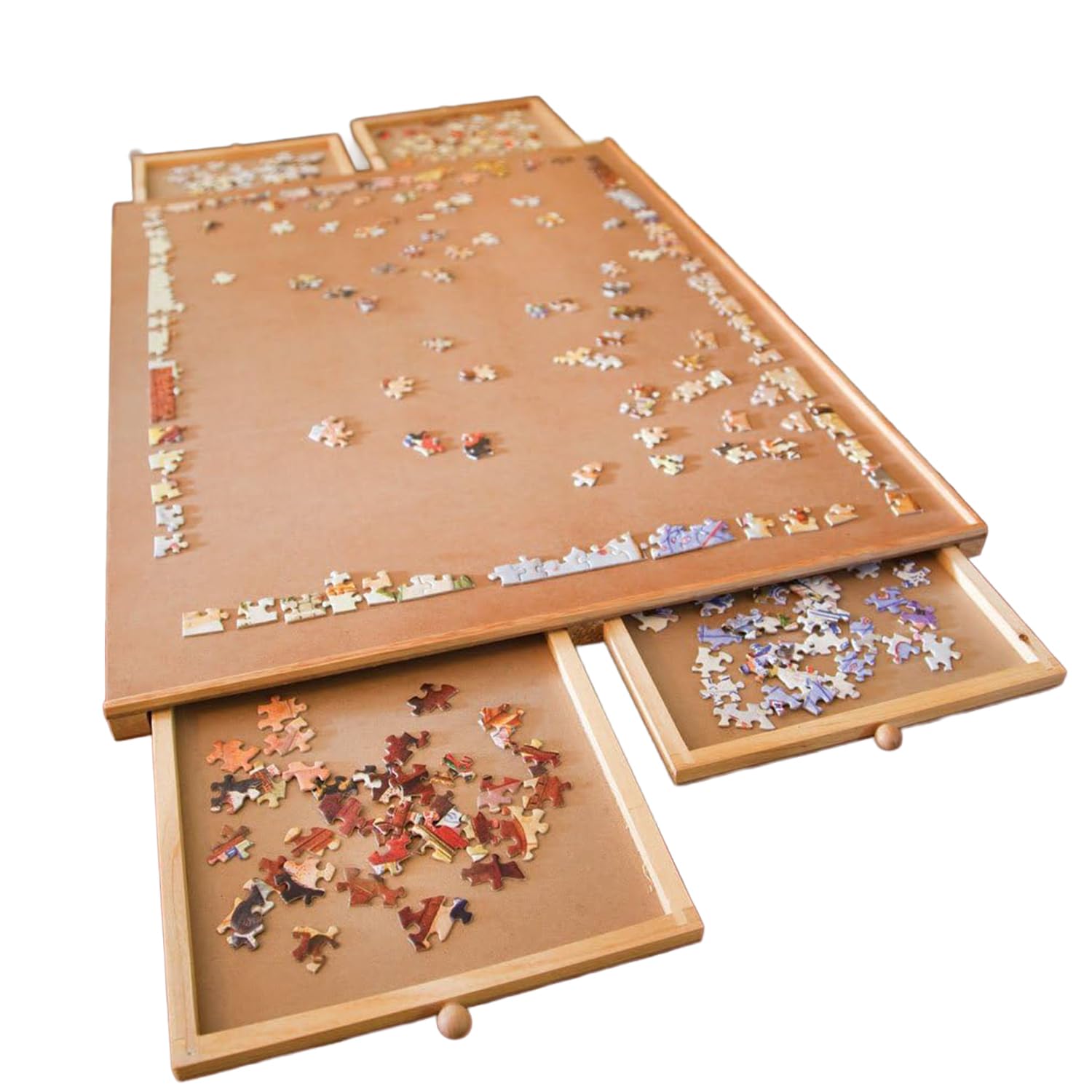
Bits and Pieces Wooden Puzzle Board with Drawers
- Slide-out drawers keep loose pieces sorted between sessions
- Lets a puzzle be paused and tucked away instead of staying spread out
- Works with any puzzle, custom or off-the-shelf, up to its size limit
- Adds cost on top of the puzzle itself
- Takes up storage space when not in use
The best senior gifts aren't always gadgets
We spend most of our time here reviewing tech that genuinely helps older adults. But some of the most appreciated gifts for seniors aren't devices at all — they're personal, screen-free, and something to enjoy with family. If you're shopping for a parent or grandparent who "has everything," here are ideas that tend to land.
Screen-free gift ideas seniors actually enjoy
- A photo book of the past year with the grandkids
- A framed portrait for the mantel or hallway
- Large-piece jigsaw puzzles — engaging without straining the eyes or hands
- A custom photo puzzle made from a favorite family photo
- Audiobook or library app setup for easy reading
Why a custom photo puzzle is a standout
A jigsaw puzzle is one of the classic screen-free activities for seniors — it's relaxing, it's good for keeping the mind engaged, and it's something family can gather around during a visit. Make it a puzzle of the grandkids or a favorite trip and it becomes a keepsake, not just an activity.
A few services will turn your own photo into a puzzle. Piece Happy is one we like for gifts: you upload a photo, optionally reimagine it in an art style like watercolor or a classic oil-painting look, and choose a size. For an older recipient, a lower piece count with larger pieces is easier on the hands and eyes while still being satisfying to build.
Tips for choosing a puzzle for a senior
- Piece count: 300–500 pieces is a comfortable, engaging range for most; go smaller for anyone with vision or dexterity challenges.
- Larger pieces are easier to handle and see.
- High-contrast, well-lit photos make a clearer, more enjoyable puzzle.
- A puzzle board or mat lets them pause and put it away between sessions.
Off-the-shelf options if you'd rather not order a custom one
Not every gift needs to be personalized — a well-made, senior-friendly puzzle straight off the shelf works fine, and it ships faster than a custom order. Look for lines specifically marketed to seniors rather than a random big-box puzzle; the piece count and image contrast are usually tuned better for older hands and eyes. A puzzle board with drawers is worth adding alongside it so a half-finished puzzle can be tucked away between visits instead of staying spread across the dining table.
A few more screen-free ideas worth considering
- A tactile fidget or sensory mat — genuinely useful for anyone with restless hands or early cognitive changes, not just a novelty.
- A subscription to a puzzle-of-the-month or crossword club — spreads the gift out instead of a single one-time box.
- A memory box or recordable photo album — pairs a physical keepsake with a recorded voice message, which tends to get pulled out and looked at again and again.
- A large-print book or magazine subscription — simple, and solves a real problem instead of just being decorative.
If the person you're shopping for does want something tech-based but low-complexity, our guide to digital photo frames for seniors covers a middle ground — a screen, but one that just cycles family photos automatically with no apps or accounts to manage day to day. For grandparents who already own the basics and still want a few well-chosen tech gifts, see our guide to gifts for grandparents who have everything.
Match the gift to their abilities, not just their interests
The single biggest reason a well-meant gift goes unused is a mismatch with what the person can comfortably see, hold, or manage — not a lack of interest. A little quiet observation before you buy goes a long way. Watch for whether they squint at small print, whether arthritis makes fine finger work frustrating, and whether they still enjoy sitting and concentrating on a project or prefer things they can pick up and put down in a few minutes.
- For arthritis or reduced hand strength: favor large, easy-grip puzzle pieces, chunky-handled tools, lightweight books, and anything that doesn't require a tight pinch or twist to use.
- For vision changes: lean toward high-contrast images, large-print books, and audio options. A puzzle of a bright, well-lit photo is far easier and more enjoyable than a busy, dark image, no matter the piece count.
- For early memory changes: familiar, nostalgic imagery and simpler activities tend to land better than anything with a lot of rules or steps. A recordable photo album or a favorite-era music option can be especially comforting.
- For low energy or limited stamina: choose things that reward short sessions — a puzzle on a board that can be paused, a magazine, a fidget or sensory item — rather than a project that only pays off after hours of effort.
Common gift-giving mistakes to avoid
- Buying by piece count or page count instead of by handling. A 300-piece puzzle with tiny pieces can be harder than a 500-piece one with large pieces. The size of what the hands and eyes deal with matters more than the number.
- Assuming "they have everything" means don't bother personalizing. The opposite is usually true — a personal, consumable gift like a photo book or a custom puzzle lands precisely because it isn't more generic stuff to store.
- Overestimating stamina or dexterity to avoid seeming to insult them. Sizing a gift to what's genuinely comfortable isn't condescending; it's what makes the gift actually get used. A too-hard puzzle that ends up abandoned is the unkinder outcome.
- Forgetting the setup. A library audiobook app, a subscription, or a recordable album often needs one bit of setup before it can be enjoyed. Doing that setup for them — or alongside them — is part of the gift.
- Ordering a custom item at the last minute. Print-on-demand keepsakes take time to make and ship. A rushed order that arrives after the occasion undercuts an otherwise thoughtful gift.
Presentation and the little extras that make it land
A screen-free gift is often as much about the shared moment as the object itself, and a few small touches amplify that. Pairing a custom photo puzzle with an afternoon spent building it together turns a present into an occasion. A puzzle board or mat, a good reading lamp beside a favorite chair, or a simple magnifier tucked in alongside a large-print book all quietly remove friction and signal that you thought about how they'd actually use the gift, not just what it was.
Comfort matters too. Good lighting is the unsung hero of screen-free hobbies — a bright, glare-free lamp makes puzzles, reading, and handwork noticeably more pleasant for aging eyes, and it's a thoughtful add-on to almost any gift on this list. And if the recipient lives in a smaller space, favor gifts that store away neatly, like a puzzle with a lidded board or a subscription that arrives and gets used up rather than accumulating on shelves.
Frequently Asked Questions
Is a 1,000-piece puzzle too hard for an older adult?
Not necessarily — plenty of seniors do 1,000-piece puzzles regularly. The piece size matters more than the count for arthritis or vision issues; a 300-piece puzzle with tiny pieces can be harder to handle than a 500-piece puzzle made with larger, easy-grip pieces.
What if they say they don't want "more stuff"?
A custom photo puzzle or a subscription tends to land differently than generic clutter because it's consumable and personal — it gets used up or rotates rather than sitting on a shelf. A recordable photo album or a puzzle-of-the-month subscription both fit this if "no more stuff" is a real concern.
How long does a custom photo puzzle take to arrive?
Custom print-on-demand puzzles typically take about one to two weeks between production and shipping, so order at least two weeks before the date it's needed — earlier around the winter holidays when volumes are higher.
Are jigsaw puzzles actually good for cognitive health, or is that overstated?
Puzzles are a reasonable low-cost mental activity — they engage visual-spatial reasoning and sustained attention — but no puzzle is a substitute for the things with stronger evidence behind them, like physical activity, sleep, and social contact. Treat it as one good habit among several, not a standalone brain-health fix.
What if they have significant vision loss?
Skip the puzzle route and lean toward audio — a library audiobook app, a subscription to an audio storytelling service, or a recordable photo album with voice messages. Our magnifier guide also covers stationary lamp magnifiers that make hobby work like puzzles more accessible if vision loss is moderate rather than severe.
What's a good screen-free gift for a senior in assisted living or with limited space?
Favor things that don't need much room or storage: a large-print book or magazine subscription, a recordable photo album, a compact puzzle on a board that tucks away, or a puzzle-of-the-month club that arrives and gets used up. Consumable and personal beats bulky, and a subscription has the bonus of arriving as a small recurring reminder that someone's thinking of them.
My parent says they don't do puzzles — what else fits the screen-free theme?
Plenty. A photo book of the past year, a framed portrait for the wall, a large-print book, a magazine subscription in a topic they love, a tactile fidget or sensory item, an audiobook or audio-storytelling setup, or a memory box all keep the personal, no-battery spirit without a single puzzle piece. The through-line is personal and usable, not any one activity.
Are these good gifts for someone with dementia or significant memory loss?
Often, yes, if chosen gently. Familiar, nostalgic images, simple large-piece puzzles, a recordable album with loved ones' voices, and comforting sensory items tend to be reassuring rather than frustrating. Avoid anything with a lot of rules or steps, and take cues from what still brings them ease. When in doubt, ask a caregiver who knows their current abilities.
How much should I spend for it to feel thoughtful?
Thoughtfulness comes from the personal fit, not the price. A modest custom photo puzzle or a well-chosen large-print book they'll actually use lands far better than an expensive gadget that intimidates them. Spend where it improves the experience — good lighting, larger pieces, a sturdy board — rather than on price for its own sake.
Can I turn any photo into a custom puzzle, or are some better than others?
Almost any photo works, but some make far better puzzles. Bright, high-contrast, well-lit images with distinct areas are easier and more satisfying to assemble than dark, busy, or low-contrast ones, where large stretches look identical. A clear photo of the grandkids or a memorable trip makes both a better puzzle and a better keepsake.
Whether it's a photo book, a framed print, or a custom photo puzzle, the through-line is the same: the most meaningful gifts are personal, and they don't need a battery.

