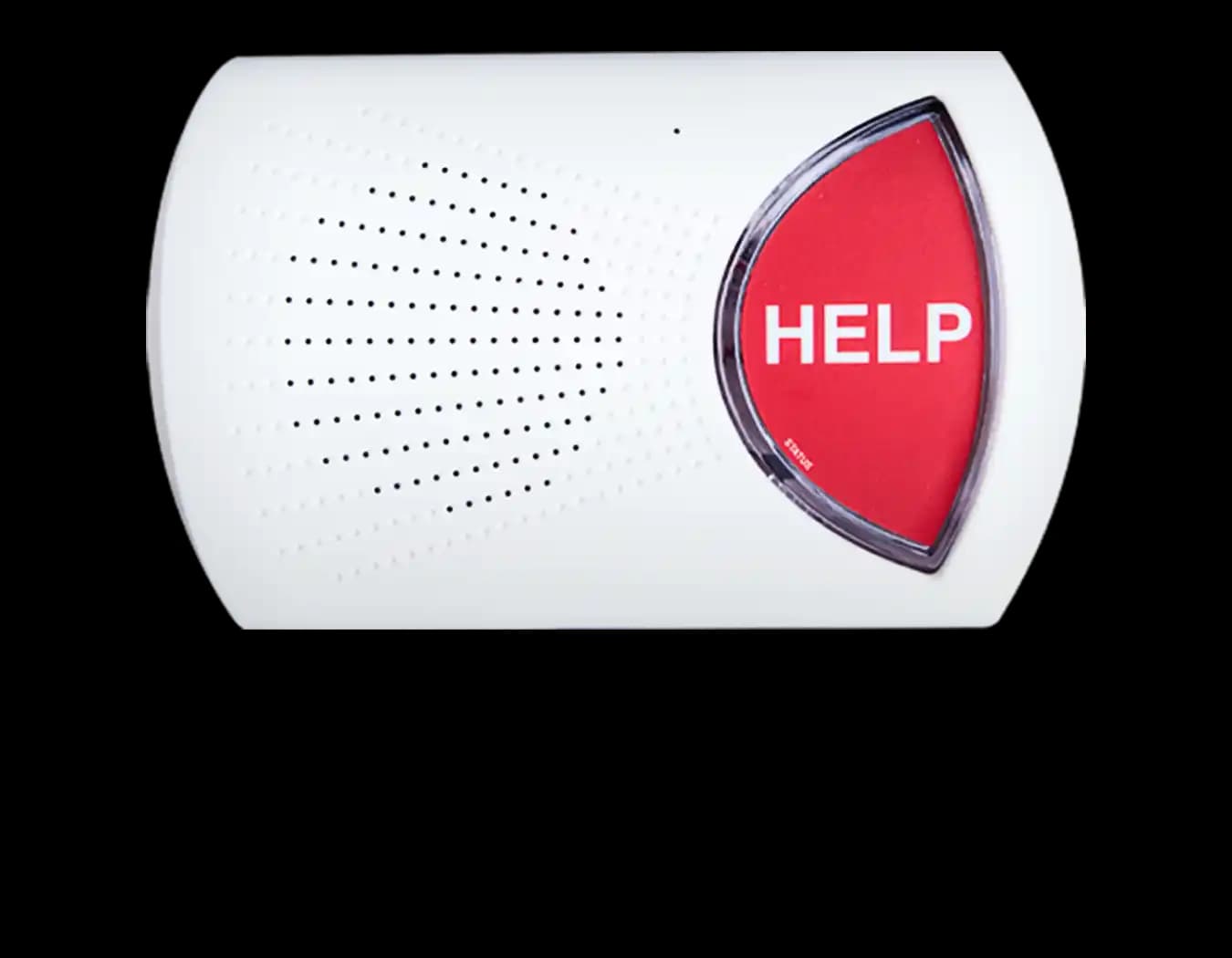
GPS Trackers for Elderly Parents Who Won't Wear One: Hidden Options That Work (2026)
When a parent takes off every pendant and watch you buy them, the answer isn't a better wearable — it's a tracker that hides in a wallet, a cane, or a walker they already use every day. Here's what actually works, what each option can't do, and when a covert tracker isn't the right tool at all.
As an Amazon Associate I earn from qualifying purchases. We independently review products; buying through our links never costs you extra.
Best No-Subscription Option
Apple AirTag (2nd Gen)
Quick picks
| Product | Best for | Amazon |
|---|---|---|
| Apple AirTag (2nd Gen) | No-Subscription Option | Check price on Amazon |
| Tracki Mini (2024 4G Model) | True Real-Time Cellular Tracking | Check price on Amazon |
| LandAirSea 54 | Mounting on a Mobility Aid or Vehicle | Check price on Amazon |

Our Top Picks
Chosen for seniors based on features, specs, and verified buyer reviews.
Jiobit Gen 3
- Small and light enough to clip to a waistband, shoelace, or jacket without looking medical
- Battery lasts roughly 2 days in live-tracking mode up to about a month in battery-saver mode
- IPX8 waterproof for an item worn outdoors
- Doesn't require a paired smartphone nearby to report location
- Requires an ongoing monthly or annual subscription on top of the hardware cost
- Only useful if the clipped-to item actually leaves the house with the person
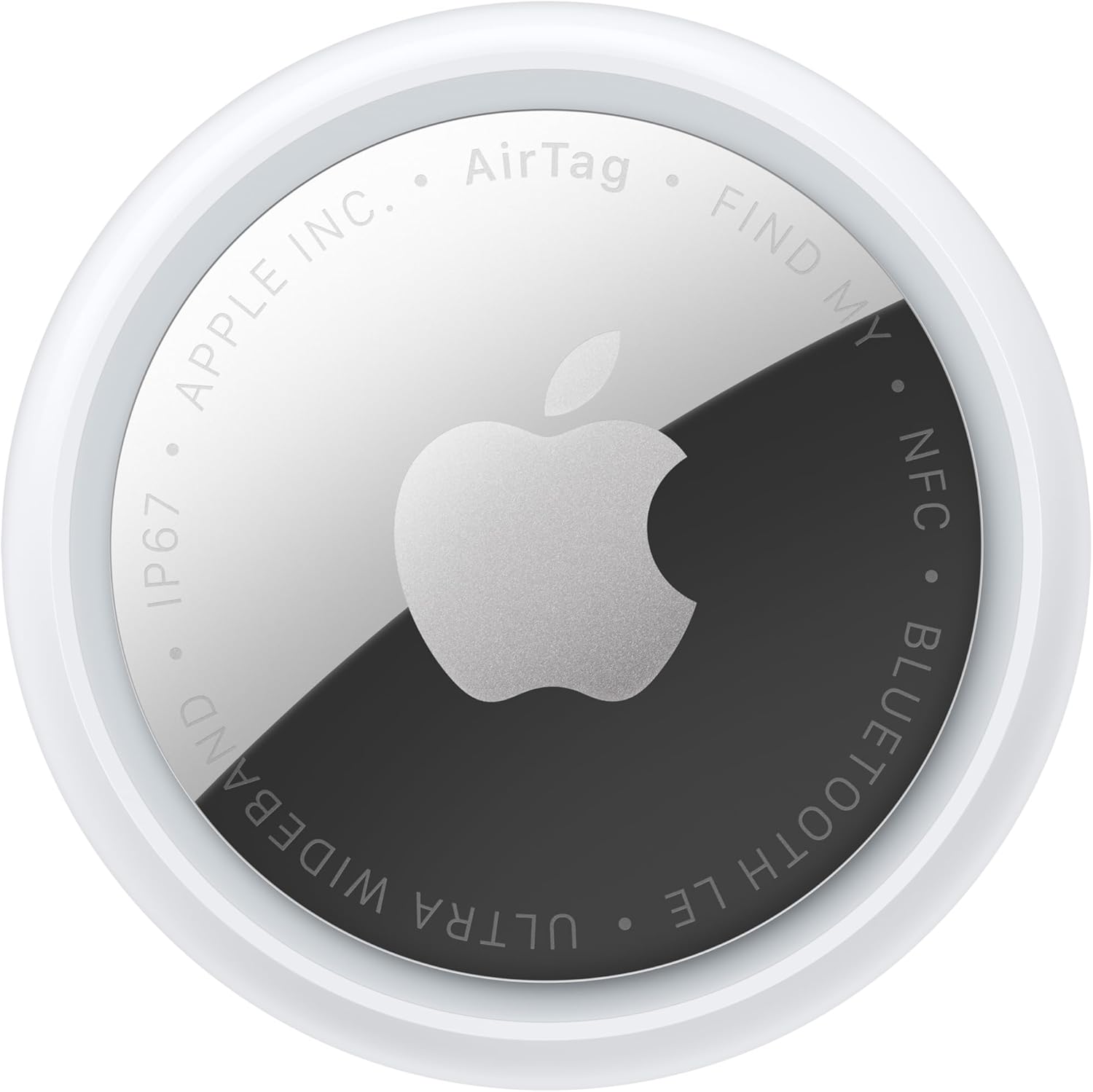
Apple AirTag (2nd Gen)
- One-time purchase, no monthly bill to track or cancel
- Coin-sized, fits in a wallet, cane grip, or coat pocket without notice
- CR2032 battery lasts more than a year
- 50% louder speaker and longer Precision Finding range than the original AirTag
- No GPS or cellular chip — relies on nearby iPhones relaying location, so updates can lag in low-iPhone-density areas
- Best experience assumes an iPhone-based family; weaker for Android-only households

Tracki Mini (2024 4G Model)
- Own 4G LTE connection reports real GPS location without needing nearby phones
- Inexpensive hardware, small enough for a coat lining or bag pocket
- Geofencing can text a caregiver the moment the device leaves a set home radius
- Mandatory ongoing subscription with no fully no-fee option
- Shorter battery life than the clip-on and Bluetooth options — Tracki lists 5 to 7 days of active use (up to 45 days in battery-save mode)

LandAirSea 54
- Strong built-in magnet mounts permanently to a rollator, scooter, or car — no need to remember to carry it
- Waterproof with roughly 7–14 days of battery life
- Prepaid 12- or 24-month no-monthly-fee bundles available on Amazon
- Low hardware cost
- Built as a vehicle/asset tracker — no SOS button or fall detection
- Requires a subscription unless you buy a prepaid bundle
- Only helps if the wandering risk involves a scooter, rollator, or car — not walking out on foot
The single biggest gap in senior safety tech isn't the hardware — it's adoption. A medical alert pendant or a GPS smartwatch only works if the person actually wears it, and a stubborn or independence-minded parent who takes it off "because I'm not an invalid" makes the best device on the market useless. If that's the situation, the fix isn't a better wearable. It's rethinking the whole approach: instead of something worn on the body, a tracker that lives inside something the person already carries and won't think twice about — a wallet, a coat pocket, a set of keys, or the frame of a walker they use every single day without fail.
That's a real trade-off, not a workaround-free upgrade. A device clipped to a jacket does nothing the day that jacket stays on a hook. A tracker tucked in a purse is silent if the purse gets left on the kitchen counter. None of the four options below are a substitute for a worn medical alert button when a fall is the primary risk — they're the better answer when the primary risk is a wandering or disorientation episode, and the person has already said no, repeatedly, to anything that looks like a medical device.
How to think about this before buying anything
What does this person reliably carry, every day, without being reminded?
This is the only question that actually matters. Someone who never leaves the house without a wallet is a good candidate for a wallet-card or AirTag approach. Someone who uses a cane or rollator on every outing is a better fit for a device that clips or straps onto that mobility aid instead — because the aid, unlike a person, doesn't forget or refuse. Someone who changes purses or jackets often is a worse fit for any single-item approach; that's when a magnetic tracker that lives permanently on a vehicle, scooter, or walker frame earns its keep, since it doesn't move between outfits.
Is the underlying concern wandering (dementia) or a fall while alone?
These are different problems with different correct tools. If the concern is a fall, the honest answer is that a covert GPS tracker doesn't summon help — it only tells you where someone is after the fact, and only if you're already looking. A fall risk without a worn alert button is still an emergency-response gap that no tracker in this article closes on its own; that gap needs a conversation about a chair-side alert base station, a smart speaker with SOS, a standalone cellular smartwatch for someone who will actually wear a watch, or a caregiver check-in schedule as a companion, not a replacement. If the concern is wandering or getting lost — which is the scenario where "they refuse to wear anything" comes up most often — a discreet, always-carried tracker is a legitimately strong tool, especially paired with a dedicated door alarm for dementia wandering that alerts a caregiver the moment an exterior door opens unexpectedly.
Real-time cellular vs. crowdsourced Bluetooth — know which one you're buying
Two very different technologies get sold as "trackers" here. Cellular trackers (Jiobit, Tracki, LandAirSea) have their own SIM and report a GPS position on a schedule or on demand, anywhere there's cell coverage — but they need an ongoing data subscription to work at all. Bluetooth trackers (Apple AirTag) have no subscription and no cellular radio of their own; they broadcast a signal that any nearby iPhone anonymously relays to Apple's Find My network. That means an AirTag works brilliantly in a city or suburb full of iPhones and is nearly useless in a rural area with little foot traffic. Buying the wrong type for where someone actually lives is the most common mistake families make here.
GPS Trackers Compared
How each tracker finds its location, whether it needs a plan, and how it's meant to be carried. Details are taken from each product's Amazon listing.
| Product | How it locates | Subscription | Battery | Carried as | Amazon |
|---|---|---|---|---|---|
| Jiobit Gen 3 | Cellular plus GPS, Wi-Fi, and Bluetooth | Required (monthly or annual plan) | Listed average of about 20 days, varies by mode | Clipped to clothing, shoes, or a bag | — |
| Apple AirTag (2nd Gen) | Apple's Find My network via nearby Apple devices (Bluetooth and Ultra Wideband) | None | Replaceable battery, more than a year | Keychain, wallet, or bag | Check price on Amazon |
| Tracki Mini (2024 4G Model) | 4G LTE plus GPS and Wi-Fi | Required, cancel anytime | 5 to 7 days active; up to 45 days in battery-save mode | In a bag or clipped to belongings | Check price on Amazon |
| LandAirSea 54 | 4G LTE GPS | Required | Motion-activated sleep to save battery | Magnet-mounted on a vehicle or other asset | Check price on Amazon |
Jiobit Gen 3 showed as currently unavailable on Amazon when we checked on September 26, 2026, so it has no direct link here. Tracki's Amazon listing is titled Tracki Universal (model TRKM010A).
Our picks
Jiobit (Gen 3) — Best for Clip-On Discretion
Jiobit was built for kids and pets first, which turns out to make it well-suited to this use case too: it's small, genuinely lightweight, and designed to clip onto a waistband, shoelace, backpack strap, or the underside of a jacket collar without looking like a medical device. Battery life ranges from about 2 days in constant live-tracking mode up to roughly a month in battery-saver mode that still checks in periodically — a real advantage over trackers that need daily charging, since a dead battery is the same as no tracker at all. It's IPX8 waterproof, which matters for something that's going to live on an item worn outdoors in all weather.
The catch is the same as every cellular tracker on this list: it needs an ongoing monthly or annual plan on top of the hardware cost. And it still depends on the item it's clipped to actually leaving the house with the person — clip it to a jacket that stays on a hook by the door on a warm day, and it's tracking nothing.
Apple AirTag (2nd Gen) — Best No-Subscription Option
The redesigned AirTag, released in early 2026, is sold singly or in a four-pack — a one-time cost with no monthly bill to forget or cancel, which matters for a family already juggling a medical alert subscription and a phone plan. It's coin-sized and disappears into a wallet, a coat's inside pocket, a cane's rubber grip cavity, or a keychain without drawing attention, and the new speaker is 50% louder if it needs to be located nearby. The CR2032 battery lasts more than a year.
The trade-off is precision and reliability of updates: an AirTag has no GPS or cellular chip of its own. It relies on any nearby iPhone — a stranger's, a neighbor's, a family member's — silently relaying its position to Apple's Find My network. In a dense area with lots of iPhone traffic, location updates can be nearly real-time. In a rural area or a region with mostly Android phones nearby, updates can be sparse or hours old. It also assumes an iPhone-based family setup to view the location at all; it doesn't work meaningfully with an Android-only household.
Check price on AmazonApple AirTag (2nd Gen)
Tracki Mini (2024 4G Model) — Best for True Real-Time Cellular Tracking
Unlike the AirTag, Tracki carries its own 4G LTE connection, so it reports a genuine GPS position on its own schedule rather than depending on nearby phones — a meaningful advantage in a suburb or rural town with lighter iPhone density. The hardware itself is inexpensive, small enough to tuck into a coat lining or a bag's interior pocket, and it supports geofencing that can text a caregiver the moment the device leaves a defined home radius, which is one of the more genuinely useful wandering-specific features across this whole category.
The subscription is mandatory and ongoing — plan pricing depends on the update frequency and commitment length, and unlike the LandAirSea below, there's no prepaid "no monthly fee" bundle option. Battery life in real-time tracking mode is also the shortest here, roughly 2–5 days, which means it needs more frequent charging discipline from whoever manages the device than Jiobit or the AirTag do.
Check price on AmazonTracki Mini (2024 4G Model)
LandAirSea 54 — Best for Hiding on a Mobility Aid or Vehicle, Not a Person
This one solves the "won't carry anything reliably" problem a different way: instead of relying on the person to keep an item on them, its strong built-in magnet lets a caregiver mount it permanently to the underside of a rollator, a mobility scooter's frame, or a car — something the person uses every time they leave, without having to remember it's there. It's waterproof, holds a charge for roughly 7–14 days depending on update frequency, and the hardware is one of the cheaper entry points.
It's genuinely built as a vehicle/asset tracker, not a personal safety device, so there's no SOS button, no fall detection, and no personal-safety-specific alerting beyond location and geofencing. It also needs its own subscription (though prepaid 12- or 24-month no-monthly-fee bundles are sold on Amazon and worth seeking out over the standard month-to-month plan). It only helps if the wandering risk involves leaving by wheelchair, scooter, or car — it does nothing for someone who walks out the front door on foot without any of those.
Check price on AmazonLandAirSea 54
What none of these fix
It's worth saying plainly: a hidden tracker is a mitigation, not a solution, for either fall risk or dementia-related wandering. It tells a caregiver where someone went after they've already gone — it doesn't stop a fall, and it doesn't replace a locked or alarmed exterior door for a household managing a real wandering risk. Families dealing with a diagnosed dementia wandering pattern typically need this layered with a door sensor or chime, a medical ID bracelet with contact information (which, unlike a tracker, works even if the battery dies or the item is lost), and in some cases a formal Silver Alert-style registration with local police. A tracker is one layer in that plan, not the whole plan.
It's also worth being honest with the family member making the decision: covertly tracking a competent adult who has explicitly declined a safety device raises real questions about autonomy and consent that a household needs to work through on its own terms, particularly if the person is not cognitively impaired and is simply asserting independence. These tools are most defensible, and most families are most comfortable with them, in the context of a diagnosed cognitive condition where the person's own judgment about the risk is part of what's impaired.
Frequently asked questions
Which of these works without relying on the person carrying anything at all?
The LandAirSea 54, mounted permanently on a mobility aid or vehicle the person always uses, is the closest thing to a "set it and forget it" option, since it doesn't depend on remembering a jacket or wallet.
Do any of these call for help automatically if someone falls?
No. None of the four devices here detect falls or trigger an automatic emergency call — that's a feature of medical alert pendants and fall-detection smartwatches, a different category built around a worn device. If a fall is the primary concern, that gap still needs to be addressed separately.
Is the Apple AirTag reliable enough on its own for a wandering risk?
It depends heavily on location. In a suburb or city with steady iPhone traffic nearby, it can update frequently and reliably. In a rural or low-iPhone-density area, updates can lag for hours, which is a real limitation for a time-sensitive wandering situation — a cellular option like Jiobit or Tracki is the safer bet there.
What if the subscription cost is the real obstacle?
The AirTag is the only device here with no ongoing subscription at all. LandAirSea's prepaid 12- or 24-month bundles, sold alongside the standard monthly plan, are worth comparing before defaulting to the month-to-month rate, which is the most expensive way to run any of these.