Top 5 GPS Trackers for Elderly Parents: Safety & Peace of Mind
Complete guide to GPS trackers for seniors with dementia. Compare wearables, shoe trackers, and smartwatches. Expert recommendations and setup tips.
As an Amazon Associate I earn from qualifying purchases. We independently review products; buying through our links never costs you extra.
Best Overall
LandAirSea 54 GPS Tracker
Quick picks
| Product | Best for | Amazon |
|---|---|---|
| LandAirSea 54 GPS Tracker | Overall | Check price on Amazon |
| PAJ GPS People Finder 4G | Features | Check price on Amazon |
| LandAirSea Sync GPS Tracker | Battery | Check price on Amazon |
| Tracki 4G GPS Tracker | International | Check price on Amazon |

Our Top Picks
Chosen for seniors based on features, specs, and verified buyer reviews.

LandAirSea 54 GPS Tracker
- Highly reliable tracking
- Compact and discreet
- Strong magnet mount
- Affordable subscription
- No SOS button
- No two-way calling
- Battery life 1-2 weeks
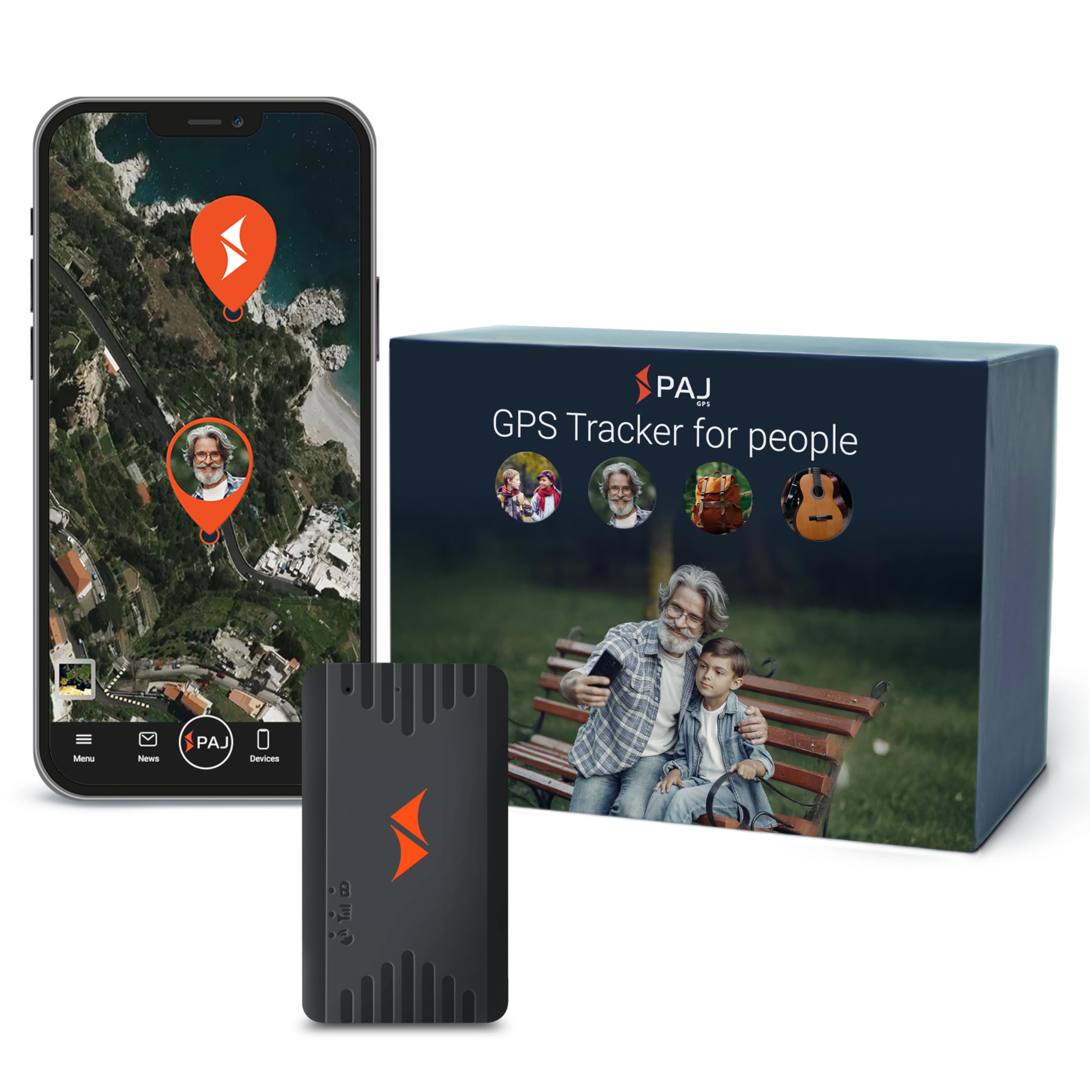
PAJ GPS People Finder 4G
- SOS emergency button
- Voice monitoring
- Feature-rich app
- Good battery life
- Not waterproof
- Slightly larger
- One-way listening only

LandAirSea Sync GPS Tracker
- 2-3 week battery life
- Waterproof IP67
- Strong magnet
- Reliable tracking
- Larger size
- No voice features
- Higher upfront cost
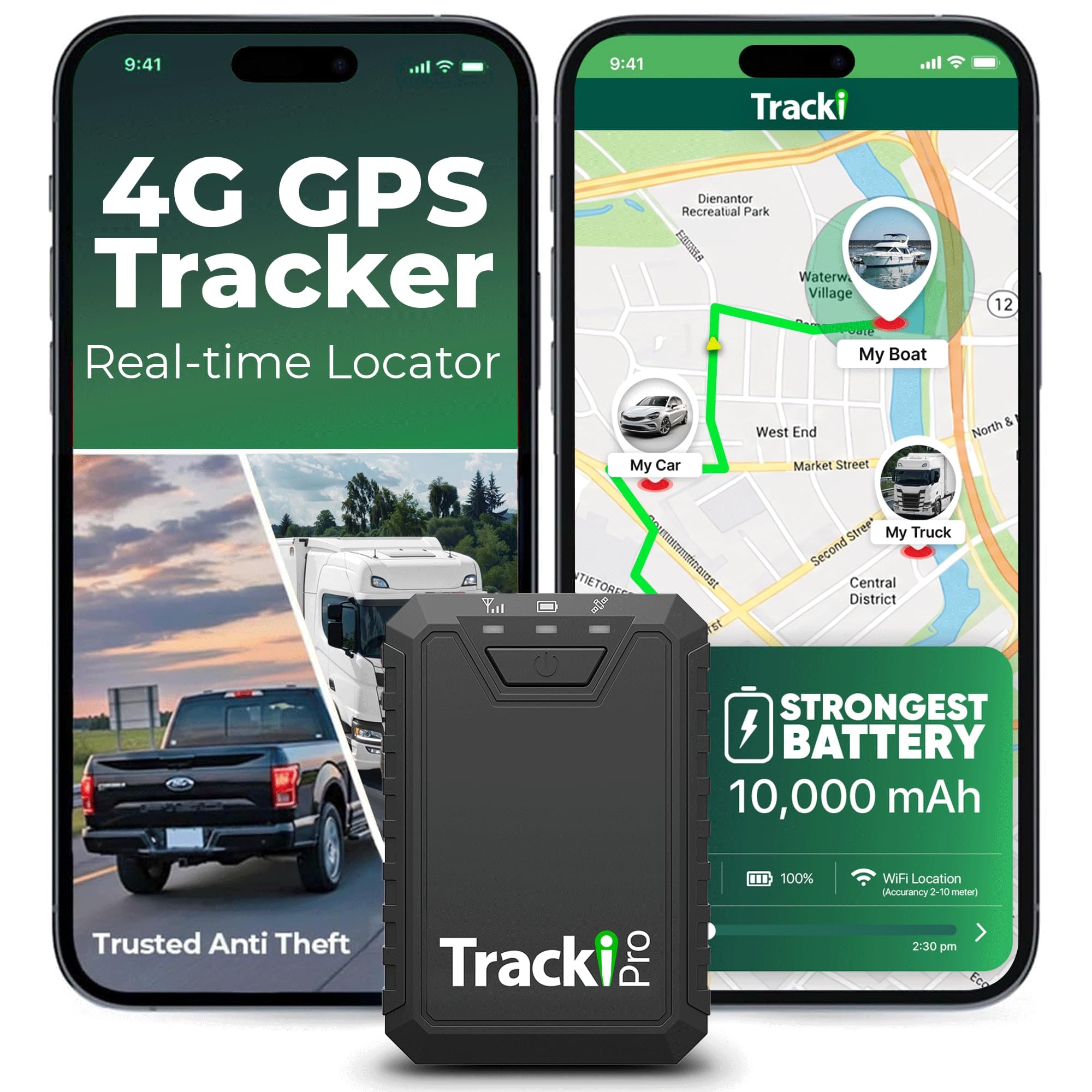
Tracki 4G GPS Tracker
- Worldwide coverage
- Real-time tracking
- Geo-fencing
- Compact size
- Monthly subscription required
- Battery life 2-5 days
Peace of Mind for Families
When a loved one with dementia or Alzheimer's wanders, every second counts. GPS trackers provide real-time location data and instant alerts when seniors leave safe zones.
How We Chose
We compared multiple GPS tracking devices on battery life, accuracy, alert systems, and ease of use for both seniors and caregivers, drawing on published specifications and buyer reviews. Based on that research, we've identified four reliable options with verified Amazon availability.
Types of GPS Trackers
Wearable Devices (Watches, Pendants)
- Worn on wrist or around neck
- Most reliable for continuous tracking
- May be removed by confused seniors
Hidden Trackers
- Can be placed in bag, car, or attached to belongings
- Cannot be easily removed
- Battery life varies (7-30 days)
Pocket/Keychain Trackers
- Small and discreet
- Easy to slip in pocket or attach to belt
- Risk of being left behind
Understanding GPS Tracking for Seniors
Wandering affects 6 in 10 people with dementia. It's one of the most dangerous behaviors, with fatal outcomes possible within hours. GPS trackers have become essential safety tools for families caring for loved ones with cognitive decline.
Why Seniors with Dementia Wander
- Looking for something familiar — Trying to go "home" or find a deceased spouse
- Feeling restless or bored — Unable to engage in activities
- Following old routines — Leaving for work or errands from decades ago
- Confusion about time and place — Not recognizing current home
- Medication side effects — Some drugs increase agitation
Critical Statistics
- 94% of people with dementia are found within 1.5 miles of home
- If not found within 24 hours, 50% risk serious injury or death
- Winter wandering has highest fatality rate (hypothermia)
- Seniors tend to wander in afternoon/evening ("sundowning")
GPS Tracker Technology Explained
How GPS Trackers Work
GPS trackers use satellite signals to determine location, then transmit that data via cellular networks to apps or websites. Real-time trackers update continuously; interval trackers check in every 5-15 minutes to save battery.
Types of Tracking Technology
GPS + Cellular (Most Common):
- Uses satellites for location, cell towers to transmit
- Requires monthly cellular plan ($10-$40/month)
- Works outdoors and near windows
- Most accurate (within 10-30 feet)
GPS + Wi-Fi:
- Uses Wi-Fi networks for indoor positioning
- Better indoor accuracy than GPS alone
- Must be near Wi-Fi networks
Bluetooth Trackers (Apple AirTag):
- Limited range on their own
- Rely on Apple's Find My network
- Work well in populated areas
- No monthly fees
Essential Features for Senior GPS Trackers
1. Geo-Fencing with Instant Alerts
- Define "safe zones" (home, yard, neighborhood)
- Instant text/email/push alerts when senior leaves zone
- Multiple caregiver notification support
- Adjustable zone sizes (50 feet to several miles)
2. Battery Life
- Real-time tracking — 1-3 days battery life
- Interval tracking — 5-14 days battery life
- Passive trackers — 30+ days battery life
- Low battery alerts critical
- Quick charging (2-3 hours) preferred
3. Waterproofing
- Minimum IP67 rating (submersible 3 feet for 30 minutes)
- Seniors may forget to remove in shower/rain
- Accidents happen with drinks, sinks, toilets
4. Comfort and Discretion
- Lightweight (under 2 ounces preferred)
- Comfortable for all-day wear
- Doesn't look obviously medical
- Difficult to remove accidentally
Our Top Picks
LandAirSea 54 GPS Tracker — Best Overall
The LandAirSea 54 has earned its reputation as one of the most reliable GPS trackers on the market, backed by a large base of positive customer reviews. This compact device delivers professional-grade tracking at a consumer-friendly price.
Design and size: At just 1.5 x 1.5 x 0.75 inches and weighing under 2 ounces, the LandAirSea 54 is remarkably small. It easily fits in a pocket, purse, or can be attached to a belt with the included case. The dark gray housing is discreet and durable.
Tracking performance: The device provides real-time GPS tracking with updates as frequent as every 3 seconds when in motion. Location accuracy is typically within 10-15 feet outdoors, which is excellent for this price range. The tracker works on 4G LTE networks, ensuring reliable connectivity in most areas.
The accompanying app (iOS and Android) is straightforward and functional. You can view current location, set up geo-fences, and review historical movement data. Geo-fence alerts arrive quickly via text, email, or push notification when your loved one enters or exits designated safe zones.
Battery life: With the standard 1,000mAh battery, expect 1-2 weeks of battery life depending on update frequency settings. The device includes a micro-USB charging cable and reaches full charge in about 3 hours. Low battery alerts give you advance warning before the device dies.
The tracker includes a built-in magnet, allowing you to attach it to metal surfaces — useful if you're tracking a vehicle or wheelchair. The waterproof rating (IP65) means it can handle rain and splashes but shouldn't be submerged.
Subscription required: The device requires a monthly data plan, starting at $14.95/month for real-time tracking. This is on the lower end for GPS tracker subscriptions. Annual prepay options offer slight discounts.
Limitations: The device has no two-way calling or SOS button, so it's purely for tracking. Battery life decreases significantly if you set very frequent updates (every 10 seconds). The app interface is functional but not as polished as premium competitors.
Best for: Families who need reliable, discreet tracking without bells and whistles. Excellent for seniors who carry a purse or wear clothing with secure pockets. Also popular for vehicle tracking.
Check price on AmazonLandAirSea 54 GPS Tracker
PAJ GPS People Finder 4G — Best for Active Monitoring
The PAJ GPS People Finder 4G offers more sophisticated features than basic trackers, with a focus on safety features like SOS calling and voice monitoring. Its strong base of positive customer reviews reflects solid performance.
Design: Slightly larger than the LandAirSea (2.4 x 1.8 x 0.7 inches), the PAJ tracker is still pocket-portable. The rounded edges make it comfortable to carry. Available in black or white. The device includes a clip for attaching to clothing or bags.
Advanced features: What sets the PAJ apart is the SOS button. When pressed, it immediately calls pre-programmed phone numbers and sends location alerts. This is invaluable if your loved one realizes they're lost and needs help. The device can store up to 3 emergency contacts.
Voice monitoring is another standout feature. You can call the device and listen to the surrounding environment without the device ringing or alerting the carrier. While this raises privacy concerns, it can be critical in emergency situations to assess your loved one's safety.
Tracking capabilities: Real-time GPS tracking with 4G connectivity provides reliable location updates. The FINDER Portal app (iOS/Android/web) is more feature-rich than basic competitors, offering detailed location history, movement alerts, speed alerts, and customizable geo-fences.
Battery life is respectable at 3-5 days with moderate tracking (5-minute update intervals). The 800mAh battery charges via micro-USB in about 2.5 hours. Battery optimization settings let you balance update frequency against battery life.
Subscription costs: Requires a monthly data plan starting at $6.99/month for basic tracking. Premium plans unlock features like unlimited geo-fences and longer location history storage.
Limitations: The voice monitoring feature may not work in all situations (depends on cellular signal) — in a home with a weak-signal room, a cell signal booster can make this feature far more consistent. The device is not waterproof, only water-resistant (light rain okay, but don't submerge). Two-way calling would be better than one-way listening.
Best for: Families who want SOS emergency calling and the ability to check in on their loved one's environment remotely. Good for early-to-moderate stage dementia when the senior can still recognize they need help.
Check price on AmazonPAJ GPS People Finder 4G
LandAirSea Sync GPS Tracker — Best Battery Life
The LandAirSea Sync balances tracking performance with extended battery life, and is well reviewed by owners. It's designed for scenarios where you need weeks of tracking without recharging.
Battery advantage: The Sync's biggest selling point is its massive 2,200mAh battery — more than double the capacity of the LandAirSea 54. With conservative tracking settings (5-minute updates), this device can run for 2-3 weeks on a single charge. Even with aggressive 1-minute updates, you'll get 4-5 days.
For families caring for seniors who resist or forget charging routines, this extended battery life is crucial. You can set up a weekly charging schedule and still have safety margin.
Size trade-off: The larger battery means a bigger device: 2.9 x 1.5 x 1 inches. It's still small enough for most pockets or purses, but noticeably larger than ultra-compact trackers. Weight is about 3 ounces.
Tracking performance: Identical GPS chipset and cellular connectivity as the LandAirSea 54, so expect the same excellent location accuracy (10-15 feet) and reliable 4G LTE coverage. The companion app is the same platform, with geo-fencing, movement alerts, and location history.
The device includes a strong magnet mount and waterproof rating (IP67), making it more versatile for different attachment methods and weather conditions than some competitors.
Subscription: Monthly data plans start at $14.95/month, identical to the LandAirSea 54. You're essentially paying the same monthly fee but getting better battery life in a slightly larger package.
Limitations: The larger size may be less comfortable in tight pockets. No built-in speaker or microphone, so no two-way calling or voice monitoring. The device is tracking-only.
Best for: Situations where extended battery life is the priority. Ideal for seniors who travel frequently, families who can't check battery status daily, or as a backup tracker you want to "set and forget" for weeks at a time.
Check price on AmazonLandAirSea Sync GPS Tracker
Apple AirTag 4-Pack — Best Budget Option
The Apple AirTag isn't marketed as a senior tracker, but its massive Find My network and no-subscription model make it worth considering for certain situations. With a huge base of positive reviews, it's proven technology. This 4-pack provides excellent value, giving you multiple trackers for different belongings or family members.
How it works: The AirTag doesn't use GPS or cellular data. Instead, it uses Bluetooth to communicate with nearby Apple devices. When any iPhone comes within range (up to 100 feet), it anonymously relays the AirTag's location to your Find My app. In urban and suburban areas with lots of iPhone users, this crowd-sourced network is remarkably effective.
Strengths: Each AirTag is tiny (1.26 inches diameter, 0.31 inches thick) and lightweight (0.39 ounces). They can attach to keychains, slip into pockets, or hide in bags easily. The battery (CR2032 coin cell) lasts about one year and costs $3-5 to replace.
Most importantly: no monthly subscription fees. You pay once for the four AirTags and you're done. For families on tight budgets or those who want to track multiple items (purse, walker, keys, etc.), this is a huge advantage over GPS trackers requiring $10-20/month subscriptions. If tracking belongings — not a person who might wander — is actually the main need, see our dedicated guide to item trackers for keys, wallets, and other everyday items for a full comparison by phone ecosystem.
Setup is extremely simple if you have an iPhone. Bring the AirTag near your phone, and it automatically pairs. The Find My app is intuitive and shows the AirTag's last known location on a map.
Precision Finding (on iPhone 11 and newer) uses ultra-wideband technology to point you directly to the AirTag when you're nearby, even indoors. This is incredibly helpful when searching.
Critical limitations: The AirTag only works within the Apple ecosystem. The senior doesn't need an iPhone, but you (the caregiver) do. Android users cannot track AirTags.
The crowd-sourced network means the AirTag only updates its location when it passes near someone else's iPhone. In rural areas or less-populated locations, updates can be hours apart. This is NOT real-time tracking.
There's no geo-fencing or automatic alerts when the AirTag moves. You must manually check the Find My app to see the current location. The AirTag also emits sounds and notifications to prevent unwanted tracking, which could confuse a senior with dementia.
The AirTag is not waterproof, only water-resistant (IP67 — fine in rain, don't submerge).
Best for: Families on very tight budgets who live in urban/suburban areas with lots of iPhone users. Good as a backup tracker or for seniors with very mild cognitive issues who aren't prone to wandering but might misplace themselves occasionally. Excellent for tracking multiple personal belongings (purse, keys, walker, wheelchair). The 4-pack lets you place one in multiple locations or share among family members.
NOT suitable for: Real-time tracking needs, rural areas, seniors with moderate-severe dementia who wander frequently, Android users.
Setting Up for Success
1. Involve Your Loved One (If Possible)
For early-stage dementia, explain the tracker as a safety tool:
- Frame it as "We want to keep you independent"
- Compare to medical alert systems
- Involve them in choosing design/style
- Respect concerns about privacy
2. Test the Geo-Fencing
- Set up zones carefully — too small causes false alarms
- Walk the perimeter to test accuracy
- Include driveway, mailbox in safe zone
- Adjust based on first-week experience
3. Prepare for Resistance
- Some seniors refuse to wear trackers
- Try different form factors
- Give it time — may take weeks to accept
- Consider discreet placement in purse or bag
If refusal is a persistent, ongoing issue rather than a first-week adjustment, see our dedicated guide to GPS trackers for seniors who refuse to wear a device, which compares clip-on, hidden, and mount-anywhere options built specifically for that situation.
4. Establish Alert Protocol
- Who receives alerts (add multiple caregivers)
- What's the response plan
- Practice checking location in app
- Know how to use history/breadcrumb trail
5. Charge Routinely
- Set daily or weekly charging reminder (depending on device)
- Charge overnight if device lasts multiple days
- Keep charging cable in visible spot
- Set low-battery alerts
Monthly Costs to Consider
GPS tracker costs vary by device. The biggest long-term factor is the monthly subscription, not the one-time device purchase:
- LandAirSea 54: one-time device purchase plus a subscription starting at $14.95/month (roughly $180/year in subscription)
- PAJ GPS People Finder: one-time device purchase plus a subscription of $6.99-14.99/month (roughly $84-180/year)
- LandAirSea Sync: one-time device purchase plus a subscription starting at $14.95/month (roughly $180/year)
- Apple AirTag 4-Pack: one-time device purchase with no monthly subscription (plan on about $12-20/year to replace the 4 batteries)
Legal and Ethical Considerations
Privacy and Consent
- Legally, you can track someone you're caring for
- Ethically, involve them in the decision if cognitively able
- For severe dementia, safety outweighs privacy concerns
- Never use GPS tracker on someone without authority/guardianship
Medical vs. Consumer Devices
- GPS trackers are NOT medical devices
- They don't replace supervision or medical alert systems
- Use as one part of comprehensive safety plan
Alternatives and Complementary Safety Tools
Day Clocks for In-Home Orientation
Not every dementia-related safety need is about location tracking. A lot of nighttime confusion and repeated "what day is it" questions come from a simple lack of orientation, not wandering risk. Our guide to digital day clocks for dementia and memory loss covers a cheap, low-tech device that displays the day, date, and time-of-day in plain language — a good complement to a GPS tracker, not a replacement for one.
Project Lifesaver
Free program in many communities:
- Seniors wear radio-frequency bracelet
- If missing, police use receivers to locate
- Works where GPS fails (indoors, dense areas)
- Check if available in your area
Door Alarms
- Simple alarms on exit doors
- Alert when door opens unexpectedly
- Inexpensive backup to GPS
- Prevents wandering at night
See our full guide to door and window alarms for dementia wandering for a comparison of local-siren and caregiver-pager options.
ID Bracelets
- Medical ID with "memory impaired" and contact info
- Helps strangers identify and assist your loved one
- Always wear alongside GPS tracker
- Engraved metal or silicone options
The Bottom Line
For most families, we recommend starting with the LandAirSea 54. It offers the best combination of reliability, features, and value, with a low-cost device and subscription. The compact size and proven track record make it ideal for discreet everyday tracking.
If you need advanced features like SOS calling, consider the PAJ GPS People Finder 4G. The voice monitoring and emergency button provide extra peace of mind for active seniors.
For extended battery life, the LandAirSea Sync runs 2-3 weeks on a charge, perfect for seniors who resist charging routines.
Budget-conscious families in urban areas should consider the Apple AirTag 4-Pack (no monthly fee), which provides four trackers for different belongings or family members, but understand its limitations as a crowd-sourced tracker rather than real-time GPS. For families weighing a subscription-free emergency button alongside location tracking, our guide to medical alert systems with no monthly fee covers that adjacent, but different, category.
Whichever tracker you choose, the most important factor is consistent use. Test the device thoroughly, establish charging routines, and make sure all caregivers know how to check location and respond to alerts. This guide covers wandering risk specifically — for an independent parent who's still driving, a vehicle-installed tracker fits better than a wearable; see our GPS trackers for monitoring an elderly parent's driving guide for that earlier-stage situation.